





Original Research
Market Orientation and University Performance in Tanzania: Mediating Efficacious Leadership Style


- Abstract
- Full text
- Metrics
Universities will function well if the management and administration of the education sector are improved and the resources available are well utilized. These resources include the caliber of professors, instruction, market orientation, and an efficacious leadership style. The purpose of this study is to investigate the relationship between market orientation, university performance in Tanzania, and the mediating impact of an efficacious leadership style. The Resource Based Theory (RBT) was applied. Self-administered questionnaires were used at five of Tanzania's largest public universities to collect data. One hundred twenty responses were analyzed using SMART PLS. The outcomes were as follows: Efficacious leadership demonstrated a significant positive relationship with university performance, and market orientation demonstrated a significant positive relationship with efficacious leadership. An efficacious Leadership Style (EL) had a mediating effect on the relationship between University Performance (UP) and Market Orientation (MO). Policymakers and other interested parties were also provided with the study's recommendations for additional research.
Market Orientation and University Performance in Tanzania: Mediating Efficacious Leadership Style
Winfrida Robson1, Hellena Mohamedy Mushi2
1Institute of Accountancy Arusha, Tanzania
2Department of Business Studies, Mzumbe University Mbeya Campus College, Tanzania
ABSTRACT:
Universities will function well if the management and administration of the education sector are improved and the resources available are well utilized. These resources include the caliber of professors, instruction, market orientation, and an efficacious leadership style. The purpose of this study is to investigate the relationship between market orientation, university performance in Tanzania, and the mediating impact of an efficacious leadership style. The Resource Based Theory (RBT) was applied. Self-administered questionnaires were used at five of Tanzania's largest public universities to collect data. One hundred twenty responses were analyzed using SMART PLS. The outcomes were as follows: Efficacious leadership demonstrated a significant positive relationship with university performance, and market orientation demonstrated a significant positive relationship with efficacious leadership. An efficacious Leadership Style (EL) had a mediating effect on the relationship between University Performance (UP) and Market Orientation (MO). Policymakers and other interested parties were also provided with the study's recommendations for additional research.
KEYWORDS: Market Orientation, Efficacious Leadership Style, University Performance, Tanzania
The relationship between leadership style, university performance, and market orientation is a crucial subject of research in the field of higher education management (Dau & Yussuf, 2023). Market Orientation (MO) is defined in the original literature by Narver & Slater (1990) as a cultural phenomenon within an organization that supports successful behaviors that generate superior organizational performance over time and create superior customer value. However, Kohli and Jaworski (1990) see MO as a complete type of long-term competitive advantage that is attained through information creation, distribution, and market responsiveness on an organizational level. The viewpoint of Kohli and Jaworski (1990) is supported and extended by Narver and Slater (1990) through the proposal of three behavioral components that represent the marketing information acquisition, dissemination, and coordinated generation of customer value activities. These components include inter-functional coordination, which entails coordinating all customer-related activities to optimize resource utilization and create superior customer value; competitor orientation, which entails understanding the capabilities and strategies of current and potential competitors; and customer orientation, which entails understanding the needs of target customers to continuously deliver value to them.
Narver and Slater (1990) describe market orientation as the combination of these three elements. Originally, market orientation was thought to be a guiding philosophy, especially for commercial organizations, for long-term organizational success (Kohli et al., 1993; Narver et al., 1998). However, non-commercial organizations may have different goals; therefore, market orientation must be modified to meet their specific needs (Kotler, 1988). Additionally, the terms "market orientation" and "customer orientation" have also been used interchangeably (Deshpande & Farley, 2004; Shapiro, 1988). This is a well-known idea in marketing, and influential authors like Drucker (1954), Shapiro (1988), Kohli and Jaworski (1990), and Narver et al. (1998) have significantly advanced our understanding of it. By looking at the three fundamental aspects of market orientation that Kohli and Jaworski (1990) articulated, we may better understand the idea of market orientation: (i) Customer emphasis: Kohli and Jaworski (1990) state that customers are the main focus of market orientation. It involves more than just gathering data on outside market variables and figuring out the clients' current demands. Developing a deeper comprehension of consumers' requirements, priorities, and the variables influencing those demands is the goal of customer-focused marketing research. (ii) Coordinated marketing: The marketing department is not the only entity in charge of market orientation. Interdepartmental cooperation is necessary to ensure that every department responds quickly to consumer requests. As part of this coordination, market intelligence is gathered and used across the entire organization (Kohli et al., 1993). (iii) Profitability: (iii) Profitability: In the literature, profitability is often viewed as the outcome or consequence of market orientation rather than a determinant.
According to Kohli and Jaworski (1990), a market-oriented business concentrates on producing superior customer value, and as a result, profitability is attained when customers recognize and value that value. Customer focus, coordinated marketing, and profitability are the three dimensions that make up a thorough understanding of market orientation and how it affects the performance of organizations. In order to increase competitiveness and effectiveness, an institution's market orientation refers to its strategic focus on comprehending and meeting the demands of its stakeholders, including students, faculty, and the larger community. At the same time, university performance includes a range of metrics that represent the entire effectiveness and influence of a learning environment, including research production, student satisfaction, academic quality, and institutional reputation (Dau & Yussuf, 2022). Numerous researchers have looked at a variety of predictors or antecedent variables in their studies to investigate and comprehend organizational effectiveness over the years. But from complex to simplistic, the models employed in these studies have demonstrated a great deal of diversity, inconsistency, and fragmentation (Aboalhool et al., 2024; Al Azzani et al., 2024; Dahmiri et al., 2024; Furyanah et al., 2024; Hikmah et al., 2024; Maja & Fatoki, 2024; Orbaningsih et al., 2024; Rossoni et al., 2024). The field is divided as a result of the numerous relationships that have been investigated and reported by these studies with organizational success. The fragmentation results from the large number of factors taken into account as well as the disagreement over the direct and indirect determinants in organizational performance models that were created especially for academic environments.
The market orientation, university performance, and effective leadership style variables chosen for this study are essential for comprehending and improving the strategic management of higher education institutions. Recent research highlights the significance of each of these criteria, which are all highly valued in management literature. Market orientation is widely acknowledged in management literature as a critical factor influencing business effectiveness (Narh et al., 2023). According to Sisay et al. (2023), it entails maintaining a competitive edge through innovation, customer satisfaction, and constant assessment of and responsiveness to market conditions and stakeholder needs. Recent research has demonstrated how market-oriented practices influence organizational performance in a variety of industries, including higher education (Agyei et al., 2023; Febriatmoko et al., 2023; Hadi, 2023; Kilic & Chen, 2023; Lin & Chung, 2023; Njegić et al., 2023; Quang Hung et al., 2023; Zebal et al., 2023). Universities face increased competition, globalization, and changing stakeholder expectations, making it more crucial than ever for them to adopt a market-orientation approach. But, more research is needed to fully understand the unique dynamics of market orientation in the context of higher education, especially in developing nations like Tanzania.
University performance is a complex concept that takes into account many different factors, such as research production, student satisfaction, academic achievement, and institutional prestige. Performance metrics are crucial in the field of management for evaluating strategic success and organizational effectiveness. Recent articles (Agyei et al., 2023; Chandler et al., 2021; Migliori et al., 2019; Muya & Tundui, 2019, 2021) that examine the difficulties and solutions for boosting institutional outcomes in a quickly evolving educational environment have highlighted the significance of comprehending and enhancing university performance. Even if the amount of study on university performance is increasing, more needs to be known about the internal and external factors that affect these results, especially in the setting of emerging economies. Examples of these elements include market orientation and leadership styles. Performance, strategy direction, and corporate culture are all significantly shaped by leadership. Effective leadership in higher education is strongly correlated with the capacity to manage challenging situations, encourage creativity, and match corporate objectives with market demands. Recent research in the field of leadership (Asrin et al., 2024; Azizah et al., 2020; Btoush, 2024; Mwita & Mrema, 2023; Quddus et al., 2020; Sarwar et al., 2022) has demonstrated that the effects of different strategic orientations, including market orientation, can be moderated by a leader's style, which can have a significant impact on organizational performance. But there is also much to learn about the precise leadership trajectories and approaches that successfully moderate the link between market orientation and academic achievement, particularly in the context of higher education in developing nations.
These factors should be studied because they are important to current management literature and because they fill in important knowledge gaps about how leadership styles and strategic orientations affect university performance. This study intends to contribute to the larger conversation on successful management techniques in educational institutions by analyzing these variables in the context of Tanzanian higher education and providing theoretically and practically meaningful findings. There are still gaps in conceptual clarity and methodological rigor in the research on market orientation and university performance, notwithstanding previous studies on the subject (Dau & Yussuf, 2022; Muya & Tundui, 2021). The precise dimensions and procedures by which market orientation leads to improved university performance are still conceptually unclear, especially when considering Tanzanian higher education. A thorough understanding of the dynamics at work is hampered by the methodological limitations of the few empirical research (Alanazi, 2024; Nguyen et al., 2023; Zaim et al., 2024) that specifically examine the mediating impacts of leadership styles on this relationship. By offering a thorough analysis of the connections between market orientation, academic success, and leadership style at Tanzanian colleges, this paper seeks to close these disparities.
The study used a quantitative technique to investigate quantitative data on market orientation and university performance measures, supplemented by leadership practices by integrating theoretical ideas from marketing, management, and educational leadership. This methodology not only strengthens the validity of the results but also provides useful implications for politicians and administrators at universities who want to maximize institutional strategy. The article will first lay a theoretical foundation by defining the conceptual foundations of market orientation and outlining its possible effects on academic achievement through the use of an organized framework. It will next look at actual data to support these connections and clarify how leadership philosophies function as mediators. In order to promote a more performance-driven and market-oriented university environment in Tanzania, the debate will finally combine findings and offer doable recommendations. This will contribute to both scholarly discourse and real-world applications in educational management.
Literature Review and Hypotheses Development
The current body of research firmly establishes a favorable correlation between market orientation and organizational success, mostly in the commercial sector (Kohli et al., 1993; Narver et al., 1998), but there is still much to learn about how to apply these findings to higher education. This disparity is more noticeable in emerging nations, where academic institutions must contend with particular difficulties not found in more developed settings (Niculescu et al., 2016). Furthermore, there has been little discussion of the possible moderating function that leadership styles may play in this relationship, especially in Tanzania's higher education system (Kyambade et al., 2024; Mseti & Kinemo, 2023; Nyangarika & Ngasa, 2020). This mistake raises important questions about how market orientation might be effectively used in institutions to improve student performance while accounting for regional, cultural, and economic quirks.
University Performance
Clarifying the operationalization of university performance within the framework of this paper is crucial before delving into a thorough investigation of it. The Niculescu et al. (2016) framework has been utilized to formulate the concept of university performance, which comprises three discrete dimensions: Overall Performance, Funding, and Retention. Based on feedback from respondents who are university leaders, these dimensions are evaluated. This is demonstrated by research by Abdulrasheed (2018), Khan and Jabeen (2019), Masrur (2021), Quddus et al. (2020), Wahab (2016), and Wahab and Tyasari (2020). Studies by Wahab and Tyasari (2020) and Macatuno-nocom (2019) have also used this method of operationalizing university performance with university officials as respondents. It is believed that the implementation of this operationalization is more representative of the main difficulties Tanzanian universities confront. There are several ways to describe performance, but one definition states that it is the degree to which stakeholders obtain advantages or uses from a company or organization (Lokuwaduge & Armstrong, 2015). Universities do not have market prices for their inputs and outputs like for-profit businesses do; therefore, standard performance measures like profit, Return On Assets (ROA), or Return On Investment (ROI) are inappropriate and insufficient for assessing universities (Buratti, 2021; Wijaya et al., 2019). Regarding universities, the evaluation of financial performance centers on the financial sustainability required of them (Yudianto et al., 2021).
In addition to financial success, additional performance characteristics must be taken into account because universities are mandated by their boards to balance a variety of priorities, including research and teaching. Acknowledging the multifaceted character of university performance is necessary for the simultaneous pursuit of various aims (Baltaru, 2019). Evaluating how well an organization converts its inputs into outputs is a suitable performance indicator (Sawaean & Ali, 2020). Several performance metrics for universities have been used in studies by Khuwaja et al. (2018) and Wahab (2016). These metrics include financial performance, research and development, innovation, community service performance, and learning and student affairs performance. In addition, the assessment of academic success might involve the "achievement level of output-goals," which includes the production and sharing of information. This covers elements like the university's ability to produce competent, employable graduates, the results of its research, and other goods and services. In particular, Nawaz Khattak et al., (2023) emphasize that students' employability functions as a legitimate gauge of their success in college.
Universities are under tremendous pressure to meet national socioeconomic demands and improve their performance in order to meet the higher standards set by society. Universities in the modern era are increasingly seen as socioeconomic growth accelerators (Tanveer, 2020; Todea et al., 2022). Public unhappiness with university performance is rising, notwithstanding the past few decades' notable advancements in higher education. Many institutions have been forced by this dissatisfaction to reevaluate their performance goals in the areas of funding and academics (Migliori et al., 2019). Omowumiodeniyi (2018) discovered that performance (as measured by research and education) is significantly improved by human capital, structural capital, and relational capital. Relatively little research has been done on trust between all kinds of HE workers, according to Jameson et al. (2023), with a surprisingly low amount of study on trust in relation to remote working during COVID-19. According to Mohamad (2019), the physical office environment, individual variables, organizational factors, and colleague factors all have an impact on how well administrative staff members perform on the job. There are currently insufficient thorough studies that incorporate these several metrics to evaluate university performance holistically, particularly in Tanzania.
Market Orientation and Organizational Performance
According to Orbaningsih et al. (2024), the organizational climate and market orientation are two key factors that improve MSME firm performance. Saastamoinen et al. (2021) suggest that firms that embrace a market orientation towards public sector consumers are more likely to participate in and secure supply contracts in public sector tenders if they exhibit good customer and competitor orientations. Rashid et al. (2020) observe that the performance of SMEs is directly impacted by higher-level aspects of market orientation. Similarly, Alobaidi & Kitapci (2019) found that market orientation significantly improved hotel performance as well. According to Lee et al. (2020), brand orientation appears to be a market orientation that influences brand performance through the intervention mechanism of brand management capabilities. According to Chandler et al. (2021), market orientation is a continuum influenced by a wide range of latent variables, including the degree of external attention, attitudes toward performance appraisal, and the degree of institutional and collegial support. Market orientation has a favorable and significant relationship with the organizational performance of SMEs, according to Ali et al. (2020). According to Altaye Bogale (2021), market orientation improves the competence of seed supply value chain operations. Market orientation and competitive advantage have a substantial impact on MSME marketing success (Dahmiri et al., 2024).
Kilic and Chen (2023) observe that the goal of marketing orientations is to increase revenue, sales, customer satisfaction, and other metrics. In the healthcare industry, in particular, academics and practitioners alike are increasingly emphasizing the value of customer orientation as a business orientation. Milfelner et al. (2019) found that proactive and reactive market orientations are strongly and favorably correlated. Reactive market orientation has a stronger and more beneficial effect on innovativeness as a component of organizational culture than proactive market orientation. The ability to innovate has been shown to be significantly enhanced by a proactive market orientation. According to Aboalhool et al. (2024), SMEs' sustainable corporate performance is positively impacted by a green market orientation. Hadi (2023) shows that SMEs that exhibit high levels of market orientation and organizational learning will get a greater benefit from product innovation in terms of performance. According to Sisay et al. (2023), market-oriented methods used by seed-produce companies help to guarantee food security, boost productivity, and create jobs. Policymakers ought to come up with plans to help seed-produced enterprises become more effective in their company endeavors and more focused on the market. Njegić et al. (2023) found that relational resources and competitive intensity have a direct and advantageous impact on market orientation. It was also discovered that export performance is directly impacted by market orientation. According to Al Azzani et al.'s (2024) findings, SMEs' performance, operational capabilities, and capacity for innovation are all positively impacted by their supply chain and market orientation. Febriatmoko et al.'s (2023) research revealed that MSMEs' marketing performance is impacted by green market orientation both directly and indirectly through organizational ambidexterity. According to Hikmah et al. (2024), market orientation, organizational competency, and IT adoption all significantly impact business performance. There is a knowledge vacuum about the functioning of market orientation in the context of higher education because the majority of these studies have concentrated on the business sector. The aforementioned premises led to the formulation of the following hypothesis:
H1. There is a statistically significant effect of market orientation on the university’s performance.
Market Orientation and Efficacious Leadership Styles
The reform process that the higher education sector underwent has changed the roles and responsibilities of university executives. Apart from being academically proficient, candidates must exhibit managerial abilities. However, Adhikari and Shrestha (2023) and Xie et al. (2023) have proposed that many educational leadership positions may not give the necessary managerial abilities and that many institutions offer insufficient or non-existent possibilities for formal coaching and training. According to numerous studies (Adeel et al., 2023; Alenezi, 2023; Raby et al., 2023), the main causes of organizational failure include resource shortages, poorly formed business plans, a lack of managerial competences, abilities, skills, and experience. As a result, creating a management skills framework for coaching purposes has become a crucial task for university administrators. According to Supriyanto et al. (2023), this framework is a useful indicator for forecasting their performance at work. Prior empirical research (Jameson et al., 2023; Kolesnik et al., 2023) has provided evidence of the positive correlation between skills and academic achievement in university settings. However, other researchers have suggested that the conversation around skills in the field of entrepreneurship research is still very new (Raby et al., 2023).
Additionally, it is asserted that this discourse is rather underdeveloped in the context of higher education and lacks thorough analysis (Raby et al., 2023). As such, this scenario offers a wealth of opportunities for more study and inquiry by scholars (Lessy et al., 2022). Competencies have been the focus of solitary research projects, according to Alenezi (2023), with less recognition of their interdependence, as Dau and Yussuf (2022) pointed out. There has not been any statistical analysis done on the connections between larger categories of competencies and university performance success (Supriyanto et al., 2023). In the realm of organizational literature, the connection between managerial skills and academic achievement leading to organizational success is still a hot topic (Sullivan, 2011). This relationship is still a major worry, even in the face of growing competition that forces businesses to hire highly qualified workers.
Numerous issues, such as budgetary limitations, a focus on the market, worries about the quality of education, and the requirement to adjust to technological advancements, have hindered Tanzania's higher education institutions' successful growth and development (Muya & Tundui, 2019, 2020, 2021). The dynamics of internationalization, globalization, and university liberalization are currently posing new challenges for the sector. For university administrators, these issues have brought forth a variety of needs, approaches, and facets (Sibawaihi & Fernandes, 2023). Thus, in order to successfully navigate and survive these diverse obstacles, university leaders must have a strong sense of self-efficacy. In the face of setbacks or obstacles, Trevisan et al. (2023) assert that the leadership role that digital technology plays in digital transformation can help to advance sustainability in Higher Education Institutions (HEIs). Furthermore, it is proposed that people with a strong sense of self-worth are inclined to improve their efforts to get past these obstacles. In addition, he stressed that leaders with digital intelligence tend to approach tasks from a wider angle in order to come up with the best possible plan. Marques et al. (2023) concurred that leadership dynamics in the context of expatriation should be examined, as they go beyond the conventional leader-follower dynamics found in corporate contexts. The following hypothesis was formed in light of the aforementioned premises:
H2: Market orientation has a positive significant relationship with efficacious leadership styles.
Efficacious Leadership Styles as Mediator
Several studies have shown that effective leadership style and employees' job performance are positively correlated. Furthermore, it seems that understanding effective leaders' conduct and motivation is much enhanced by the concept of effective leaders. But not much research has been done on this subject, especially in the realm of education (Yang et al., 2023). Furthermore, studies on effective leaders are still in their early phases (Alzghoul et al., 2023). Moreover, scientific literature on the subject of efficaciousness in relation to university leaders' job performance is scarce, especially in tertiary education institutions (McKimm et al., 2023). The functions of chancellors, presidents, and deans have been the subject of extensive research, which has exposed a serious problem with leadership failure in the administration of higher education institutions (Adhikari & Shrestha, 2023). Many academics who have looked at possible remedies to this leadership issue claim that developing university leaders is a management process that has not received as much study attention and is not fully understood (Alzahrani et al., 2023). According to Sibawaihi and Fernandes (2023), leaders at all organizational levels must be able to envision, inspire, and initiate change. They also note that additional research is needed in the field of higher education, particularly in developing nations where leadership practices may differ significantly from those in Western contexts, so the role of efficacious leadership styles cannot be ignored, hence hypothesized:
H3: The efficacious leadership styles mediate the relationship between market orientation and university’s performance.
Resource-Based View (RBV)
This study used the Resource-Based View (RBV), or Resource-Based Theory (RBT), which holds that an organization's capacity to obtain and make use of uncommon, valuable, unique, and non-replaceable resources determines its competitive advantage (Barney et al., 2001). These resources can include corporate culture, institutional prestige, and intellectual capital in the context of higher education. Market orientation can be seen as a strategic resource that improves a university's capacity to address stakeholder and market demands from the RBV perspective. In a competitive academic environment, a university can set itself apart by tailoring its services to the needs of the community, businesses, and students. According to Khuwaja (2018), the RBV explains why market orientation might boost university performance by enabling the institution to more effectively employ its internal resources to meet external needs and strengthen its competitive position. According to this theoretical foundation, market orientation is an essential resource that can propel long-term success rather than only being a strategic decision. According to the RBV, a leader's style can also be viewed as a resource that affects the implementation of market orientation. A culture that embraces market-oriented techniques can be fostered by effective leadership, which will improve the institution's capacity to leverage this strategic resource (Wahab, 2016).
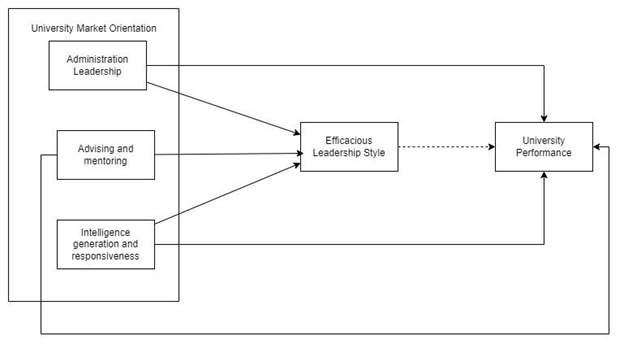
Figure 1 shows the conceptual framework of the study. There is a plethora of studies in the literature that link UP with the degree of MO (Dau & Yussuf, 2022, 2023; Khuwaja, 2018; Muya & Tundui, 2020, 2021, 2023b; Niculescu et al., 2016). Regardless of whether the country was seen as contextually developing or developed, the more authentic, generalizable, and context-specific UNIVERSITY-MARKOR scale was used in this study to assess MO in public higher education institutions (Dau & Yussuf, 2022, 2023; Niculescu et al., 2016).
Conceptual Framework
Method
Study Design
The study employed a quantitative research design (Cresswell, 2014).This design was chosen for several reasons: (1) the research philosophy guiding the study, which is post-positivist; (2) the procedures adopted for the inquiry; (3) the data collection methods, analysis, and interpretation used; and (4) the nature of the phenomenon being investigated, and analysis was done through the use of SMART PLS.
Population, Sampling and Sampling Procedure
The study's target population comprises the university Vice Chancellor/ Rector/ Director, Dean/ Deputy Dean, Chairman/Head of Department and Administration Head in Tanzania. Specifically, the focus is on individuals affiliated with the five largest and oldest public-sector universities in Tanzania (Ardhi University, University of Dar es Salaam, Muhimbili University of Health and Allied Sciences, Mzumbe University and Sokoine University of Agriculture). These universities, known for their extensive range of courses and degree programs, cater to a diverse student and faculty population, representing various socio-economic clusters that collectively mirror all segments and classes within the country's population (TCU, 2021). Experts in market Orientation (MO) assert that a deep understanding of MO is most effectively gained from those who regularly engage with it (Khuwaja, 2018). This rationale underpins the selection of the study's participants. The identified stakeholders are key individuals who are primarily responsible for managing universities.
The choice of a university as the study context is based on their extensive experience with leadership styles in the sub-Saharan African region. The majority of public-sector departments seem to have certain homogenous problems, which is why it is appropriate to concentrate solely on public universities in Tanzania. This situation may allow study results to be applied to public-sector organisations across the nation (Muya & Tundui, 2020). Every Tanzanian public university faces essentially the same challenges, with comparable compensation packages provided (Muya & Tundui, 2021). According to TCU (2023), the total population of these university leaders selected was 170. The researchers employed a multistage stratified sampling technique. In the initial stage, a stratified sampling method was utilized to divide the population into four distinct strata: Vice Chancellor/ Rector/ Director, Dean/ Deputy Dean, Chairman/Head of Department and Administration Head at the university. In the second stage, the study used Krejcie and Morgan's (1970) method to determine the proper sample size. Krejcie and Morgan (1970) state that 118 is the minimum sample size needed for a population of 170. About 200 questionnaires were distributed, and 120 were obtained for data analysis was 120.
Measurement Units
Table 1 offers a concise overview of the measurement instruments employed for the variables under investigation.
A Summarized Description for the Measurement Units of the Study Variables
|
Variables (Measurement Tool) |
Number of items |
Reliability |
Source |
|
University Performance |
13 items |
AVE > 0.5, CR-Coefficient > 0.70, α = 0.89 |
|
|
Market-Orientation (UNIVERSITY-MARKOR) |
22 items |
AVE > 0.5, CR-Coefficient > 0.70, α = 0.90 |
|
|
Efficacious Leadership |
5 items |
AVE > 0.5, CR-Coefficient > 0.70, α = 0.750 |
Results
Measurement Model
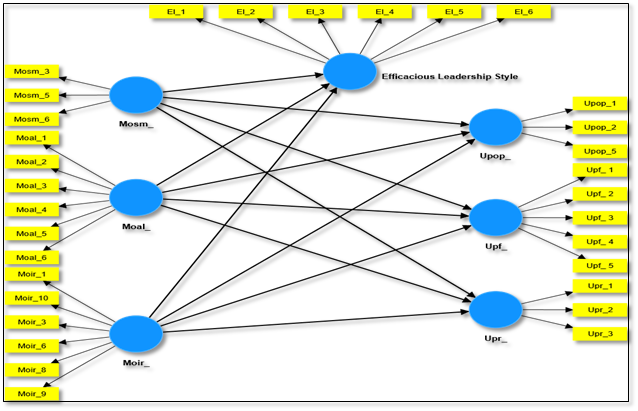
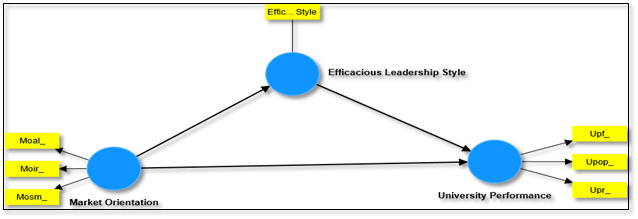
The measurement model was assessed using the PLS-SEM technique (see Figure 2), and the following items—Morr_2, Moir_4, Moir_5, Moir_7, Mosm_1, Mosm_2, Mosm_4, Upop_3, and Upop_4—were eliminated from the study due to low factor loadings. Every item's loading was higher than the suggested level of .7 (Hair et al., 2019). This suggests that the constructs have a high degree of dependability. After convergent validity was examined, it was determined to be acceptable because each construct's average variance extracted (AVE) was greater than .50. Previous research (Agyei et al., 2023; Njegić et al., 2023; Quang Hung et al., 2023; Rossoni et al., 2024) is in agreement with these values and their cut-off points. In Table 2, factor loadings range from -1.0 to +1.0, so the threshold was meet. In Table 2, collinearity assessment was conducted using the VIF inner values to avoid type 1 and 2 errors (Hair et al., 2019). The VIF values were below the recommended value of 5 (Fornell & Cha, 1994) . According to Hair and Alamer (2022) multicollinearity is not a significant concern if the VIF value is below 5. The values ranged from 1.491 to 4.511, indicative of no multicollinearity.
Factor Loadings and results of collinearity assessment
|
Efficacious Leadership Style |
Moal_ |
Moir_ |
Mosm_ |
Upf_ |
Upop_ |
Upr_ |
VIF |
|
|
El_1 |
.83 |
2.63 |
||||||
|
El_2 |
.85 |
3.02 |
||||||
|
El_3 |
.84 |
2.79 |
||||||
|
El_4 |
.83 |
2.45 |
||||||
|
El_5 |
.89 |
4.38 |
||||||
|
El_6 |
.89 |
4.51 |
||||||
|
Moal_1 |
.85 |
3.19 |
||||||
|
Moal_2 |
.87 |
4.01 |
||||||
|
Moal_3 |
.89 |
3.93 |
||||||
|
Moal_4 |
.81 |
2.34 |
||||||
|
Moal_5 |
.88 |
3.57 |
||||||
|
Moal_6 |
.84 |
2.78 |
||||||
|
Moir_1 |
.84 |
3.26 |
||||||
|
Moir_10 |
.86 |
3.01 |
||||||
|
Moir_3 |
.81 |
3.22 |
||||||
|
Moir_6 |
.87 |
3.20 |
||||||
|
Moir_8 |
.76 |
1.92 |
||||||
|
Moir_9 |
.79 |
2.43 |
||||||
|
Mosm_3 |
.90 |
2.61 |
||||||
|
Mosm_5 |
.89 |
2.67 |
||||||
|
Mosm_6 |
.90 |
2.44 |
||||||
|
Upf_ 1 |
.87 |
2.98 |
||||||
|
Upf_ 2 |
.89 |
3.49 |
||||||
|
Upf_ 3 |
.84 |
3.43 |
||||||
|
Upf_ 4 |
.76 |
2.11 |
||||||
|
Upf_ 5 |
.80 |
2.81 |
||||||
|
Upop_1 |
.90 |
2.95 |
||||||
|
Upop_2 |
.90 |
3.01 |
||||||
|
Upop_5 |
.84 |
1.70 |
||||||
|
Upr_1 |
.85 |
3.55 |
||||||
|
Upr_2 |
.88 |
3.84 |
||||||
|
Upr_3 |
.86 |
1.49 |
In Table 3, Cronbach's Alpha values ranged from .84 to .93, and Composite Reliability statistics ranged from .90 to .94. Both of these reliability indicators surpass the necessary threshold of .7 (Crocetta et al., 2021), confirming that construct reliability is established. The AVE value is greater than or equal to the recommended threshold of .50, items converge to measure the underlying construct, thus establishing convergent validity (Fornell & Larker, 1981). Therefore, convergent validity is confirmed.
Construct Reliability Analysis (Cronbach Alpha and Composite Reliability) and AVE
|
Cronbach's alpha |
Composite reliability (rho_c) |
Average variance extracted (AVE) |
|
|
Efficacious Leadership Style |
.92 |
.94 |
.73 |
|
Moal_ |
.93 |
.94 |
.74 |
|
Moir_ |
.90 |
.92 |
.68 |
|
Mosm_ |
.88 |
.93 |
.81 |
|
Upf_ |
.89 |
.92 |
.70 |
|
Upop_ |
.86 |
.91 |
.78 |
|
Upr_ |
.84 |
.90 |
.75 |
In Table 4, bold values represent the square root of AVE.
Discriminant Validity Follen and Lacker Criterion
|
Efficacious Leadership Style |
Moal_ |
Moir_ |
Mosm_ |
Upf_ |
Upop_ |
Upr_ |
|
|
Efficacious Leadership Style |
.86 |
||||||
|
Moal_ |
.33 |
.86 |
|||||
|
Moir_ |
.39 |
.77 |
.82 |
||||
|
Mosm_ |
.57 |
.55 |
.55 |
.90 |
|||
|
Upf_ |
.38 |
.27 |
.37 |
.16 |
.83 |
||
|
Upop_ |
.33 |
.39 |
.46 |
.25 |
.81 |
.88 |
|
|
Upr_ |
.25 |
.35 |
.41 |
.17 |
.71 |
.79 |
.86 |
In Table 5, all items in the table strongly load onto their respective parent constructs rather than onto other constructs in the study. Therefore, based on the evaluation of cross-loadings, discriminant validity is achieved (Crocetta et al., 2021).
Discriminant Validity - Cross Loadings
|
Efficacious Leadership Style |
Moal_ |
Moir_ |
Mosm_ |
Upf_ |
Upop_ |
Upr_ |
|
|
El_1 |
.83 |
.35 |
.36 |
.48 |
.18 |
.15 |
.14 |
|
El_2 |
.85 |
.18 |
.24 |
.45 |
.33 |
.33 |
.27 |
|
El_3 |
.84 |
.26 |
.28 |
.46 |
.42 |
.38 |
.30 |
|
El_4 |
.83 |
.20 |
.36 |
.44 |
.25 |
.21 |
.09 |
|
El_5 |
.89 |
.33 |
.34 |
.54 |
.36 |
.27 |
.23 |
|
El_6 |
.89 |
.35 |
.42 |
.56 |
.40 |
.33 |
.24 |
|
Moal_1 |
.35 |
.85 |
.55 |
.55 |
.20 |
.29 |
.23 |
|
Moal_2 |
.29 |
.87 |
.63 |
.48 |
.25 |
.35 |
.32 |
|
Moal_3 |
.26 |
.89 |
.67 |
.47 |
.19 |
.31 |
.23 |
|
Moal_4 |
.29 |
.81 |
.66 |
.45 |
.14 |
.28 |
.18 |
|
Moal_5 |
.24 |
.88 |
.71 |
.43 |
.23 |
.32 |
.34 |
|
Moal_6 |
.27 |
.84 |
.73 |
.46 |
.35 |
.42 |
.43 |
|
Moir_1 |
.35 |
.66 |
.84 |
.60 |
.35 |
.41 |
.28 |
|
Moir_10 |
.30 |
.65 |
.86 |
.41 |
.38 |
.48 |
.40 |
|
Moir_3 |
.37 |
.67 |
.81 |
.44 |
.32 |
.34 |
.30 |
|
Moir_6 |
.30 |
.67 |
.87 |
.37 |
.30 |
.35 |
.35 |
|
Moir_8 |
.35 |
.59 |
.76 |
.54 |
.18 |
.31 |
.34 |
|
Moir_9 |
.27 |
.58 |
.79 |
.39 |
.30 |
.33 |
.35 |
|
Mosm_3 |
.51 |
.53 |
.52 |
.90 |
.16 |
.24 |
.23 |
|
Mosm_5 |
.46 |
.46 |
.44 |
.89 |
.07 |
.18 |
.06 |
|
Mosm_6 |
.56 |
.49 |
.52 |
.90 |
.18 |
.24 |
.17 |
|
Upf_ 1 |
.32 |
.30 |
.37 |
.14 |
.87 |
.80 |
.61 |
|
Upf_ 2 |
.30 |
.30 |
.38 |
.17 |
.89 |
.68 |
.63 |
|
Upf_ 3 |
.36 |
.17 |
.27 |
.14 |
.84 |
.63 |
.59 |
|
Upf_ 4 |
.33 |
.16 |
.26 |
.18 |
.76 |
.61 |
.56 |
|
Upf_ 5 |
.29 |
.15 |
.21 |
.02 |
.80 |
.64 |
.57 |
|
Upop_1 |
.30 |
.37 |
.38 |
.23 |
.76 |
.90 |
.78 |
|
Upop_2 |
.25 |
.30 |
.40 |
.20 |
.69 |
.90 |
.73 |
|
Upop_5 |
.31 |
.37 |
.42 |
.22 |
.70 |
.84 |
.58 |
|
Upr_1 |
.19 |
.25 |
.30 |
.19 |
.61 |
.73 |
.85 |
|
Upr_2 |
.22 |
.29 |
.27 |
.15 |
.63 |
.74 |
.88 |
|
Upr_3 |
.23 |
.35 |
.44 |
.12 |
.61 |
.61 |
.86 |
As shown in Table 6, the criteria of discriminant validity for measures of different concepts are distinct or not correlate too highly. Figure 2 shows the lower order construct.
Discriminant Validity - HTMT
|
Efficacious Leadership Style |
Moal_ |
Moir_ |
Mosm_ |
Upf_ |
Upop_ |
|
|
Efficacious Leadership Style |
||||||
|
Moal_ |
.35 |
|||||
|
Moir_ |
.42 |
.83 |
||||
|
Mosm_ |
.62 |
.60 |
.61 |
|||
|
Upf_ |
.42 |
.27 |
.40 |
.17 |
||
|
Upop_ |
.36 |
.43 |
.51 |
.28 |
.81 |
|
|
Upr_ |
.27 |
.37 |
.44 |
.21 |
.81 |
.84 |
Lower Order Construct Measurement Model
Validating Higher Order Constructs (HOC)
The higher-order constructs were also validated as part of the measurement model assessment. Each construct was evaluated for reliability and convergent validity. Additionally, as Sarstedt et al. (2024) recommended, the higher-order constructs were tested for discriminant validity against lower-order constructs. The results demonstrated that both reliability and validity for the higher-order constructs were established. For all constructs, reliability was confirmed with values greater than .70, and convergent validity was confirmed with an AVE greater than .50, as shown Table 7. Furthermore, discriminant validity between higher-order and lower-order constructs was assessed. The results using (Fornell & Larker, 1981) criterion indicated that the square root of the AVE for each construct was higher than its correlation with all other constructs. Additionally, the HTMT values were below .90, further establishing discriminant validity (Table 8).
The validity and reliability assessments in Table 7 unequivocally demonstrate the validity and reliability of the data. The next section's testing of the study hypotheses was made possible by these early evaluations.
Higher Order Construct Reliability and Convergent Validity
|
Cronbach's alpha |
Composite reliability (rho_c) |
Average variance extracted (AVE) |
||||
|
Market Orientation |
.83 |
.90 |
.75 |
|||
|
University Performance |
.91 |
.94 |
.84 |
|||
The discriminant validity (DV) in Table 8 was examined using the Fornell-Lacker standard. The square root of the AVE for the constructs was larger than the inter-construct correlation, according to the Fornell-Lacker criterion results. DV is established as a result.
The results of the discriminant validity, HTMT test, are also shown in brackets.
Fornell and Lacker (1981) Criterion – Higher Order Discriminant Validity and HTMT Results in Bracket
|
Efficacious Leadership Style |
Market Orientation |
University Performance |
||
|
Efficacious Leadership Style |
1.00 |
|||
|
Market Orientation |
.50 [.54] |
.86 |
||
|
University Performance |
.35 [.36] |
.40 [.45] |
.92 |
|
Table 9 shows hypothesis testing results:
H1: There is a significant impact of efficacious leadership style on university performance. The results revealed that an efficacious leadership style has no significant effect on university performance:
H2: There is a significant impact on market orientation and efficacious leadership style. The results revealed that market orientation has a significant effect on an efficacious leadership style: .
Direct Relationship Results
|
Original sample (O) |
SD |
t |
p |
|
|
HI: Efficacious Leadership Style -> University Performance |
.19 |
.09 |
2.00 |
.000 |
|
H2: Market Orientation -> Efficacious Leadership Style |
.50 |
.12 |
4.11 |
.000 |
|
Market Orientation -> University Performance |
.30 |
.15 |
2.00 |
.000 |
Table 10 shows H3: There is a mediation effect of efficacious leadership style on the relationship between market orientation and university performance. The results revealed that there was a mediation effect on the relationship between market orientation and university performance: .
Specific Indirect Effects
|
Original sample (O) |
SD |
t |
p |
|
|
H3: Market Orientation -> Efficacious Leadership Style -> University Performance |
.10 |
.06 |
1.55 |
.000 |
The path that is postulated in the research framework is depicted in Figure 3 by the structural model. Paths' relevance is used to evaluate the structural model. The strength of each structural path determines the model's fitness.
Structural Model
Discussion
This finding broadens the application of RBT outside of the conventional corporate setting and into the academic field, especially in poor nations. This is consistent with recent research (Ali et al., 2020; Hikmah et al., 2024; Lee et al., 2020) that examined market orientation in a variety of organizational situations and demonstrated its significant impact on improving performance results. According to recent research, leadership styles have a significant impact on organizational outcomes, such as performance and market orientation (Wahab et al., 2024). In addition, performance and market orientation are mediated by leadership, and different institutional settings may benefit more from different leadership philosophies (Hundie & Habtewold, 2024). These findings are revolutionary as well as pertinent (Nguyen et al., 2023). The findings can help colleges better link their market orientation plans with leadership practices in order to improve performance through strategic management and policy-making (Chandler et al., 2021). This is especially important when it comes to accomplishing the Sustainable Development Goals (SDGs) since improving university performance via strategic leadership and orientation can support high-quality instruction, innovation, and economic expansion. The study's conclusions have a big impact on the academic community as well as the higher education sector as a whole and how it fits within the Sustainable Development Goals (SDGs). Through an analysis of the relationship that exists between leadership styles, university performance, and market orientation at Tanzanian universities (Dau & Yussuf, 2022, 2023; Muya & Tundui, 2019, 2020, 2021, 2023a), this study offers information that can be used by academic institutions anywhere, particularly in developing nations. The study emphasizes how efficacious leadership and a deliberate focus on market orientation can lead to better performance outcomes, which are critical for institutions to remain competitive and sustainable.
One of the study's major accomplishments is the potential for informing methods that make colleges more sustainable in terms of operations and social effects. In higher education, market orientation refers to matching institutional tactics to the demands and requirements of employers, students, and the community at large. A key component of sustainability is ensuring that universities continue to be relevant and sensitive to the requirements of society, which calls for this alignment. According to the study's findings, institutions with a focus on the market are better positioned to improve educational quality and accessibility, which directly supports Goal 4 of the Sustainable Development Goals (SDGs). Universities can improve the employability of their graduates by customizing their curricula to the demands of the labor market by embracing a market-oriented approach (Khuwaja, 2018; Niculescu et al., 2016). As a result, education becomes a more effective tool for social mobility, which in turn promotes economic growth and lowers inequality (SDG 10). The focus on effective leadership style to mediate the relationship between performance and market orientation emphasizes how crucial effective leadership is to bring about long-lasting transformation in educational institutions. Long-term sustainability requires an innovative and adaptable culture, which may be fostered by effective leadership in particular. Prioritizing market orientation means that leaders will probably support actions that cut down on resource waste, raise awareness of environmental issues, and ensure the university's activities align with more general sustainability objectives (SDG 12: Responsible Consumption and Production).
This study is very pertinent to achieving many Sustainable Development Goals. The study emphasizes the function of higher education in promoting sustainable development by showing the connection between market orientation and academic achievement. Universities that are responsive to market needs are better able to foster innovation, support the knowledge economy, and take on important social issues. Universities that are focused on the market tend to be more inventive because they are always trying to satisfy the changing demands of their constituents. SDG 8: Decent Work and Economic prosperity are supported by this innovation, which is essential for both new industry creation and economic prosperity. Universities have the potential to be major players in promoting sustainable economic development by equipping students with the skills required for developing industries. Additionally, the study indicates that institutions with a focus on the market are more likely to interact with the community and take on regional issues. Due to universities' potential to act as centers for research and innovation addressing urban issues including affordable housing, clean energy, and sustainable transportation, their involvement is essential to the achievement of SDG 11: Sustainable Cities and Communities.
Conclusions and Policy Implications
By showing that market orientation typically used in the corporate sector can be viewed as a strategic resource that Tanzanian institutions may use to enhance their performance, the study supports and expands upon the Resource-Based View (RBV). According to RBV, companies can obtain a competitive edge by strategically managing their valuable, uncommon, unique, and non-replaceable resources. The study shows that market orientation is a strategic advantage that helps universities better match their internal strengths with external demands, improving their performance. This is accomplished by applying RBV to the higher education sector. The introduction of RBV into the educational setting highlights how adaptable and useful it is in a variety of fields, especially in developing nations. The link between market orientation and university success and the mediating function of efficacious leadership. The capacity to inspire and motivate staff members to put the needs of the business ahead of their personal self-interest is a hallmark of efficacious leadership. According to the findings, efficacious leaders at Tanzanian institutions play a critical role in converting market-oriented strategies into enhanced performance outcomes. This is consistent with other recent research that highlights the role that leadership plays in promoting organizational change and market orientation. This contributes to the continuous development of RBT in the context of higher education by highlighting the need to develop leadership philosophies that are both effective and sensitive to market forces.
The study also helps to add a new variable: efficacious leadership style as a mediator to the Niculescu model, which is used to assess academic performance at universities using administrative, research, and instructional factors. In particular, in developing markets such as Tanzania, the research proposes a more comprehensive method of evaluating university performance by adding market orientation and leadership as crucial components. This improvement to the Niculescu model offers a more thorough framework for comprehending the intricate processes influencing college achievement in addition to increasing its application in many cultural and economic contexts. This study offers a fresh viewpoint on the function of market orientation in universities, especially in emerging nations. The study challenges the conventional wisdom that universities function independently of market forces by proving that market orientation is not just significant but crucial for university performance. This change in viewpoint calls for a reassessment of how universities interact with their surrounding communities, arguing that market-oriented approaches can provide more long-lasting and significant educational results. The study adds to the continuing discussion over the function of leadership in university administration. Deepening our understanding of how leadership styles impact institutional success, the research demonstrates that efficacious leadership can mitigate the effects of market orientation on performance.
This research has important ramifications for university's leadership development programs, indicating that universities ought to provide special attention to developing leaders with transformative and market-savvy leadership styles. In addition to its theoretical contributions, this study provides useful information that can guide university management and strategic planning, especially in developing nations. In order to make sure that institutional policies are in line with the demands of students, employers, and the larger community, the findings advise legislators and university administrators to prioritize market orientation. The study also emphasizes how critical it is to support efficacious leadership in universities because these leaders are essential to converting market focus into enhanced performance.
Future Research Directions
Although Tanzanian universities are the study's primary emphasis, higher education institutions globally, especially those in emerging markets, can benefit from the findings. Subsequent investigations may delve into utilizing these discoveries in diverse cultural and economic environments, scrutinizing how market orientation and leadership approaches impact university performance and sustainability across varied locales. Studies that compare the effects of market orientation on university performance in various nations could shed light on how broadly applicable the results are. A more thorough understanding of how higher education might promote sustainable development on a global scale may result from this study. Future research could use longitudinal designs to examine how the links between performance, leadership, and market orientation change over time, as this study was cross-sectional. A deeper understanding of the long-term viability of market-oriented initiatives in higher education may result from this.
References
Aboalhool, T., Alzubi, A., & Iyiola, K. (2024). Humane entrepreneurship in the circular economy: The role of green market orientation and green technology turbulence for sustainable corporate performance. Sustainability (Switzerland), 16(6). https://doi.org/1.3390/su16062517
Adeel, S., Daniel, A. D., & Botelho, A. (2023). The effect of entrepreneurship education on the determinants of entrepreneurial behaviour among higher education students: A multi-group analysis. Journal of Innovation and Knowledge, 8(1), 100324. https://doi.org/1.1016/j.jik.2023.100324
Adhikari, D. R., & Shrestha, P. (2023). Knowledge management initiatives for achieving sustainable development goal 4.7: higher education institutions’ stakeholder perspectives. Journal of Knowledge Management, 27(4), 1109–1139. https://doi.org/1.1108/JKM-03-2022-0172
Agyei, P. M., Bukari, C., & Amoah, N. (2023). Market orientation of entrepreneurial university distance education and sustainable competitive advantage relationships: The mediating role of employee engagement. Cogent Social Sciences, 9(1), 1–22. https://doi.org/1.1080/23311886.2023.2198783
Al Azzani, H. A., Mat Jusoh, N., & Abbas, A. (2024). Market and supply chain orientation; dynamic capabilities leading to innovation and operational capabilities. SAGE Open, 14(2), 1–24. https://doi.org/1.1177/21582440241248895
Alanazi, A. M. H. (2024). The Relationship between leadership , knowledge management, innovation and organisational performance in higher education institutions. Educational Administration: Theory and Practice, 30(5), 2160–2166. https://doi.org/1.53555/kuey.v30i5.3253
Alenezi, M. (2023). Digital learning and digital institution in higher education. Education Sciences, 13(1). https://doi.org/1.3390/educsci13010088
Ali, G. A., Hilman, H., & Gorondutse, A. H. (2020). Effect of entrepreneurial orientation, market orientation and total quality management on performance: Evidence from Saudi SMEs. Benchmarking, 27(4), 1503–1531. https://doi.org/1.1108/BIJ-08-2019-0391
Alobaidi, M., & Kitapci, O. (2019). Strategic orientation, market orientation and business performance: In searching for integration, evidence from Turkey. Montenegrin Journal of Economics, 15(3), 53–7. https://doi.org/1.14254/1800-5845/2019.15-3.4
Altaye Bogale, S. (2021). Market orientation and performance of agro-food value chains in developing and emerging markets the case of maize, teff, and beans seed supply chains in Ethiopia [Doctoral dissertation, Wageningen University and Research].
Alzahrani, A. S., Tsai, Y. S., Iqbal, S., Marcos, P. M. M., Scheffel, M., Drachsler, H., Kloos, C. D., Aljohani, N., & Gasevic, D. (2023). Untangling connections between challenges in the adoption of learning analytics in higher education. Education and Information Technologies, 28(4). Springer US. https://doi.org/1.1007/s10639-022-11323-x
Alzghoul, A., B, K. M. A., C, K. K., Amineh, A., Khaddam, D., E, O. A., & Creativity, E. (2023). Nexus of strategic thinking, knowledge-oriented leadership, and employee creativity in higher education institutes. International Journal of Professional Business Review, 1–21. https://doi.org/10.26668/businessreview/2023.v8i4.1107
Asrin, A., Sudirman, S., Makki, M., & Maulyda, M. A. (2024). The leadership of quality strategic for improvement lecture performance toward excellence’s university. Revista de Educacion y Derecho, 29. https://doi.org/1.1344/REYD2024.29.44780
Azizah, Y. N., Rijal, M. K., Rumainur, Rohmah, U. N., Pranajaya, S. A., Ngiu, Z., Mufid, A., Purwanto, A., & Mau, D. H. (2020). Transformational or transactional leadership style: Which affects work satisfaction and performance of islamic university lecturers during COVID-19 pandemic? Systematic Reviews in Pharmacy, 11(7), 577–588. https://doi.org/1.31838/srp.202.7.82
Baltaru, R. (2019). Studies in Higher Education Do non-academic professionals enhance universities ’ performance ? Reputation vs . organisation. Studies in Higher Education, 44(7), 1183–1196. https://doi.org/1.1080/03075079.2017.1421156
Barney, J., Wright, M., & Ketchen, D. J. (2001). The resource-based view of the firm: Ten years after 1991. Journal of Management, 27(6), 625–641. https://doi.org/1.1177/014920630102700601
Btoush, D. Z. (2024). The impact of transformational leadership on organizational performance case study: The University of Jordan. International Journal of Business Excellence, 40(1), 1–16. https://doi.org/1.1504/ijbex.2019.10021401
Buratti, N. (2021). The impact of market orientation on university spin-off business performance. Journal of International Entrepreneurship, 19, 104–129. https://doi.org/10.1007/s10843-020-00282-4
Caruana, A., Ramaseshan, B., & Ewing, M. T. (1998). Do universities that are more market orientated perform better? International Journal of Public Sector Management, 11(1), 55–70.
Caruana, A., Ramaseshan, B., & Ewing, M. T. (1999). Market orientation and performance in the public sector: The role of organizational commitment. Journal of Global Marketing, 12(3), 59–79.
Chandler, N., Heidrich, B., Szászvári, K., & Kása, R. (2021). Reframing market-orientation: A comparative study of the market orientation concept in the subcultures of university employees. Society and Economy, 43(3), 270–288. https://doi.org/1.1556/204.2021.00011
Cresswell, J. W. (2014). Research design:Qualitative, quantitative and mixed methods approaches (4th ed.). Sage Publications.
Crocetta, C., Antonucci, L., Cataldo, R., Galasso, R., Grassia, M. ., Lauro, C. N., & Marino, M. . (2021). Higher-order PLS-PM approach for different types of constructs, social indicators research. Theoretical Sociology: The Future of a Disciplinary Foundation, 154(2), 725–754. https://doi.org/10.1007/s11205-020-02563-w
Dahmiri, D., Junaidi, J., Johannes, J., Yacob, S., & Indrawijaya, S. (2024). The impact of market orientation on marketing performance: exploring the moderating role of competitive advantage. Business: Theory and Practice, 25(1), 164–174. https://doi.org/1.3846/btp.2024.20174
Dau, R. K., & Yussuf, H. A. (2022). Measuring university performance in Tanzania: A comparative analysis of market orientation scales. International Journal of Arts and Humanities, 3(1), 118–13. https://doi.org/1.25082/ijah.2022.01.005
Dau, R. K., & Yussuf, H. A. (2023). Testing MKTOR in Tanzania Universities. Development Research of Management, 18(1), 1–2. https://doi.org/10.19166/derema.v18i1.5947
Deshpande, R., & Farley, J. U. (2004). Organizational culture, market orientation, innovativeness, and firm performance: an international research odyssey. International Journal of Research in Marketing, 21(1), 3–22. https://doi.org/10.1016/j.ijresmar.2003.04.002
Drucker, P. F. (1954). The practice of management. Harper and Row Publishers, Inc.
Febriatmoko, B., Prananta, W., & Wijaya, A. P. (2023). A case study: How does green market orientation impact MSMEs marketing performance through organizational ambidexterity? IOP Conference Series: Earth and Environmental Science, 1248(1), 1–9. https://doi.org/1.1088/1755-1315/1248/1/012022
Fornell, C., & Cha, J. (1994). Partial least squares. Advanced Methods of Marketing Research, 407, 52–78.
Fornell, C., & Larker, D. (1981). Evaluating structural equation models with unobservable variables and measurement error. Journal of Marketing Research, 18(1), 39–50.
Furyanah, A., Suroso, A., & Setyanto, R. P. (2024). Dimensions of entrepreneurial orientation and marketing performance: the moderating effect of market turbulence. Revista de Gestao Social e Ambiental, 18(5), 1–2. https://doi.org/1.24857/rgsa.v18n5-063
Hadi, P. (2023). Business Ecosystem & Strategy Effect of product innovation on SME’s performance: The moderating role of organizational learning and market orientation. International Journal of Business Ecosystem & Strategy, 5(2), 47–54. https://doi.org/10.36096/ijbes.v5i2.405
Hair, J. F., & Alamer, A. (2022). Partial Least Squares Structural Equation Modeling (PLS-SEM) in second language and education research: Guidelines using an applied example. Research Methods in Applied Linguistics, 1(100027.). https://doi.org/10.1016/j.rmal.2022.100027
Hair, J., W., B., B., B., Anderson, R., & Tatham, R. (2019). Multivariate data analysis. Andover, Hampshire, UK.
Hampton, G. M. (2007). Exploring market orientation and performance in the university. Proceedings of the Marketing Educators’ Association, San Antonio, TX, 43–48.
Hikmah, Ratnawati, Tri, A., & Darmanto, S. (2024). The effect of organizational capability, market orientation, and IT adoption on creative industry business performance. Pacific Asia Journal of the Association for Information Systems, 16(1), 103–118. https://doi.org/1.17705/1pais.16106
Hundie, Z. A., & Habtewold, E. M. (2024). The effect of transformational, transactional, and laissez-faire leadership styles on employees’ level of performance: The case of hospital in Oromia Region, Ethiopia. Journal of Healthcare Leadership, 16, 67–82. https://doi.org/1.2147/JHL.S450077
Jameson, J., Barnard, J., Rumyantseva, N., Essex, R., & Gkinopoulos, T. (2023). A systematic scoping review and textual narrative synthesis of trust amongst staff in higher education settings. Studies in Higher Education, 48(3), 424–444. https://doi.org/1.1080/03075079.2022.2145278
Khan, T. A., & Jabeen, N. (2019). Higher education reforms and tenure track in Pakistan: Perspectives of leadership of regulatory agencies. Bulletin of Education and Research, 41(2), 181–205.
Khuwaja, F. M. (2018). The Mediating Role of Innovation in The Relationship Between Market Orientation and University Performance in Pakistan. https://etd.uum.edu.my/7428/
Khuwaja, F. M., Shar, S., Shahikh, S. S., & Umrani, W. A. (2018). The first and second order measurements of context specific market orientation in relation to performance of higher education institutions. International Journal of Advanced and Applied Sciences. https://doi.org/1.21833/ijaas.2018.12.010
Kilic, C., & Chen, R. A. (2023). Individual-level market orientation of healthcare practitioners in the COVID-19 Era. Journal of Marketing Development and Competitiveness, 17(1), 34–46. https://doi.org/1.33423/jmdc.v17i1.5908
Kohli, A. K., & Jaworski, B. J. (1990). Market orientation: The construct, research propositions, and managerial implications. Developing a Market Orientation, 54(2), 1–18. https://doi.org/1.4135/9781452231426.n2
Kohli, A. K., Jaworski, B. J., & Kumar, A. (1993). MARKOR: A measure of market orientation. Journal of Marketing Research, 30(4), 467. https://doi.org/1.2307/3172691
Kolesnik, K., Oliinyk, N., Komarivska, N., Kazmirchuk, N., & Imber, V. (2023). Future-teacher soft skills development in the context of Ukraine’s integration into the European higher education area. International Journal of Learning, Teaching and Educational Research, 22(2), 413–431. https://doi.org/1.26803/ijlter.22.2.23
Kotler, P. (1988). Marketing management. Englewood Cliffs, NJ: Prentice-Hall, Inc.
Krejcie, R. V., & Morgan, D. W. (1970). Determining sample size for research activities. Educational and Psychological Measurement, 30(3), 607–61.
Kyambade, M., Bartazary, D., Namatovu, A., & Tushabe, M. (2024). Authentic leadership and performance of public servants in Tanzania context: the mediation role of motivation. International Journal of Public Leadership, June. https://doi.org/1.1108/IJPL-03-2024-0031
Lee, W. J. (Thomas), O’Cass, A., & Sok, P. (2020). How and when does the brand orientation-market orientation nexus matter? Journal of Business and Industrial Marketing, 35(2), 349–361. https://doi.org/1.1108/JBIM-12-2018-0388
Lessy, Z., Pary, L. K., & Adamek, M. E. (2022). Communication methods for moving from authoritarian to allocative or distributed leadership, in Yogyakarta Province, Indonesia, as Adopted by a High School Principal: A Case Study. Leadership and Policy in Schools, 00(00), 1–23. https://doi.org/1.1080/15700763.2022.2131580
Lin, S. K., & Chung, H. C. (2023). The relationship between entrepreneurial orientation and firm performance from the perspective of MASEM: The mediation effect of market orientation and the moderated mediation effect of environmental dynamism. SAGE Open, 13(4), 1–15. https://doi.org/1.1177/21582440231218804
Lokuwaduge, C. D. S., & Armstrong, A. (2015). The impact of governance on the performance of the higher education sector in Australia. Educational Management Administration and Leadership, 43(5), 811–827. https://doi.org/1.1177/1741143214535740
Macatuno-nocom, N. (2019). Digital leadership practices of select deans in Philippine State universities and colleges : Implications on the 21 st Century Education. International Journal of Global Community, II(1), 1–22.
Maja, C. N., & Fatoki, O. (2024). Entrepreneurial orientation and performance of SMMEs in selected municipalities of Limpopo province: the role market orientation and environmental dynamism. International Journal of Research in Business and Social Science (2147- 4478), 13(3), 17–25. https://doi.org/1.20525/ijrbs.v13i3.2899
Marques, T. M. G., Miska, C., Crespo, C. F., & Branco, M. M. (2023). Responsible leadership during international assignments: a novel approach toward expatriation success. International Journal of Human Resource Management, 34(2), 253–285. https://doi.org/1.1080/09585192.2021.1964571
Masrur, M. (2021). Digital leadership to improve the pedagogical competence of university english lecturers in Samarinda. Journal of Social Studies Education Research, 12(4), 424–446. https://jsser.org/index.php/jsser/article/view/3688
McKimm, J., Ramani, S., Forrest, K., Bishop, J., Findyartini, A., Mills, C., Hassanien, M., Al-Hayani, A., Jones, P., Nadarajah, V. D., & Radu, G. (2023). Adaptive leadership during challenging times: Effective strategies for health professions educators: AMEE Guide No. 148. Medical Teacher, 45(2), 128–138. https://doi.org/1.1080/0142159X.2022.2057288
Migliori, S., Pittino, D., Consorti, A., & Lucianetti, L. (2019). The relationship between entrepreneurial orientation, market orientation and performance in university spin-offs. International Entrepreneurship and Management Journal, September. https://doi.org/1.1007/s11365-017-0488-x
Milfelner, B., Dlačić, J., Snoj, B., & Selinšek, A. (2019). Importance of innovation resources for market orientation – financial performance link: mediating role of proactive market orientation. Naše Gospodarstvo/Our Economy, 65(4), 1–13. https://doi.org/1.2478/ngoe-2019-0015
Mohamad, N. (2019). A study on the factors influencing job performance among administration staffs in Taylor’s University.
Mseti, E., & Kinemo, S. (2023). The influence of ethical guidance on academic staff ’s teaching performance in public universities in Tanzania. International Journal of Governance and Public Policy Analysis (IJGPPA), 05(02), 1–21.
Muya, F., & Tundui, H. (2019). Justifications for undertaking marketing orientation studies in higher learning institutions in Tanzania. In Makerere Journal of Higher Education (Vol. 11, Issue 2, pp. 171–188). https://doi.org/1.4314/majohe.v11i2.7
Muya, F., & Tundui, H. (2020). Strategies for improving the performance of higher learning institutions in Tanzania. International Journal of Social Sciences & Educational Studies, 7(1), 27–41. https://doi.org/1.23918/ijsses.v7i1p27
Muya, F., & Tundui, H. (2021). Challenges of marketing orientation in Tanzania higher learning. Journal of Co-Operative and Business Studies (JCBS), 6(2).
Muya, F., & Tundui, H. (2023a). The effects of marketing orientation on the performance of higher learning institutions in tanzania: Staff and students’ perceptions. In state of the art in Partial Least Squares Structural Equation Modeling (PLS-SEM) methodological extensions and applica. Cham: Springer International Publishing., 409–433.
Muya, F., & Tundui, H. (2023b). The effects of marketing orientation on the performance of higher learning institutions in Tanzania: Staff and students’ perceptions. In state of the art in Partial Least Squares Structural Equation Modeling (PLS-SEM) methodological extensions and applicat. Cham: Springer International Publishing., 409–433.
Mwita, K., & Mrema, G. (2023). The Influence of transformational and transactional leadership on organisational performance: A case of a higher education institution in Tanzania. International Journal Of Humanities Education and Social Sciences (IJHESS), 2(5), 1779–1789. https://doi.org/1.55227/ijhess.v2i5.477
Narh, L., Odoom, R., Mahmoud, M. A., & Tweneboah-Koduah, E. Y. (2023). The symbiotic effect of market orientation and brand orientation on performance of service firms in Ghana. Journal of Brand Management, 30(4), 318–332. https://doi.org/1.1057/s41262-022-00295-5
Narver, J. C., & Slater, S. (1990). The effect of a market orientation on business profitability. Journal of Marketing, 54, 20–35.
Narver, J. C., Slater, S. F., & Tietje, B. (1998). Creating a market orientation. Journal of Market-Focused Management, 2, 241–255. https://doi.org/1.17660/actahortic.2006.704.8
Nawaz Khattak, A., Ullah Irfan, K., Karim, A., Azhar Mughal, M., Waqas, A., Naseer, R., & Imran Khan, M. (2023). Employability skills: Career challenges for fresh Bachelor Of Business Administration (BBA) graduates In Pakistan. Journal of Positive School Psychology, 2023(1), 490–503. http://journalppw.com
Nguyen, P. D., Khoi, N. H., Le, A. N. H., & Ho, H. X. (2023). Benevolent leadership and organizational citizenship behaviors in a higher education context: a moderated mediation model. Personnel Review, 52(4), 1209–1232. https://doi.org/1.1108/PR-04-2021-0234
Niculescu, M., Xu, B., Hampton, G. M., & Peterson, R. T. (2016). Market orientation and its measurement in universities. Administrative Issues Journal: Education, Practice and Research, 3(2), 72-87. https://doi.org/1.5929/2013.3.2.2
Njegić, K., Milanović, V., & Stankov, B. (2023). The drivers of market orientation and its impact on export performance of Serbian firms. Journal of East European Management Studies, 28(1), 9–42. https://doi.org/1.5771/0949-6181-2023-1-9
Nyangarika, A., & Ngasa, Z. J. (2020). Effect of leadership styles on classroom instruction for secondary schools in Tanzania. International Journal Of Advance Research And Innovative Ideas In Education, 6(3), 211–222.
Omowumiodeniyi, E. (2018). Impact of Intellectual Capital on The Performance of Public Universities in Nigeria: Evidence from University Ofilorin [Master's thesis, Kwara State University, Nigeria].
Orbaningsih, D., Pakaja, F., Handhajani, S. B. P., & Nursiswati, A. (2024). The influence of organizational climate and market orientation on business performance with financial literacy and CSR as mediation in MSMEs in Malang City. Revista de Gestao Social e Ambiental, 18(6), 1–16. https://doi.org/1.24857/rgsa.v18n6-043
Quang Hung, B., Thanh Hoai, T., Anh Hoa, T., & Phong Nguyen, N. (2023). Performance implication of management accounting systems in market-oriented firms: Empirical evidence from Vietnam. Cogent Business and Management, 10(3), 1–19. https://doi.org/1.1080/23311975.2023.2251630
Quddus, A., Nugroho, B. S., Hakim, L., Ritaudin, M. S., Nurhasanah, E., Suarsa, A., Karyanto, U. B., Tanjung, R., Hendar, Pratama, V. Y., Awali, H., Mufid, A., Purwanto, A., Fahlevi, M., & Sudargini, Y. (2020). Effect of ecological, servant and digital leadership style influence university performance? Evidence from Indonesian universities. Systematic Reviews in Pharmacy, 11(10), 408–417. https://doi.org/1.31838/srp.202.1.64
Raby, R. L., Fischer, H., & Cruz, N. I. (2023). Community college International Leaders’ sensemaking: Entrepreneurial leadership skills and behavior. Community College Review, 51(1), 52–74. https://doi.org/1.1177/00915521221125822
Rashid, M. A., Kalyar, M. N., & Shafique, I. (2020). Market orientation and women-owned SMEs performance: The contingent role of entrepreneurial orientation and strategic decision responsiveness. South Asian Journal of Business Studies, 9(2), 215–234. https://doi.org/1.1108/SAJBS-02-2019-0032
Rossoni, A. L., de Vasconcellos, E. P. G., & Sbragia, R. (2024). Influence of social capital, market orientation, and technological readiness on researchers’ interactions with companies. Future Business Journal, 10(1). https://doi.org/1.1186/s43093-024-00359-9
Saastamoinen, J., Reijonen, H., & Tammi, T. (2021). SMEs’ market orientation toward public sector customers in public procurement. International Journal of Public Sector Management, 34(1), 1–16. https://doi.org/1.1108/IJPSM-05-2020-0131
Sarstedt, M., Adler, S. J., Ringle, C. ., Cho, G. Diamantopoulos, A.Hwang, H., & Liengaard, B. D. . (2024). Same model, same data, but different outcomes: Evaluating the impact of method choices in structural equation modeling. Journal of Product Innovation Management, Forthcoming. https://doi.org/10.1111/jpim.12738
Sarwar, U., Zamir, S., Fazal, K., Hong, Y., & Yong, Q. Z. (2022). “Impact of leadership styles on innovative performance of female leaders in Pakistani Universities.” PLoS ONE, 17(5 May). https://doi.org/1.1371/journal.pone.0266956
Sawaean, A. A., & Ali, K. (2020). The impact of entrepreneurial leadership and learning orientation on organizational performance of SMEs : The mediating role of innovation capacity. Management Science Letters, 10, 369–38. https://doi.org/1.5267/j.msl.2019.8.033
Shapiro, B. P. (1988). What the Hell is ‘Market-Ori- ented’? Harvard Business Review, 66, 119–125.
Sibawaihi, S., & Fernandes, V. (2023). Globalizing higher education through internationalization and multiculturalism: The case of Indonesia. Higher Education Quarterly, 77(2), 232–245. https://doi.org/1.1111/hequ.12391
Sisay, D. T., Verhees, F. J. H. M., & van Trijp, H. C. M. (2023). Market orientation practices of Ethiopian seed producer cooperatives. Humanities and Social Sciences Communications, 10(1). https://doi.org/1.1057/s41599-023-02156-1
Siswanto, I., Wu, M., Ma, H., Arifin, Z., Solikin, M., & Widyianto, A. (2023). The characteristics of efficacious leader in higher education: A literature review. Journal of Education and Learning (EduLearn), 17(1), 145–157. https://doi.org/10.11591/edulearn.v17i1.20486
Sullivan, J. (2011). Global leadership in higher education administration: Perspectives on internationalization by university presidents, vice-presidents and deans. University of South Florida.
Supriyanto, A. S., Ekowati, V. M., Rokhman, W., Ahamed, F., Munir, M., & Miranti, T. (2023). Empowerment leadership as a predictor of the organizational innovation in higher education. International Journal of Professional Business Review, 8(2), 1–21. https://doi.org/1.26668/businessreview/2023.v8i2.1538
Tanveer, M. (2020). Rankings and performance in higher education: Pakistan’ s perspective (Issue January). Libraries at University of Nebraska-Lincoln
TCU. (2021). List of Approved University Institutions in Tanzania as of 30th April, 2021. Tanzania Commission for Universities Report.
TCU. (2023). Vital Stats on University Education in Tanzania 2022. In The Tanzania Commission for Universities. https://doi.org/1.1080/07311768308800049
Todea, S., Davidescu, A. A., Pop, N. Al, & Stamule, T. (2022). Determinants of student loyalty in higher education: A structural equation approach for the Bucharest University of Economic Studies, Romania. International Journal of Environmental Research and Public Health, 19(9). https://doi.org/1.3390/ijerph19095527
Trevisan, L. V., Eustachio, J. H. P. P., Dias, B. G., Filho, W. L., & Pedrozo, E. Á. (2023). Digital transformation towards sustainability in higher education: state-of-the-art and future research insights. Environment, Development and Sustainability, 0123456789. https://doi.org/1.1007/s10668-022-02874-7
Wahab, A. (2016). Factors determining perceived job performance of university leaders in Pakistan. Universiti Utara Malaysia.
Wahab, A., & Tyasari, I. (2020). Entrepreneurial leadership for university leaders : A futuristic approach for Pakistani HEIs. Asia Pacific Management Review, 25(1), 54–63. https://doi.org/1.1016/j.apmrv.2019.09.002
Wahab, F. A., Subramaniam, A., Ho, J. A., & Bali Mahomed, A. S. (2024). Augmenting effect of inclusive and ambidextrous leadership on public university academic staffs’ innovative performance: The mediating role of innovative work behavior. SAGE Open, 14(1), 1–16. https://doi.org/1.1177/21582440241232761
Wijaya, A. F., Supriyono, B., & Dewi, P. I. (2019). Effect of good university governance and organizational commitment on the performance of private higher education institution. Advances in Economics, Business and Management Research, 93(AICoBPA 2018), 169–173. https://doi.org/1.2991/aicobpa-18.2019.39
Xie, X., Janssen, J., Beach, P., Perreault, M., Beelen, J., & van Tartwijk, J. (2023). The effectiveness of Collaborative Online International Learning (COIL) on intercultural competence development in higher education. International Journal of Educational Technology in Higher Education, 20(1). https://doi.org/1.1186/s41239-022-00373-3
Yang, M., Al Mamun, A., & Salameh, A. A. (2023). Leadership, capability and performance: A study among private higher education institutions in Indonesia. Heliyon, 9(1), e13026. https://doi.org/1.1016/j.heliyon.2023.e13026
Yudianto, I., Mulyani, S., Fahmi, M., & Winarningsih, S. (2021). The influence of good university governance and intellectual capital on university performance in Indonesia. Academic Journal of Interdisciplinary Studies, 10(1), 57–7. https://doi.org/1.36941/ajis-2021-0006
Zaim, H., Erzurum, E., Zaim, S., Uluyol, B., & Seçgin, G. (2024). The influence of Islamic leadership on work performance in service industry: an empirical analysis. International Journal of Ethics and Systems, 40(1), 127–152. https://doi.org/1.1108/IJOES-12-2021-0242
Zebal, M. A., Sharif, T. R., Crumbly, J., & Zebal, A. (2023). The role of internal market orientation on the adoption of external market orientation in retail banking. Journal of Research in Marketing and Entrepreneurship, 25(2), 203–222. https://doi.org/1.1108/JRME-09-2021-0128

Page 1 of
Download Count : 34
Visit Count : 105
Keywords
Efficacious Leadership Style; Market Orientation; University Performance; Tanzania


Author(s) Information


How to cite this article
Robson, W., & Mushi, H. M. (2025). Market orientation and university performance in Tanzania: mediating efficacious leadership style. Studies in Educational Management, 17, 17-43. https://doi.org/10.32038/sem.2025.17.02
Acknowledgments
Not applicable.
Funding
Not applicable.
Conflict of Interests
No, there are no conflicting interests.
Open Access
This article is licensed under a Creative Commons Attribution 4.0 International License, which permits use, sharing, adaptation, distribution and reproduction in any medium or format, as long as you give appropriate credit to the original author(s) and the source, provide a link to the Creative Commons license, and indicate if changes were made. You may view a copy of Creative Commons Attribution 4.0 International License here: http://creativecommons.org/licenses/by/4.0/