







Case Study
Perceived Multinational Tax-Evasion Practices and Government Interventions in Ghana: Direct Associations with Tax Revenue Mobilisation and Predictive Assessment


- Abstract
- Full text
- Metrics
Tax revenue mobilisation depends partly on the relationship between corporate tax practices and the measures used by governments to administer and enforce tax obligations. This study examines the direct relationships between professionals’ perceptions of multinational tax-evasion practices, government interventions and tax revenue mobilisation in Ghana. Using a quantitative, cross-sectional survey design, the study analysed 337 usable responses from tax officers, accountants, finance managers and auditors. The data were analysed in SmartPLS 4 using PLS-SEM and 5,000 bootstrap subsamples. Tax-evasion practices were negatively associated with tax revenue mobilisation, while government interventions were positively associated with perceived tax revenue mobilisation. The study’s principal contribution is its direct-effects assessment of these two relationships, complemented by predictive evaluation and importance-performance analysis to examine the model’s explanatory and practical relevance. The results indicate that both perceived tax-evasion practices and government interventions are important to professionals' perceptions of tax revenue mobilisation. Causal inference and generalisability are restricted by the cross-sectional, purposive and self-reported data. Findings are based on perceptions, not actual tax revenue or tax evasion.
Perceived Multinational Tax-Evasion Practices and Government Interventions in Ghana: Direct Associations with Tax Revenue Mobilisation and Predictive Assessment
Elizabeth Dede Pardie1, Mensah Marfo*2, Edward Annan3, Ruby Norkor Noi4
1,4Accra Institute of Technology (AIT), Department of Business, Accra, Ghana
2KAAF University, Department of Business Administration and Education, Accra, Ghana
3University of Gold Coast, Department of Business Administration and Education, Accra, Ghana
ABSTRACT:
Tax revenue mobilisation depends partly on the relationship between corporate tax practices and the measures used by governments to administer and enforce tax obligations. This study examines the direct relationships between professionals’ perceptions of multinational tax-evasion practices, government interventions and tax revenue mobilisation in Ghana. Using a quantitative, cross-sectional survey design, the study analysed 337 usable responses from tax officers, accountants, finance managers and auditors. The data were analysed in SmartPLS 4 using PLS-SEM and 5,000 bootstrap subsamples. Tax-evasion practices were negatively associated with tax revenue mobilisation, while government interventions were positively associated with perceived tax revenue mobilisation. The study’s principal contribution is its direct-effects assessment of these two relationships, complemented by predictive evaluation and importance-performance analysis to examine the model’s explanatory and practical relevance. The results indicate that both perceived tax-evasion practices and government interventions are important to professionals' perceptions of tax revenue mobilisation. Causal inference and generalisability are restricted by the cross-sectional, purposive and self-reported data. Findings are based on perceptions, not actual tax revenue or tax evasion.
KEYWORDS: Multinational Tax-Evasion Perceptions, Government Interventions, Tax Revenue Mobilisation, Direct Effects, Predictive Assessment, Ghana
Tax evasion by multinational companies refers to deliberate practices that reduce the tax a group pays in a host country below the amount the law requires, including understatement of taxable income, incomplete reporting of taxable transactions, expense classification designed to shrink the tax base, mispriced intra-group transactions and the routing of profit through low-tax jurisdictions (Alstadsæter et al., 2022; Sebele-Mpofu et al., 2021). The distinction between aggressive tax avoidance and evasion is not always clear. Arrangements that begin as lawful tax planning may involve evasion when companies misrepresent documents or use transfer prices that depart substantially from arm’s length values (Cooper & Nguyen, 2020; Kovermann & Velte, 2019). Tax avoidance, by contrast, reduces tax through means that remain within the letter of the law, including aggressive planning and profit shifting, whereas evasion breaches the law through misreporting, concealment or misclassification (Alstadsæter et al., 2022; Slemrod, 2019). This study keeps the two concepts distinct throughout. Its focus is perceived evasion practices. Where it draws on research on avoidance and profit shifting, that research is used as context on the revenue stakes of multinational tax behaviour, not as direct evidence of evasion. This study examines the reported frequency of such practices among professionals familiar with corporate tax affairs.
Tax revenue mobilisation refers to a government’s ability to collect taxes effectively through accurate reporting, timely payment and efficient administration (Akitoby et al., 2020; Mawejje & Sebudde, 2019). Many Sub-Saharan African countries collect less revenue than their economies could potentially generate, with tax-to-GDP ratios remaining insufficient to meet public spending needs without substantial borrowing (Gwaindepi, 2021; Tolossa & Melese, 2024). Ghana faces similar difficulties, with tax collection lagging behind that of many lower-middle-income countries (Tefuttor et al., 2025). The 2023 IMF programme further highlighted the importance of strengthening domestic revenue mobilisation.
Multinational tax practices contribute to these concerns, as lower-income countries lose a greater share of revenue to multinational profit shifting than wealthier economies (Janský & Palanský, 2019; Johannesen et al., 2020). Ghanaian enforcement officers also report continuing concerns about multinational tax evasion (Ofori & Appiah, 2025). These losses constrain public spending on services, infrastructure and social protection. Research across African countries has associated higher tax revenue with lower poverty and unemployment (Ajeigbe et al., 2024). Foreign direct investment has also been linked to economic and social sustainability in sub-Saharan Africa (Slimani et al., 2024). For Ghana, ensuring that multinational companies pay the taxes they owe is important for maintaining public revenue and supporting sustainable development.
Multinational companies carry disproportionate weight in that effort. They supply a large share of corporate income tax in developing economies, and operations spread across jurisdictions with different rates and enforcement capacities give them opportunities that purely domestic firms do not have (Bilicka, 2019; Johannesen et al., 2020).
Profit shifting to tax havens, much of it legal tax avoidance rather than evasion, removes an estimated 40 percent of multinational profits from the countries where they are generated, with lower-income countries losing a greater percentage of revenue to tax havens than high-income countries (Beer et al., 2020; Janský & Palanský, 2019; Tørsløv et al., 2023).
Evidence from South Africa and Vietnam also points to profit shifting through intra-firm transactions (Le & Zamarian, 2025; Wier, 2020); such shifting is avoidance when prices are defensible and becomes evasion when they depart substantially from arm's length values or are misreported. In Ghana, tax evasion was estimated at one-fifth of GDP between 1990 and 2015 (Amoh & Adafula, 2019). Enforcement officers have also reported cases involving multinational tax evasion and money laundering, although bureaucratic delays hinder intelligence sharing (Ofori & Appiah, 2025).
Government interventions, in this study, are the measures a tax administration employs to detect, deter and correct non-compliance, together with measures that make compliance easier: audits, penalties, monitoring, digital filing and invoicing systems, guidance, reminders and requirements to submit information for verification (Okunogbe & Santoro, 2023; Slemrod, 2019). Evidence on their effect is encouraging though uneven. Electronic invoicing raised reported VAT liabilities in Peru (Bellon et al., 2022), electronic filing cut bribery and compliance costs in Tajikistan (Okunogbe & Pouliquen, 2022), and in Rwanda electronic invoicing raised VAT compliance chiefly by making audits more efficient (Kotsogiannis et al., 2025). Studies in China link information-based tax enforcement to lower corporate tax avoidance, including avoidance involving tax havens (Li et al., 2020; Xiao & Shao, 2020; Xu, 2026). However, semi-autonomous revenue authorities in Sub-Saharan Africa have not consistently improved tax collection (Dom, 2019). Technology is also less effective when tax administrations lack the capacity to act on available information, and unsuccessful audits may weaken future compliance (Kasper & Alm, 2022; Okunogbe & Santoro, 2023).
The Ghana Revenue Authority has introduced electronic filing and an electronic VAT invoicing system from 2022 and successive compliance programmes, while multinational operations remain concentrated in mining, oil and gas, telecommunications, banking and manufacturing, sectors where intra-group transactions are common, and transfer pricing exposure is high. Domestic compliance research has concentrated on small and medium enterprises, examining religiosity, state legitimacy, compliance costs, trust and enforcement (Ababio & Gnonsio, 2021; Carsamer & Abbam, 2023; Kumi et al., 2024; Tefuttor et al., 2025). Despite existing research on profit shifting and tax enforcement, limited attention has been given to how multinational tax evasion and government interventions jointly relate to tax revenue mobilisation, particularly in African economies. Evidence based on the experiences of professionals familiar with multinational tax practices also remains limited.
This study draws on economic deterrence theory, which explains how the likelihood of detection and penalties can discourage tax evasion (Alm, 2019; Alm & Malézieux, 2021), and the slippery slope framework, which emphasises how enforcement power and taxpayer trust promote compliance (Batrancea et al., 2019; Kogler et al., 2023).
This study builds on these views by exploring the relationship between perceived multinational tax evasion and government interventions affecting tax revenue mobilisation in Ghana, and the predictive power of the model and the relative importance and performance of the indicators.
The study builds on existing literature by focusing on the unique links between perceived multinational tax evasion, government interventions and tax revenue mobilisation in Ghana. It includes both in the same model, offering evidence of their relative explanatory and predictive power and, therefore, a deeper understanding of tax revenue mobilization beyond studying tax evasion or government action alone.
Theoretical Review
Economic Deterrence Theory (EDT)
The theory assumes taxpayers weigh the benefits of evasion against potential penalties. The greater the chance of being audited and the more stringent the sanctions, the more likely it is that there will be compliance. However, experiments have shown that audits and fines can raise compliance, albeit with mixed results across contexts (Alm & Malézieux, 2021).
Field studies also show that revenue-officer visits increase tax payments and spill over to other firms, and that successful audits can lead to improved future compliance (Boning et al., 2020; Kasper & Alm, 2022). Third-party information and credible enforcement also make a difference in explaining differences in compliance (Alm, 2019; Slemrod, 2019). When applied to this study, the theory implies that credible enforcement can deter multinationals from evading taxes and facilitate revenue mobilisation by detecting and recovering unpaid taxes. However, the theory does not fully explain voluntary compliance or the contribution of taxpayer services.
Slippery Slope Framework (SSF)
The framework is based on two aspects: the capacity of tax authorities to enforce tax compliance and punish tax evaders; and taxpayers' confidence in the tax authorities' fairness and competence. Both factors are linked to higher compliance rates in 44 countries (Batrancea et al., 2019), and similar links exist across institutional settings (Kogler et al., 2023). The framework is relevant to this study because the government interventions examined include taxpayer support, such as guidance, reminders and digital systems, as well as enforcement measures like audits and penalties. Therefore, cooperative engagement, alongside credible enforcement, may be especially pertinent for larger taxpayers (Gangl & Torgler, 2020). In Ghana, the relationships between authority power and enforced compliance, as well as between trust and voluntary compliance, have been found (Kumi et al., 2024). On the other hand, corruption and poor governance can negatively impact tax morale (Jahnke & Weisser, 2019; Sebele-Mpofu, 2020). The framework focuses on the importance of enforcement and effective taxpayer support.
Empirical Review and Hypotheses Development
Multinational Companies’ Tax Evasion (TE) and Tax Revenue Mobilisation (TRM)
Studies link multinational profit shifting, which largely reflects tax avoidance, to reduced tax revenue, particularly in lower-income countries (Janský & Palanský, 2019; Johannesen et al., 2020; Tørsløv et al., 2023). The gap between where companies conduct business and where they report profits is a major concern (Cobham & Janský, 2019; Garcia-Bernardo et al., 2021). Common practices include transfer pricing, debt shifting and treaty shopping (Beer et al., 2020). Evidence from South Africa, the United Kingdom and Vietnam also points to differences between foreign-owned companies’ economic activities and reported taxable income (Bilicka, 2019; Le & Zamarian, 2025; Wier, 2020).
Disclosure and information-sharing measures may help address these practices. Country-by-country reporting has been linked to changes in income shifting (Joshi, 2020), while disclosure requirements affect investment decisions and multinational group structures (De Simone & Olbert, 2022). Automatic information exchange has also influenced offshore bank deposits (Casi et al., 2020). However, complex corporate structures can make revenue losses difficult to detect through routine random audits (Alstadsæter et al., 2022). Because most of this evidence concerns avoidance, it shows the revenue stakes of multinational tax behaviour rather than the effect of evasion itself. Direct evidence on evasion is scarcer and comes mainly from investigations and enforcement records (Alstadsæter et al., 2022; Ofori & Appiah, 2025). As evasion is unlawful and concealed, it is expected to reduce collected revenue at least as directly as avoidance does. Evidence on how perceived multinational tax evasion relates to revenue mobilisation in Ghana remains limited.
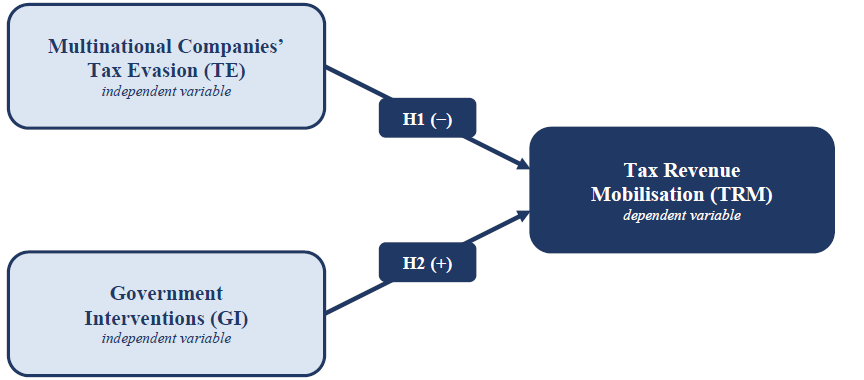
H1: Perceived multinational tax-evasion practices are negatively associated with perceived tax revenue mobilisation in Ghana.
Government Interventions (GI) and Tax Revenue Mobilisation (TRM)
Studies have established a connection between tax audits and improved revenue collection (Appiah et al., 2025; Inegbedion & Okoye-uzu, 2024; Tolossa & Melese, 2024). Revenue reforms typically include both policy shifts and administrative reforms (Akitoby et al., 2020). In addition to this, several other studies confirm that tax reforms in Peru, Ethiopia and China have led to higher taxes (Bellon et al., 2022; Li et al., 2020; Mascagni et al., 2021), and a drop in audit resources can make tax enforcement more difficult (Nessa et al., 2020). But technology will not be enough. Enforcement capacity is an important determinant of revenue collection (Bergeron et al., 2024), while electronic invoicing can help to improve audit efficiency (Kotsogiannis et al., 2025). In China, modernised administration has been shown to reduce corporate tax avoidance (Xu, 2026; Yuan & Bai, 2025); however, easier information disclosure may lead to capital flows towards jurisdictions with weaker enforcement (Wang & Fang, 2025). Greater institutional strength has also been linked to less illicit financial outflows in Africa (Jeke et al., 2025). Evidence remains mixed. The registration of small businesses can generate less revenue (Moore, 2023), and administrative shortcomings and customs corruption have limited revenue performance in Rwanda and Madagascar (Chalendard et al., 2023; Mascagni et al., 2023). This evidence suggests that the contribution of government interventions depends on effective implementation.
H2: Government interventions are positively associated with perceived tax revenue mobilisation in Ghana.
Conceptual Framework
The conceptual framework connects three constructs. The independent variables are Multinational Companies' Tax Evasion (TE) and Government Interventions (GI), while Tax Revenue Mobilisation (TRM) is the dependent variable. The constructs are shown in Figure 1.
Conceptual Framework
Conceptualisation and Operationalisation of Variables
All three constructs were specified as reflective and measured with eight indicators each. The TE construct was defined as perceived evasion, that is, practices that reduce tax below the legally required amount through understatement, incomplete reporting, misclassification or concealment. Sources on avoidance were used only to identify the channels through which such practices operate. Each item was worded for Ghanaian conditions, drawing on the definitions given in the sources cited in Table 1.
Conceptualisation and Operationalisation of Variables
|
Constructs |
Indicators |
Source |
Code |
|
Multinational Companies’ Tax Evasion (TE) |
Reporting of taxable income below actual income |
TE1 |
|
|
|
Use of accounting arrangements to reduce taxable obligations |
|
TE2 |
|
|
Incomplete reporting of taxable transactions |
TE3 |
|
|
|
Classification of expenses to reduce the taxable amount |
|
TE4 |
|
|
Use of cross-country differences in tax rules |
TE5 |
|
|
|
Adjustment of financial information when computing tax payable |
|
TE6 |
|
|
Complex financial arrangements that reduce tax liabilities |
|
TE7 |
|
|
Tax considerations in the reporting of business transactions |
|
TE8 |
|
Tax Revenue Mobilisation (TRM) |
Effective collection increasing funds for public services |
TRM1 |
|
|
|
Timely payment of applicable taxes |
|
TRM2 |
|
|
Accurate reporting to improve government revenue |
TRM3 |
|
|
|
Records supporting accurate determination of obligations |
|
TRM4 |
|
|
Timely payments raising revenue collected |
TRM5 |
|
|
|
Response to assessments within required periods |
|
TRM6 |
|
|
Efficient administration improving collection |
|
TRM7 |
|
|
Provision of financial information for assessment |
|
TRM8 |
|
Government Interventions (GI) |
Regular tax audits encouraging compliance |
GI1 |
|
|
|
Tax information and guidance from government agencies |
|
GI2 |
|
|
Sufficiency of penalties for non-compliance |
GI3 |
|
|
|
Monitoring activities of tax authorities |
|
GI4 |
|
|
Digital tax systems improving monitoring |
GI5 |
|
|
|
Reminders and notifications on tax obligations |
|
GI6 |
|
|
Adequacy of policy measures for monitoring multinationals |
|
GI7 |
|
|
Information requirements for tax verification |
|
GI8 |
Note. TE1 to TE4 and TE6 describe misreporting and misclassification, which constitute evasion. TE5, TE7 and TE8 describe practices that may also be lawful avoidance; they are interpreted here as the evasion end of the avoidance-evasion continuum, and this is acknowledged in limitation Section.
Source: Authors’ compilation (2026).
Method
Research Design and Approach
This study adopted a quantitative, explanatory design and a positivist approach to examine the relationships between multinational Tax Evasion (TE), Government Interventions (GI) and Tax Revenue Mobilisation (TRM). The cross-sectional design supports conclusions about associations, not causality.
Sampling
The study targeted Ghanaian professionals involved in multinational companies’ tax affairs, including company finance and tax staff, tax consultants, accounting and audit practitioners, and Ghana Revenue Authority (GRA) officers in greater Accra. Purposive sampling was used because no comprehensive public register identifies professionals with direct experience in multinational taxation.
A total of 500 questionnaires were distributed through multinational companies, professional firms and GRA large-taxpayer offices. After screening, 337 usable responses were retained, giving a 67.4% response rate, which compares well with organisational surveys (Holtom et al., 2022).
The sample was considered adequate using the inverse square root method (Kock & Hadaya, 2018), which showed that a minimum of about 212 respondents were needed, and G*Power analysis (two predictors, f² = .15, α = .05, power = .95), which showed that 107 respondents were needed. Both estimates were below the final sample of 337.
Non-response bias remains possible because the views of the 163 individuals who did not provide usable responses were not assessed. The findings may not generalise beyond the surveyed professionals.
Data Collection and Instruments
The questionnaire comprised four sections: respondent characteristics (A), Tax Evasion (TE), Tax Revenue Mobilisation (TRM) and Government Interventions (GI) (B–D). Each construct had eight items measured on a five-point Likert scale (1 = Strongly Disagree; 5 = Strongly Agree; 3 = Not sure). Evasion items referred to company practices generally to reduce reluctance to disclose sensitive information. The questionnaire included informed consent and took 10–40 minutes to complete. Data were collected from purposively selected professionals involved in multinational tax affairs in Greater Accra between June and August 2026.
Data Analysis Technique
SmartPLS 4 was used to assess the measurement and structural models (Ringle et al., 2024). PLS-SEM supports the analysis of multi-item constructs and predictive performance (Hair et al., 2019). Reliability and validity were assessed using standard PLS-SEM criteria (Franke & Sarstedt, 2019). Model performance was assessed using R², f² and PLS predict (Shmueli et al., 2019).
Model Specification
The empirical model is expressed as:
TRMi = β0 + β1TEi + β2GIi + εi
where TRMi, TEi and GIi are Tax Revenue Mobilisation, Multinational Companies’ Tax Evasion and Government Interventions reported by respondent i; β0 is the intercept; β1 and β2 are the path coefficients; and εi is the error term. In line with H1 and H2, β1 is expected to be negative and β2 positive.
Diagnostics Check
Endogeneity, collinearity, and common method bias were checked before interpreting the structural paths.
Endogeneity Assessment
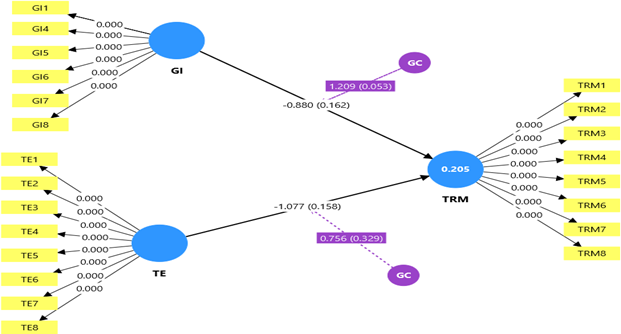
Endogeneity was assessed using the Gaussian copula approach (Table 2). Neither government interventions (p = .05) nor multinational tax evasion (p = .32) was significant at the 5% level, although the former result warrants caution.
Endogeneity Test
|
Constructs |
Original sample (O) |
M |
SD |
t |
p |
Decision |
|
GC (GI -> TRM) -> TRM |
1.20 |
0.82 |
0.62 |
1.93 |
0.053 |
Not Significant |
|
GC (TE -> TRM) -> TRM |
0.75 |
0.27 |
0.77 |
0.97 |
0.329 |
Not Significant |
Figure 2 shows the copula-augmented model. Because the copula term for government interventions is close to significance, endogeneity cannot be ruled out completely, and the structural estimates are interpreted cautiously.
Endogeneity Test Diagram
Common Method Bias
The inner-model VIF values of 1.01 for both predictors (reported with the measurement, effect size and explained variance results in Table 3) show that collinearity between tax evasion and government interventions does not distort the structural estimates. They are not, however, evidence that common method bias is absent. Because all constructs were measured with the same self-administered questionnaire, procedural remedies were applied when the instrument was designed and administered (Kock et al., 2021; Podsakoff et al., 2024). Respondents were assured of anonymity and confidentiality and were told that responses would not be linked to individuals or organisations, which reduces social desirability pressure. The predictor and outcome constructs were placed in separate sections with their own instructions, which creates psychological separation between them. Evasion items referred to company practices in general rather than to the respondent's own employer, to reduce reluctance to report sensitive behaviour. As a statistical check, full collinearity VIFs computed from the construct correlations were 1.154 for GI, 1.14 for TE and 1.23 for TRM, well below the threshold of 3.3 (Kock, 2015). The weak correlation between the two predictors (r = .11) also argues against a strong common method factor, which would tend to inflate all correlations. These checks reduce, but do not eliminate, the possibility of common method bias. The data remain self-reported perceptions that may be affected by social desirability, recall, and consistency biases, and this is acknowledged in the limitations section.
Results
This section provides the measurement model, predictive assessment and structural results for the 337 respondents.
Measurement Model: Factor Loadings
All indicators load above the .70 benchmark (Hair et al., 2019). Loadings for GI run from .74 (GI7) to .82 (GI3), for TE from .74 (TE8) to .82 (TE4), and for TRM from .74 (TRM3) to .81 (TRM6).
Construct Reliability and Validity
Table 3 indicates good reliability, with Cronbach’s alpha (.91–.91), rho_a (.91–.91) and rho_c (.92–.92) within acceptable limits (Hair et al., 2019). AVE values (.61–.61) are above .50, which indicates convergent validity.
Table 3 also reports the structural model statistics. The inner-model VIF values of 1.01 for both predictors indicate that collinearity between TE and GI does not distort the structural estimates. TE and GI explain 19.2% of the variance in TRM (R² = .19; adjusted R² = .18), a modest explanatory power, because the model considers only two predictors, while other factors that influence revenue mobilisation, such as macroeconomic conditions, tax policy and domestic taxpayer behaviour, are not considered. The f² values of .13 for GI and .12 for TE are below the medium-effect threshold (.15) but above the small-effect threshold (.02).
Construct Reliability, Validity, Inner VIF, Effect Size (f²) and R²
|
Constructs/Indicators |
Factor Loadings |
Cronbach’s alpha |
rho_a |
rho_c |
AVE |
|
Government Interventions |
|
.91 |
.91 |
.92 |
.61 |
|
GI1 |
.76 |
|
|
|
|
|
GI2 |
.78 |
|
|
|
|
|
GI3 |
.82 |
|
|
|
|
|
GI4 |
.80 |
|
|
|
|
|
GI5 |
.77 |
|
|
|
|
|
GI6 |
.78 |
|
|
|
|
|
GI7 |
.74 |
|
|
|
|
|
GI8 |
.81 |
|
|
|
|
|
Multinational Companies’ Tax Evasion |
|
.91 |
.91 |
.92 |
.61 |
|
TE1 |
.78 |
|
|
|
|
|
TE2 |
.78 |
|
|
|
|
|
TE3 |
.78 |
|
|
|
|
|
TE4 |
.82 |
|
|
|
|
|
TE5 |
.79 |
|
|
|
|
|
TE6 |
.78 |
|
|
|
|
|
TE7 |
.77 |
|
|
|
|
|
TE8 |
.74 |
|
|
|
|
|
Tax Revenue Mobilisation |
|
.91 |
.91 |
.92 |
.61 |
|
TRM1 |
.80 |
|
|
|
|
|
TRM2 |
.80 |
|
|
|
|
|
TRM3 |
.74 |
|
|
|
|
|
TRM4 |
.75 |
|
|
|
|
|
TRM5 |
.79 |
|
|
|
|
|
TRM6 |
.81 |
|
|
|
|
|
TRM7 |
.77 |
|
|
|
|
|
TRM8 |
.78 |
|
|
|
|
|
Structural model |
Inner VIF |
f² |
R² |
R² adjusted |
|
|
GI -> TRM |
1.01 |
.13 |
|
|
|
|
TE -> TRM |
1.01 |
.12 |
|
|
|
|
Tax Revenue Mobilisation |
|
|
.19 |
.18 |
|
Multicollinearity
Outer-model VIF values in Table 4 range from 1.78 (TE8) to 2.40 (GI3). All 24 indicators had VIF values below 3.00, indicating no concerning multicollinearity.
Outer Model Collinearity
|
Indicators |
VIF |
Indicators |
VIF |
Indicators |
VIF |
|
GI1 |
2.09 |
TE1 |
1.94 |
TRM1 |
2.21 |
|
GI2 |
2.13 |
TE2 |
2.06 |
TRM2 |
2.20 |
|
GI3 |
2.40 |
TE3 |
2.05 |
TRM3 |
1.85 |
|
GI4 |
2.20 |
TE4 |
2.39 |
TRM4 |
1.89 |
|
GI5 |
1.99 |
TE5 |
2.21 |
TRM5 |
2.11 |
|
GI6 |
2.02 |
TE6 |
1.98 |
TRM6 |
2.23 |
|
GI7 |
1.82 |
TE7 |
2.05 |
TRM7 |
1.92 |
|
GI8 |
2.31 |
TE8 |
1.78 |
TRM8 |
2.06 |
Discriminant Validity (Fornell–Larcker Criterion)
In Table 5, the square roots of AVE on the diagonal (.78 for GI, .78 for TE and .78 for TRM) exceed every correlation in the corresponding rows and columns. The largest correlation in absolute terms, .30 between GI and TRM, is far below the smallest diagonal value. TE and TRM correlate negatively (−.28), and GI and TE only weakly (.11), so each predictor adds unique information about revenue mobilisation.
Discriminant Validity
|
Constructs |
GI |
TE |
TRM |
|
GI |
.78 |
|
|
|
TE |
.11 |
.78 |
|
|
TRM |
.30 |
−.28 |
.78 |
Discriminant Validity (HTMT Criterion)
The heterotrait–monotrait ratios in Table 6 are .13 for TE and GI, .32 for TRM and GI and .30 for TRM and TE. All three are well below the conservative .85 threshold (Franke & Sarstedt, 2019); therefore, the three constructs appear to be empirically different.
Discriminant Validity (HTMT Criterion)
|
Constructs |
HTMT Ratio |
|
TE ↔ GI |
.13 |
|
TRM ↔ GI |
.32 |
|
TRM ↔ TE |
.30 |
Model Fit Analysis
As shown in Table 7, SRMR was .04 for both models, below the .08 threshold. The NFI was .93, while d_ULS and d_G were .56 and .15, respectively.
Model Fit Analysis
|
Fit summary |
Saturated model |
Estimated model |
|
SRMR |
.04 |
.04 |
|
d_ULS |
.56 |
.56 |
|
d_G |
.15 |
.15 |
|
Chi-square |
291.16 |
291.16 |
|
NFI |
.93 |
.93 |
Predictive Relevance and Out-of-Sample Prediction
Table 8 reports the PLSpredict results. All eight TRM indicators have positive Q²predict values (.07 to .14), so the model predicts better than the indicator-mean benchmark. PLS-SEM also produced lower RMSE and MAE than the linear model benchmark for all eight indicators. Following Shmueli et al. (2019), this pattern indicates high predictive power relative to the linear benchmark. In absolute terms, however, the Q²predict values are small (below .25; Hair et al., 2019), which is consistent with the modest R² of .19. The results show that the model predicts better than simple benchmarks for holdout cases drawn from the study data; they do not show that it would predict revenue mobilisation equally well in other populations, settings or periods.
Predictive Relevance and Out-of-Sample Prediction
|
Indicators |
Q²predict |
PLS-SEM_RMSE |
PLS-SEM_MAE |
LM_RMSE |
LM_MAE |
IA_RMSE |
IA_MAE |
|
TRM1 |
.12 |
.96 |
.78 |
.99 |
.81 |
1.02 |
.83 |
|
TRM2 |
.13 |
.94 |
.76 |
.96 |
.77 |
1.01 |
.83 |
|
TRM3 |
.07 |
.95 |
.77 |
.98 |
.80 |
.99 |
.82 |
|
TRM4 |
.09 |
.87 |
.71 |
.90 |
.72 |
.91 |
.75 |
|
TRM5 |
.11 |
.90 |
.71 |
.93 |
.74 |
.95 |
.76 |
|
TRM6 |
.14 |
.87 |
.69 |
.91 |
.72 |
.95 |
.78 |
|
TRM7 |
.13 |
.84 |
.66 |
.88 |
.69 |
.90 |
.73 |
|
TRM8 |
.12 |
.91 |
.73 |
.95 |
.76 |
.97 |
.81 |
Predictive Performance of Tax Revenue Mobilisation
At the construct level, Q²predict is .19, RMSE is .90 and MAE is .70 (Table 9). This indicates small but meaningful predictive relevance for cases held out from estimation within the sample. Because respondents were purposively selected professionals, the result should not be read as validating the model for predicting revenue mobilisation in other samples.
Predictive Performance of Tax Revenue Mobilisation
|
Construct |
Q²predict |
RMSE |
MAE |
|
TRM |
.19 |
.90 |
.70 |
Importance-Performance Map Analysis
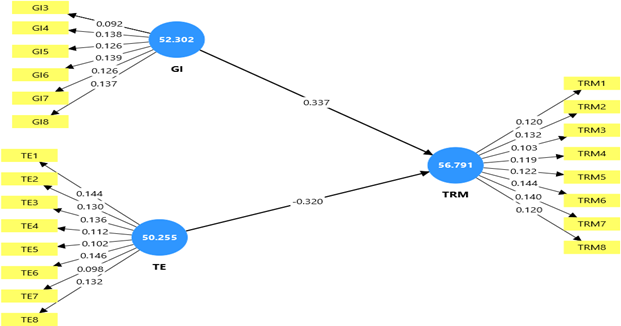
IPMA examined indicator importance and performance for tax revenue mobilisation (Table 10; Figure 3). Total effects ranged from −.05 (TE1) to .05 (GI6 and GI8), while performance scores ranged from 49.55 (TE1) to 53.63 (GI7). These results provide a descriptive comparison of the indicators, but policy priorities should also consider their meaning and the direction of their total effects.
Table 10
The IPMA for Tax Revenue Mobilisation (TRM)
|
Measure |
GI1 |
GI2 |
GI3 |
GI4 |
GI5 |
GI6 |
GI7 |
GI8 |
|
Importance |
0.04 |
0.05 |
0.05 |
0.05 |
0.05 |
0.05 |
0.05 |
0.05 |
|
Performance |
52.44 |
51.48 |
51.85 |
52.30 |
52.18 |
51.48 |
53.63 |
53.04 |
|
Measure |
TE1 |
TE2 |
TE3 |
TE4 |
TE5 |
TE6 |
TE7 |
TE8 |
|
Importance |
-0.05 |
-0.05 |
-0.05 |
-0.04 |
-0.04 |
-0.05 |
-0.04 |
-0.05 |
|
Performance |
49.55 |
50.22 |
50.96 |
49.62 |
49.92 |
50.81 |
49.70 |
50.90 |
Importance–Performance Map Analysis (IPMA)
Structural Model Hypothesis Testing
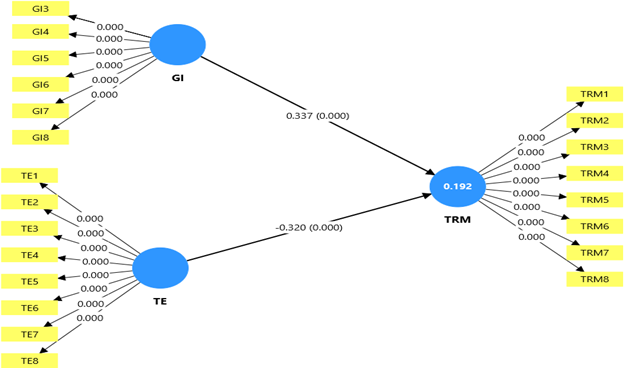
This was assessed by examining the estimated path coefficients, bootstrapped t-statistics and p-values for the hypothesised relationships (Table 11). Multinational companies’ tax evasion was negatively and statistically significantly associated with tax revenue mobilisation (β = −.32, t = 6.92, p < .001). Government interventions were positively and statistically significantly connected with tax revenue mobilisation (β = .33, t = 6.42, p < .001). The direction and statistical significance of both estimated relationships support H1 and H2, respectively. The findings suggest that higher perceived multinational tax-evasion practices are associated with lower perceived revenue mobilisation, whereas more favourable assessments of government interventions are associated with higher perceived revenue mobilisation.
Structural Model Hypothesis Testing
|
Hypotheses |
Structural Path Effects |
Original sample (O) |
SD |
t |
p |
Decision |
|
H1 |
TE -> TRM |
-.32 |
.04 |
6.92 |
< .001 |
Supported |
|
H2 |
GI -> TRM |
.33 |
.05 |
6.42 |
< .001 |
Supported |
Bootstrapped Confidence Intervals
The 95% bootstrapped confidence intervals for both relationships (tax evasion, −.41 to −.23; government interventions, .23 to .44) do not contain zero, which confirms that both relationships are significant (Table 12). The estimates were also similar to the original estimates using the bootstrap means.
Bootstrapped Confidence Interval
|
Path Effects |
Original sample (O) |
Sample mean (M) |
2.5% |
97.5% |
|
TE -> TRM |
-.32 |
-.32 |
-.41 |
-.23 |
|
GI -> TRM |
.33 |
.34 |
.23 |
.44 |
The estimated structural model is presented in Figure 4, in which the path coefficients and p-values are presented. For hypothesis decisions, refer to Table 11.
Structural Model
Discussion
The results show that tax revenue mobilisation is negatively related to multinational tax evasion (β = −.32, p < .001), thus validating H1. This is consistent with studies that report revenue losses from multinational profit shifting (Beer et al., 2020; Tørsløv et al., 2023; Wier, 2020), although those studies largely concern avoidance and transfer mispricing rather than evasion, so the comparison is indirect. The current study provides tax professionals' contributions from Ghana. Results for H2 suggest a positive relationship between government interventions and revenue mobilisation (β = .33, p < .001). This is in agreement with the findings of Inegbedion and Okoye-uzu (2024) on tax audits and Bellon et al. (2022) on electronic invoicing. The copula test for GI was not significant at p = .053; therefore, the results should be interpreted with caution. The effect sizes for GI (f² = .13) and TE (f² = .12) are similar, while their correlation is weak (r = .11). This implies that the two predictors contribute largely separate information about revenue mobilisation. While deterrence theory suggests that enforcement can deter evasion, the cross-sectional design does not establish causality or directly test the relationship between enforcement and deterrence of evasion. Moreover, perceived enforcement intensity does not necessarily reflect actual audit effectiveness, as Kasper and Alm (2022) caution.
Theoretical Implications
The similar effect sizes of tax evasion and government interventions indicate that both are relevant to understanding of tax revenue mobilisation. The results align with “deterrence theory”, which states that non-compliance correlates with reduced revenue collection, and enforcement correlates with increased compliance. The findings are also relevant to the slippery slope framework because both types of government intervention, enforcement and taxpayer support, are addressed. However, their separate effects were not looked at. Future research may be able to differentiate between the level of authority and the level of taxpayer support to evaluate the influence of each on compliance and revenue mobilisation.
Practical Implications
The negative correlation between tax evasion and revenue mobilisation supports the view that accurate tax reporting, transfer-price documentation, and good tax governance are vital for multinational companies operating in Ghana. The positive correlation between government interventions and revenue mobilisation reinforces the need for the Ghana Revenue Authority (GRA) to keep focusing on a variety of measures, such as audits, digital systems, monitoring and guidance for taxpayers. However, the study does not provide information on the separate contribution of each measure. Administrative records, compliance outcomes and implementation costs should therefore be taken into account in resource allocation. The IPMA results provide additional information on the relative importance and performance of individual indicators. These findings can inform further assessment of the priorities set at the administrative level, but these indicators should not be considered high-return interventions without additional evidence.
Policy Implications
The results emphasize the need to tackle multinational tax non-compliance and enhance the capacity of the Ministry of Finance and GRA to monitor corporations' tax obligations. Measures include strengthening tax information systems, conducting targeted compliance checks, and pursuing international information exchange as permitted by law and available resources. Guidance for taxpayers is also important, and the administrative procedures are efficient. The cross-sectional design does not, however, show that these individual policies are effective or cause the observed changes. The results of the study should therefore be used to help evaluate further policies rather than taken as evidence of any actual revenue gains.
Conclusion
The present study investigated the relationships between perceived multinational tax evasion and government interventions and tax revenue mobilisation in Ghana. Tax evasion was negatively associated with revenue mobilisation, while government interventions showed a positive association. These results represent the opinions of tax practitioners and tax professionals and do not necessarily represent actual tax losses or real revenue results. The findings thus give an indication of relevant relationships but not the effectiveness of any single policy.
Limitations
The cross-sectional design prevents the clarification of causality. The purposive sample might not be representative of all tax professionals, multinationals, or taxpayers in Ghana. All data were self-reported perceptions collected with one instrument. Although procedural remedies were applied and the full collinearity check did not indicate serious common method bias, social desirability, recall and consistency effects cannot be excluded. This study did not rely on administrative tax data to determine actual tax collection or tax losses. In addition, the questionnaire might not adequately separate legal tax avoidance from illegal tax evasion. In particular, items TE5, TE7 and TE8 describe practices that may be lawful avoidance as well as evasion, so the TE construct may partly capture aggressive avoidance. The predictive assessment was based on holdout cases from the same data and does not establish predictive validity in other populations. The model also explained 19.2% of the variance in revenue mobilisation, which suggests that other factors were not considered.
Future Research
Future research might explore the relationship between perceived tax practices and revenue outcomes using data from a survey, supplemented by administrative tax data, longitudinal data, or interviews. Future research could distinguish legal tax planning from evasion and examine digital services separately from taxpayer support. More extensive and varied samples from multiple sites would facilitate evaluation of the results and assess their generalizability.
Funding
Not applicable.
Author Contributions
Elizabeth Dede Pardie: Conceptualisation of the study, research design, questionnaire development, and data collection.
Mensah Marfo: Methodology review, validation of the analytical approach, interpretation of findings, and critical review of the manuscript.
Edward Annan: Data analysis using PLS-SEM, interpretation of statistical results, and drafting of the results section.
Ruby Norkor Noi: Literature review, identification of relevant scholarly sources, and review of the manuscript.
Conflict of Interest
The authors declare that they have no known competing financial interests or personal relationships that could have appeared to influence the work reported in this paper.
Generative AI Use Disclosure Statement
No generative AI tools were used in the writing or analysis of this manuscript.
Data Availability Statement
The data supporting the findings of this study are available from the corresponding author upon reasonable request.
Ethics Approval and Informed Consent
The study was approved by the Institutional Review Board of Accra Institute of Technology (AIT), Accra, Ghana (Approval No. AIT-EC/HSS4/05/26). Before completing the questionnaire, participants consented to take part. Participation was voluntary, and all responses were collected anonymously and kept confidential.
Acknowledgments
The authors thank the participating tax professionals and colleagues who commented on earlier drafts.
References
Ababio, A. G., & Gnonsio, M. A. (2021). State legitimacy and tax compliance among small and medium scale enterprises: A case study of Dodowa district, Ghana. Journal of Financial Crime, 28(3), 858–869. https://doi.org/10.1108/jfc-09-2020-0195
Ajeigbe, K. B., Ganda, F., & Enowkenwa, R. O. (2024). Impact of sustainable tax revenue and expenditure on the achievement of sustainable development goals in some selected African countries. Environment, Development and Sustainability, 26(10), 26287–26311. https://doi.org/10.1007/s10668-023-03730-y
Akitoby, B., Baum, A., Hackney, C., Harrison, O., Primus, K., & Salins, V. (2020). Tax revenue mobilization episodes in developing countries. Policy Design and Practice, 3(1), 1–29. https://doi.org/10.1080/25741292.2019.1685729
Alm, J. (2019). What motivates tax compliance? Journal of Economic Surveys, 33(2), 353–388. https://doi.org/10.1111/joes.12272
Alm, J., & Malézieux, A. (2021). 40 years of tax evasion games: A meta-analysis. Experimental Economics, 24(3), 699–750. https://doi.org/10.1007/s10683-020-09679-3
Alstadsæter, A., Johannesen, N., Le Guern Herry, S., & Zucman, G. (2022). Tax evasion and tax avoidance. Journal of Public Economics, 206, 104587. https://doi.org/10.1016/j.jpubeco.2021.104587
Amoh, J. K., & Adafula, B. (2019). An estimation of the underground economy and tax evasion. Journal of Money Laundering Control, 22(4), 626–645. https://doi.org/10.1108/jmlc-01-2019-0002
Appiah, E., Song, N., Appiah-Otoo, I., Ahia, B. N. K., Dumor, K., Toure, M., & Koudalo, Y. M. A. (2025). The impact of bureaucratic quality on tax revenue collection in democratic settings. Humanities and Social Sciences Communications, 12(1), 1290. https://doi.org/10.1057/s41599-025-05620-2
Batrancea, L., Nichita, A., Olsen, J., Kogler, C., Kirchler, E., Hoelzl, E., Weiss, A., Torgler, B., Fooken, J., Fuller, J., Schaffner, M., Banuri, S., Hassanein, M., Alarcón-García, G., Aldemir, C., Apostol, O., Bank Weinberg, D., Batrancea, I., Belianin, A., … Zukauskas, S. (2019). Trust and power as determinants of tax compliance across 44 nations. Journal of Economic Psychology, 74, 102191. https://doi.org/10.1016/j.joep.2019.102191
Beer, S., de Mooij, R., & Liu, L. (2020). International corporate tax avoidance: A review of the channels, magnitudes, and blind spots. Journal of Economic Surveys, 34(3), 660–688. https://doi.org/10.1111/joes.12305
Bellon, M., Dabla-Norris, E., Khalid, S., & Lima, F. (2022). Digitalization to improve tax compliance: Evidence from VAT e-invoicing in Peru. Journal of Public Economics, 210, 104661. https://doi.org/10.1016/j.jpubeco.2022.104661
Bergeron, A., Tourek, G., & Weigel, J. L. (2024). The state capacity ceiling on tax rates: Evidence from randomized tax abatements in the DRC. Econometrica, 92(4), 1163–1193. https://doi.org/10.3982/ecta19959
Bilicka, K. A. (2019). Comparing UK tax returns of foreign multinationals to matched domestic firms. American Economic Review, 109(8), 2921–2953. https://doi.org/10.1257/aer.20180496
Boning, W. C., Guyton, J., Hodge, R., & Slemrod, J. (2020). Heard it through the grapevine: The direct and network effects of a tax enforcement field experiment on firms. Journal of Public Economics, 190, 104261. https://doi.org/10.1016/j.jpubeco.2020.104261
Carsamer, E., & Abbam, A. (2023). Religion and tax compliance among SMEs in Ghana. Journal of Financial Crime, 30(3), 759–775. https://doi.org/10.1108/jfc-01-2020-0007
Casi, E., Spengel, C., & Stage, B. M. B. (2020). Cross-border tax evasion after the common reporting standard: Game over? Journal of Public Economics, 190, 104240. https://doi.org/10.1016/j.jpubeco.2020.104240
Chalendard, C., Fernandes, A. M., Raballand, G., & Rijkers, B. (2023). Corruption in customs. Quarterly Journal of Economics, 138(1), 575–636. https://doi.org/10.1093/qje/qjac032
Cobham, A., & Janský, P. (2019). Measuring misalignment: The location of US multinationals’ economic activity versus the location of their profits. Development Policy Review, 37(1), 91–110. https://doi.org/10.1111/dpr.12315
Cooper, M., & Nguyen, Q. T. K. (2020). Multinational enterprises and corporate tax planning: A review of literature and suggestions for a future research agenda. International Business Review, 29(3), 101692. https://doi.org/10.1016/j.ibusrev.2020.101692
De Simone, L., & Olbert, M. (2022). Real effects of private country-by-country disclosure. The Accounting Review, 97(6), 201–232. https://doi.org/10.2308/tar-2020-0714
Dom, R. (2019). Semi-autonomous revenue authorities in sub-Saharan Africa: Silver bullet or white elephant. Journal of Development Studies, 55(7), 1418–1435. https://doi.org/10.1080/00220388.2018.1469743
Franke, G., & Sarstedt, M. (2019). Heuristics versus statistics in discriminant validity testing: A comparison of four procedures. Internet Research, 29(3), 430–447. https://doi.org/10.1108/intr-12-2017-0515
Gangl, K., & Torgler, B. (2020). How to achieve tax compliance by the wealthy: A review of the literature and agenda for policy. Social Issues and Policy Review, 14(1), 108–151. https://doi.org/10.1111/sipr.12065
Garcia-Bernardo, J., Janský, P., & Tørsløv, T. (2021). Multinational corporations and tax havens: Evidence from country-by-country reporting. International Tax and Public Finance, 28(6), 1519–1561. https://doi.org/10.1007/s10797-020-09639-w
Gwaindepi, A. (2021). Domestic revenue mobilisation in developing countries: An exploratory analysis of sub-Saharan Africa and Latin America. Journal of International Development, 33(2), 396–421. https://doi.org/10.1002/jid.3528
Hair, J. F., Risher, J. J., Sarstedt, M., & Ringle, C. M. (2019). When to use and how to report the results of PLS-SEM. European Business Review, 31(1), 2–24. https://doi.org/10.1108/ebr-11-2018-0203
Holtom, B., Baruch, Y., Aguinis, H., & Ballinger, G. A. (2022). Survey response rates: Trends and a validity assessment framework. Human Relations, 75(8), 1560–1584. https://doi.org/10.1177/00187267211070769
Inegbedion, H., & Okoye-uzu, C.-S. (2024). Tax audit on tax revenue of SMEs in Nigeria. Humanities and Social Sciences Communications, 11(1), 1603. https://doi.org/10.1057/s41599-024-03709-8
Jahnke, B., & Weisser, R. A. (2019). How does petty corruption affect tax morale in sub-Saharan Africa? European Journal of Political Economy, 60, 101751. https://doi.org/10.1016/j.ejpoleco.2018.09.003
Janský, P., & Palanský, M. (2019). Estimating the scale of profit shifting and tax revenue losses related to foreign direct investment. International Tax and Public Finance, 26(5), 1048–1103. https://doi.org/10.1007/s10797-019-09547-8
Jeke, L., Moyo, C. Z., & Apau, R. (2025). Financial liberalisation and illicit financial outflows in African countries: Does institutional quality and macroeconomic stability matter? Journal of Financial Regulation and Compliance, 33(1), 1–15. https://doi.org/10.1108/jfrc-06-2023-0078
Johannesen, N., Tørsløv, T., & Wier, L. (2020). Are less developed countries more exposed to multinational tax avoidance? Method and evidence from micro-data. World Bank Economic Review, 34(3), 790–809. https://doi.org/10.1093/wber/lhz002
Joshi, P. (2020). Does private country-by-country reporting deter tax avoidance and income shifting? Evidence from BEPS Action Item 13. Journal of Accounting Research, 58(2), 333–381. https://doi.org/10.1111/1475-679x.12304
Kasper, M., & Alm, J. (2022). Audits, audit effectiveness, and post-audit tax compliance. Journal of Economic Behavior & Organization, 195, 87–102. https://doi.org/10.1016/j.jebo.2022.01.003
Kock, F., Berbekova, A., & Assaf, A. G. (2021). Understanding and managing the threat of common method bias: Detection, prevention and control. Tourism Management, 86, 104330. https://doi.org/10.1016/j.tourman.2021.104330
Kock, N. (2015). Common method bias in PLS-SEM: A full collinearity assessment approach. International Journal of e-Collaboration, 11(4), 1–10. https://doi.org/10.4018/ijec.2015100101
Kock, N., & Hadaya, P. (2018). Minimum sample size estimation in PLS-SEM: The inverse square root and gamma-exponential methods. Information Systems Journal, 28(1), 227–261. https://doi.org/10.1111/isj.12131
Kogler, C., Olsen, J., Kirchler, E., Batrancea, L. M., & Nichita, A. (2023). Perceptions of trust and power are associated with tax compliance: A cross-cultural study. Economic and Political Studies, 11(3), 365–381. https://doi.org/10.1080/20954816.2022.2130501
Kotsogiannis, C., Salvadori, L., Karangwa, J., & Murasi, I. (2025). E-invoicing, tax audits and VAT compliance. Journal of Development Economics, 172, 103403. https://doi.org/10.1016/j.jdeveco.2024.103403
Kovermann, J., & Velte, P. (2019). The impact of corporate governance on corporate tax avoidance: A literature review. Journal of International Accounting, Auditing and Taxation, 36, 100270. https://doi.org/10.1016/j.intaccaudtax.2019.100270
Kumi, R., Bannor, R. K., Oppong-Kyeremeh, H., & Adaletey, J. E. (2024). Voluntary and enforced tax compliance determinants and impact among agrochemical businesses in Ghana. Arab Gulf Journal of Scientific Research, 42(3), 991–1011. https://doi.org/10.1108/agjsr-03-2023-0133
Le, M.-D., & Zamarian, M. (2025). Tax-avoidance profit shifting by multinational firms: Evidence from Vietnam. Economic Systems, 49(2), 101286. https://doi.org/10.1016/j.ecosys.2024.101286
Li, J., Wang, X., & Wu, Y. (2020). Can government improve tax compliance by adopting advanced information technology? Evidence from the Golden Tax Project III in China. Economic Modelling, 93, 384–397. https://doi.org/10.1016/j.econmod.2020.08.009
Mascagni, G., Dom, R., Santoro, F., & Mukama, D. (2023). The VAT in practice: Equity, enforcement, and complexity. International Tax and Public Finance, 30(2), 525–563. https://doi.org/10.1007/s10797-022-09743-z
Mascagni, G., Mengistu, A. T., & Woldeyes, F. B. (2021). Can ICTs increase tax compliance? Evidence on taxpayer responses to technological innovation in Ethiopia. Journal of Economic Behavior & Organization, 189, 172–193. https://doi.org/10.1016/j.jebo.2021.06.007
Mawejje, J., & Sebudde, R. K. (2019). Tax revenue potential and effort: Worldwide estimates using a new dataset. Economic Analysis and Policy, 63, 119–129. https://doi.org/10.1016/j.eap.2019.05.005
Moore, M. (2023). Tax obsessions: Taxpayer registration and the “informal sector” in sub-Saharan Africa. Development Policy Review, 41(1), e12649. https://doi.org/10.1111/dpr.12649
Nessa, M., Schwab, C. M., Stomberg, B., & Towery, E. M. (2020). How do IRS resources affect the corporate audit process? The Accounting Review, 95(2), 311–338. https://doi.org/10.2308/accr-52520
Ofori, E., & Appiah, M. O. (2025). Multinational tax evasion and money laundering: Examining the financial investigation system in Ghana. Journal of Money Laundering Control, 28(2), 442–462. https://doi.org/10.1108/jmlc-09-2024-0150
Okunogbe, O., & Pouliquen, V. (2022). Technology, taxation, and corruption: Evidence from the introduction of electronic tax filing. American Economic Journal: Economic Policy, 14(1), 341–372. https://doi.org/10.1257/pol.20200123
Okunogbe, O., & Santoro, F. (2023). The promise and limitations of information technology for tax mobilization. World Bank Research Observer, 38(2), 295–324. https://doi.org/10.1093/wbro/lkac008
Podsakoff, P. M., Podsakoff, N. P., Williams, L. J., Huang, C., & Yang, J. (2024). Common method bias: It’s bad, it’s complex, it’s widespread, and it’s not easy to fix. Annual Review of Organizational Psychology and Organizational Behavior, 11(1), 17–61. https://doi.org/10.1146/annurev-orgpsych-110721-040030
Ringle, C. M., Wende, S., & Becker, J. M. (2024). SmartPLS 4. Bönningstedt: SmartPLS. https://www.smartpls.com
Sebele-Mpofu, F., Mashiri, E., & Schwartz, S. C. (2021). An exposition of transfer pricing motives, strategies and their implementation in tax avoidance by MNEs in developing countries. Cogent Business & Management, 8(1), 1944007. https://doi.org/10.1080/23311975.2021.1944007
Sebele-Mpofu, F. Y. (2020). Governance quality and tax morale and compliance in Zimbabwe’s informal sector. Cogent Business & Management, 7(1), 1794662. https://doi.org/10.1080/23311975.2020.1794662
Shmueli, G., Sarstedt, M., Hair, J. F., Cheah, J. H., Ting, H., Vaithilingam, S., & Ringle, C. M. (2019). Predictive model assessment in PLS-SEM: Guidelines for using PLSpredict. European Journal of Marketing, 53(11), 2322–2347. https://doi.org/10.1108/ejm-02-2019-0189
Slemrod, J. (2019). Tax compliance and enforcement. Journal of Economic Literature, 57(4), 904–954. https://doi.org/10.1257/jel.20181437
Slimani, S., Omri, A., & Abbassi, A. (2024). Financing sustainable development goals in sub-Saharan Africa: Does international capital flows matter? Sustainable Development, 32(6), 6656–6685. https://doi.org/10.1002/sd.3041
Tefuttor, C. K., Nsor-Ambala, R., Onumah, R., & Agbeibor, J. (2025). Modeling the determinants of tax compliance behavior in Ghana: A moderated mediation model. Journal of Economic and Administrative Sciences. Advance online publication. https://doi.org/10.1108/JEAS-11-2024-0479
Tolossa, G., & Melese, W. E. (2024). Revisiting determinants of tax revenue mobilization in Sub-Saharan African countries: Does e-government matter? Cogent Social Sciences, 10(1), 2399937. https://doi.org/10.1080/23311886.2024.2399937
Tørsløv, T., Wier, L., & Zucman, G. (2023). The missing profits of nations. Review of Economic Studies, 90(3), 1499–1534. https://doi.org/10.1093/restud/rdac049
Wang, H., & Fang, B. (2025). Open government data and corporate tax avoidance: Evidence from listed companies of China. Accounting & Finance, 65(5), 4263–4283. https://doi.org/10.1111/acfi.70055
Wier, L. (2020). Tax-motivated transfer mispricing in South Africa: Direct evidence using transaction data. Journal of Public Economics, 184, 104153. https://doi.org/10.1016/j.jpubeco.2020.104153
Xiao, C., & Shao, Y. (2020). Information system and corporate income tax enforcement: Evidence from China. Journal of Accounting and Public Policy, 39(6), 106772. https://doi.org/10.1016/j.jaccpubpol.2020.106772
Xu, L. (2026). Beyond borders: The unexpected effects of domestic digital tax enforcement on international tax avoidance. Emerging Markets Finance and Trade, 62(4), 1272–1287. https://doi.org/10.1080/1540496x.2025.2556882
Yuan, Q., & Bai, J. (2025). Preventive regulation and corporate tax avoidance: Evidence from China. Accounting & Finance, 65(1), 819–856. https://doi.org/10.1111/acfi.13351

Page 1 of
Download Count : -
Visit Count : 9
Keywords
Multinational Tax-Evasion Perceptions; Government Interventions; Tax Revenue Mobilisation; Direct Effects; Predictive Assessment; Ghana

Author(s) Information


How to cite this article
Dede Pardie, E., Marfo, M., Annan, E., & Norkor Noi, R. (2026). Perceived multinational tax-evasion practices and government interventions in Ghana: Direct associations with tax revenue mobilisation and predictive assessment. New Challenges in Accounting and Finance, 15, 39-60. https://doi.org/10.32038/ncaf.2026.15.03
Funding
Not applicable.
Author Contributions
Elizabeth Dede Pardie: Conceptualisation of the study, research design, questionnaire development, and data collection.
Mensah Marfo: Methodology review, validation of the analytical approach, interpretation of findings, and critical review of the manuscript.
Edward Annan: Data analysis using PLS-SEM, interpretation of statistical results, and drafting of the results section.
Ruby Norkor Noi: Literature review, identification of relevant scholarly sources, and review of the manuscript.
Conflict of Interest
The authors declare that they have no known competing financial interests or personal relationships that could have appeared to influence the work reported in this paper.
Generative AI Use Disclosure Statement
No generative AI tools were used in the writing or analysis of this manuscript.
Data Availability Statement
The data supporting the findings of this study are available from the corresponding author upon reasonable request.
Ethics Approval and Informed Consent
The study was approved by the Institutional Review Board of Accra Institute of Technology (AIT), Accra, Ghana (Approval No. AIT-EC/HSS4/05/26). Before completing the questionnaire, participants consented to take part. Participation was voluntary, and all responses were collected anonymously and kept confidential.
Acknowledgments
The authors thank the participating tax professionals and colleagues who commented on earlier drafts.
Open Access
This article is licensed under a Creative Commons Attribution 4.0 International License, which permits use, sharing, adaptation, distribution and reproduction in any medium or format, as long as you give appropriate credit to the original author(s) and the source, provide a link to the Creative Commons license, and indicate if changes were made. You may view a copy of Creative Commons Attribution 4.0 International License here: http://creativecommons.org/licenses/by/4.0/