






Original Research
Development of Language Skills of Students by Establishing Inter-Subject Connections Between the Kazakh Language and the History of Kazakhstan Subjects


- Abstract
- Full text
- Metrics
This study investigates how well it works to foster students' language proficiency development by creating interdisciplinary links between the history of Kazakhstan and the Kazakh language in the Nazarbayev Intellectual Schools. The research examines how integrating language instruction with historical content enhances students' language proficiency, critical thinking abilities, and cultural literacy. It is based on the tenets of interdisciplinary education and language acquisition theory. The research methodology includes a comprehensive review of the literature on Content and Language Integrated Learning (CLIL) pedagogy, an analysis of the structure of curricula, and the collection of empirical data through classroom observations and student assessment. The relevance of integrating language learning with the history of Kazakhstan lies in its ability to promote the development of multilingualism, increase the level of language proficiency, and deepen cultural understanding among students, thereby preparing them to become informed and involved citizens in a diverse global society. The aim of the investigation is to study and apply pedagogical strategies like CLIL. These strategies help students become more proficient in language and enhance cultural understanding. Furthermore, the research elucidates the teaching approaches and optimal methodologies employed in the classroom.
|
Development of Language Skills of Students by Establishing Inter-Subject Connections Between the Kazakh Language and the History of Kazakhstan Subjects |
|
Zaure Kaliyeva1,*, Gulnaziya Bektassova2, Assemgul Aliyeva3, Kuat Tleuberdinov4 |
|
1,2 Nazarbayev Intellectual School of Physics and Mathematics in Kokshetau, Republic of Kazakhstan 3International School of Astana, Republic of Kazakhstan 4The branch "Center for Pedagogical Measurements" of AEO "Nazarbayev Intellectual Schools", Republic of Kazakhstan |
|
ABSTRACT This study investigates how well it works to foster students' language proficiency development by creating interdisciplinary links between the history of Kazakhstan and the Kazakh language in the Nazarbayev Intellectual Schools. The research examines how integrating language instruction with historical content enhances students' language proficiency, critical thinking abilities, and cultural literacy. It is based on the tenets of interdisciplinary education and language acquisition theory. The research methodology includes a comprehensive review of the literature on Content and Language Integrated Learning (CLIL) pedagogy, an analysis of the structure of curricula, and the collection of empirical data through classroom observations and student assessment. The relevance of integrating language learning with the history of Kazakhstan lies in its ability to promote the development of multilingualism, increase the level of language proficiency, and deepen cultural understanding among students, thereby preparing them to become informed and involved citizens in a diverse global society. The aim of the investigation is to study and apply pedagogical strategies like CLIL. These strategies help students become more proficient in language and enhance cultural understanding. Furthermore, the research elucidates the teaching approaches and optimal methodologies employed in the classroom. |
|
Keywords: Second Language, Interdisciplinary, Multilingualism, Content and Language Integrated Learning, CLIL |
Introduction
Kazakhstan’s educational system is now undergoing a process of modernization. Regarding governmental policy in the Nazarbayev Intellectual Schools, the project “Trinity of languages” was initiated, the program aimed at developing three languages: Kazakh, Russian, and English (Nazarbayev, 2007). The State Education Development Program of Kazakhstan for the years 2011-2020 states that English should be taught at all educational levels in addition to being studied as a foreign language and that by 2017 and 2020, the percentage of citizens who speak three languages should be up to 12% and 15%, respectively (State Programme of Education Development in the Republic of Kazakhstan for 2011-2020, 2010).
The full model of multilingual education as an experiment has been gradually implemented in Nazarbayev Intellectual Schools (NIS) since 2012. To implement the policy, NIS has utilized the CLIL method to create a trilingual environment to help students build their linguistic competencies (Autonomous Educational Organization Nazarbayev Intellectual Schools, 2013). To achieve this goal, NIS began to actively use Kazakh, Russian, and English languages to teach other subjects. For instance, subjects like "Kazakh language and literature", "History of Kazakhstan", "Geography" and "Law" are taught in the Kazakh language, subjects "Russian language and literature", "World history" and "Computer science" in Russian, whereas subjects such as “Computer science”, “Physics”, “Chemistry”, “Biology” are taught in the English language (National Center of Educational Statistics, 2012).
Trilingual education presented significant challenges for teachers as well as learners. On the one hand, educators found it challenging to adjust to new methods of instruction and learning. However, students also found it challenging to comprehend the subject's content because they were unable to express themselves or understand it in the second language. As a result, students' interest in the subject decreased, and in some cases, a negative attitude toward the subject was formed. In order to overcome language barriers and achieve learning objectives, history, and Kazakh language teachers conducted a collective action research project to explore the challenges students are encountering and possible solutions to tackle this issue and improve the teaching and learning experience.
Therefore, the research was framed by the following questions:
1. What challenges do students encounter while studying the “History of Kazakhstan” in the second language?
2. How do inter-subject connections between History and Kazakh language subjects can help students better acquire subject content and master complex materials?
Literature review
Vygotsky's sociocultural theory emphasizes the significance of social interaction and cultural tools in cognitive development and provides the theoretical foundation for integrating language and subject acquisition (Vygotsky, 1978). Here, the Kazakh language facilitates deeper engagement with historical knowledge by acting as a cultural artifact and an instructional medium. Research has demonstrated that students who acquire knowledge through a second language improve their cognitive flexibility and problem-solving abilities (Cummins, 2000). Learning about historical events and settings in Kazakh improves critical thinking and analytical abilities. By contextualizing vocabulary and grammatical structures, language learning can be made more relevant and efficient by integrating it with subject matter knowledge (Dalton-Puffer, 2007; Mart & Khajavi, 2019). For example, studying historical accounts and vocabulary in Kazakh aids pupils in developing their academic language skills. The simultaneous emphasis on Kazakhstani history and the Kazakh language strengthens students' cultural identities. Byram (1997) asserts a natural connection between language acquisition and cultural learning, and this connection helps pupils develop a greater understanding of their ancestry. Use of original historical materials in Kazakh, theme modules, and project-based learning are effective pedagogical tools for integrating the language with history instruction. Mehisto et al.'s (Mehisto, 2008) research emphasizes the value of scaffolding, which gives students organized support to help them comprehend difficult material in a second language.
CLIL methodology
In Content and Language Integrated Learning (CLIL) programmes, is the overall program that can be adopted as an approach that helps students learn content subjects through their additional language (Liu, Lo, & Xin, 2023). The caliber of its methods has a major impact on how trilingual education develops. Additionally, CLIL is effective for students in learning a new language and also helps to develop other skills such as cognitive, cultural awareness, and general academic knowledge (Le,& Nguyen, 2022).
The word CLIL is distinct since it encompasses several methodologies that are utilized in various educational settings (Coyle, Hood, & Marsh, 2010). Different approaches to implementing CLIL are referred to by a variety of labels, including "language storm," "full-language immersion," and partial-language immersion. Four key components are mentioned in defining the fundamentals of the CLIL method, which addresses the language and cultural context of European nations and attempts to address academic and instructional issues (Lasagabaster, 2008; Banegas, 2012). Depending on the learners' age, the sociolinguistic setting, and their degree of CLIL usage, each of the four components is applied differently.
Methodology of the research
An action research approach has been selected for this investigation since it was considered the most suitable method (Johnson, 2012). The study used a research methodology developed by Kemmis and McTaggart (Kemmis, 2008), which involves four stages in the spiral cycle: planning, acting, observing, and reflecting (Figure 1). A group was formed to address the problem involving the Kazakh language and Kazakhstan History teachers, and an action plan was formed. The creative group carries out cooperative lesson planning and investigates potential cross-curricular interconnection between the History of Kazakhstan and the Kazakh language that could aid students in achieving high results in both areas. Additionally, during the first meeting, teachers determined the research topic, research questions, sample, and research plan during their first meeting (Table 1), and all the amendments were written in the reflective journal.
Research participants
Participants in this study were students from the Nazarbayev Intellectual School of Physics and Mathematics in Kokshetau, Kazakhstan, where, as part of an integrated program, despite the fact that their first language was Russian, they studied the history of Kazakhstan for two hours in Kazakh language (L2). The selected students were in 10th grade. Most participants spoke Kazakh or Russian languages. Nonetheless, with the consent of parents, five students with limited vocabulary and weak language skills were chosen for the interview.
Table 1. Research plan for this action research
|
Period |
Data collection stage |
Reflection |
|
January –February |
І. The first stage of data collection. 1. Conduct a survey. 2. Сonduct an observation 3. Conduct a face-to-face interview 4. Conduct an entry assessment of students' speaking skills. 5. Conduct feedback with students. Conduct a reflection with students at the end of each lesson. |
I. Plan the type of data that should be collected. 1. What kind of information it can provide? How do I start collecting data? 2. What facts do concern me? 3. What problems do students have on this topic? 4. How can effective information be collected when researching this problem? 5. What is the starting point of the data? |
|
March – April |
ІІ. Continue to collect and modify data. 1. Interviews with students and discussion with colleagues 2. Reflection of students and teachers. 3. Conducting current testing. |
1. What is the significance of the data collected? 2. What additional information should be collected? 3. What new types of data collection can be used? |
|
May |
ІІІ. Completion stage of data collection. Analysis. 1. Conduct a survey. 2. Interviewing. Testing for assessment purposes. |
1. What conclusions can be drawn from the analysis of data? 2. What questions arose at the end of the study? What were the results of the study? |
Techniques of data collection
The researchers gathered the necessary data for this study using surveys, interviews, classroom observations, language exams, and other assessments. The creative group polled one class's twenty-five students. In compliance with the research work plan, the creative group also conducted one-on-one interviews with five students to determine the challenges they faced comprehending courses taught in Kazakh. The creative group members participated in each other's lessons and had reflection and discussion sessions to evaluate the results.
Findings and discussion
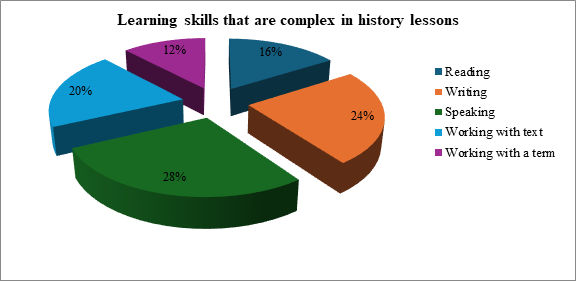
According to the interview responses, the reasons for the lack of language skills are lack of vocabulary, mistakes in the pronunciation of sounds typical of the Kazakh language, difficulty in conveying ideas, and difficulty in learning languages due to a predisposition to mathematics and science. In terms of skills, it was found that the most difficult skills in the history of Kazakhstan are the skills of “speaking” (28%) and “writing” (24%), also 20% of respondents said that they have difficulty working with the text (Figure 1).
Figure 1. The result of the survey
As "critical friends," the study team members attended each other's classes and observed the chosen students. Following each lesson, talks were held in response to the findings of this observation. Teachers had a chance to collaboratively discuss the approaches and adjustments linked to the improvement of students' language abilities; therefore, the activity benefited both sides. Also, teachers participated in English language classes to acquire practical approaches and strategies and to compare them.
To solve the practical issue with the vocabulary, it was decided to create phrases and lexical minimums related to the topic; this helped the student convey the idea clearly. As a result, students' vocabulary increased significantly, and they learned to communicate their thoughts systematically and clearly. For example, using the following phrases such as “This event/change was significant because…”, “Short/ long- term/main/indirect causes of the event...”, “... The following conclusions can be drawn from the data...”, “I think….”, helped students to convey their thoughts in an academic language”. Phrases related to this topic were given in each lesson, and their correct use was constantly monitored by the teacher and the students, giving each other feedback.
At the beginning of the lesson, students used dictionaries to learn how to use words and phrases wisely. For instance, firstly, to learn a new word from a dictionary, the student looks up the definition in the dictionary; secondly, you write the word on the board and practice pronouncing it correctly; thirdly, you have to compose a phrase or sentence and explain the meaning of the new term in context; and fourth, you have to compose a text, dialogue, or conversation using the new words as keywords.
Furthermore, techniques such as paraphrasing synonyms, simplifying complex concepts, and adjusting definitions were employed. Such an approach involved participants modifying new words through constructing sentences and word combinations, which helped them to memorize and expand their vocabulary. Following each lesson or specific activity, students engaged in self-reflection, which enhanced their capacity to organize and strategize their learning endeavors. This reflective practice contributed significantly to the development of students' organizational and planning skills in their educational pursuits.
During this action research, we found that although the research topic was aimed at developing students’ speaking skills, the whole work done was comprehensive and effective in the development of both writing and speaking skills. It was found that a student who can express their thoughts in a written form can feel free in debates, conversations, and discussions and defend their views and opinions. On this basis, it was determined that language skills need to be developed in a comprehensive manner. Evidence of the results of the study can be found in their performance on formative and summative assessments and oral answers given by students during the lesson. The dynamics were observed because of the summative assessment performance for three terms of five selected students.
Figure 2. Indicators of summative assessment for the term of students in “History of Kazakhstan” subject. 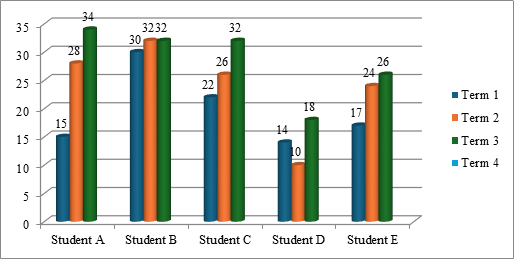
Implications
A primary cause of many students misinterpreting a lecture is their incapacity to learn historical concepts and vocabulary. As a result, students become less interested in the subject, there is less activity in the classroom, and it becomes more difficult to understand the text's major idea. According to the study's findings, 16% of students find it challenging to understand the terminology used in the classroom. When children begin studying history in grades 5 and 6, they encounter khaganates, productive forces, ruling class representatives, and other entities that make memory retention challenging. These phrases get more complicated in grades 7–12, which could put extra strain on kids. As a result, the study of Kazakhstani history provides several instances of historical idea work. Below is an activity to review:
Task 1. Describe given definition first in 5 words, then in 4 words, then in 3 words, then in 2 words, and finally in 1 word. For example, genocide is the extermination of certain groups of the population based on race, nationality, and religion.
1. elimination of racial and national characteristics of the population.
2. elimination of national symbols of the population.
3. elimination of signs of the population.
4. elimination of population;
5. elimination.
Task 2. Matching the given terms and definitions.
Table 2. Table for matching the given terms and definitions
|
Term |
Definition |
|
|
urbanization |
the growth rate of the urban population in the country; |
|
|
migration |
the process of long-term or permanent resettlement of people across borders; |
|
|
emigration |
exchange of residence in one's own country for residence in another country; |
|
|
demography |
the number, composition, and structure of a particular population, nation, ethnic group, territorial distribution, growth or decline; |
|
|
repatriate |
a person who has returned to his historical homeland; |
|
Task 3. The chapter “Kazakhstan in the period of strengthening the totalitarian system” contains several complex terms. Students are encouraged to complete the table.
Table 3. Sample of a table to work with terms and concepts
|
Terms and concepts |
Association |
Definition |
|
Totalitarianism |
|
|
|
Repression |
|
|
|
"Enemy of the people" |
|
|
|
Main Directorate of Camps and Places of Incarceration (GULag) |
|
|
Task 4. One can create an inverse crossword puzzle by appending a phrase that reveals the concept's meaning to each letter in the term.
For example, migration
M - , I - , G - , R - , А - , T - , I - , O - , N - .
Task 5. Write five or six sentences using a variety of historical terms.
For example, khan, sultan, bai, hodja, peasant, blue blood (white bone/ak suiek), commoner (black bone/kara suiek), feudal lord, dominant class, etc.
Engaging with terminology can be facilitated through a variety of instructional approaches, including individual, pair, and group activities. Games such as "Terminological Lotto" and "Domino" do not only capture students' interest but also enhance their retention and application of vocabulary. The utilization of dictionaries is essential for students to internalize historical concepts and terms effectively. In grades 6-7, tailored vocabulary instruction takes into consideration the developmental characteristics of students by incorporating game-based methods such as "Throwing the Ball," "Hot Seat," and "Who is Faster?" These interactive strategies have demonstrated efficacy in fostering vocabulary acquisition. Additionally, providing students with a handout entitled "Language of History" serves as a valuable resource to reinforce the application of historical vocabulary in context during each lesson.
Working with text
Working with the text is one of the most challenging work types during the lesson's study and instruction. In the classroom, working with the text involves a variety of activities. These include working with sounds, using dictionaries, being familiar with data and resources, expanding one's vocabulary, developing one's language, locating crucial terms related to a certain subject, and speaking abilities. Psychologists also identify several levels of reading comprehension in the native language for the development of written language. For example, Klychnikova (Klychnikova, 1983) suggests seven levels of text comprehension:
1) level of comprehension of individual words.
2) level of comprehension of individual phrases.
3) level of comprehension of individual sentences.
4) level of comprehension of the general content of the text.
5) level of comprehension of the general content and individual details of the text.
6) level of comprehension of sensory information and text evaluation.
7) level of comprehension of distinguishing the free data of the text.
Types of work with the written source can be divided into research-oriented reading, acquaintance-oriented reading, review-oriented reading, and search-oriented reading. For instance, the students were given the following task to consider the algorithm for working with the text “Collectivization”:
1) The text should be read first for review; 2) then the teacher asks a specific question and teaches to find the answer to that question in the text; 3) then teaching with the aim of developing language skills; 4) at the end one is studied for the purpose of generalization. The leading questions of each stage are made in advance. After all, the teacher works in two ways in the analysis of the text: first, to deepen the knowledge of the students on the topic of the lesson, and second, to solve the problem of developing the skills of text analysis.
The following methods can be applied to help students grasp the subject matter better. After the material has been read aloud a few times, pupils should begin "silent reading" as their language skills improve. Reading aloud to one another helps pupils improve their ability to pronounce words correctly and allows them to correct one another's errors. By reading and narrating the book aloud, silent reading is a technique that demonstrates pupils' comprehension of the material without the assistance of others and lets you assess their speed-reading ability. Ask pupils to read a short passage, and make sure that everyone begins reading at the same moment to gauge their reading speed. Students are to raise their hands when they have finished reading the material.
There are three steps involved in using text: 1. The tasks to be completed before reading the material; 2. The phase of working through the text; and 3. The time following reading the text. The following guidelines apply to pre-reading exercises and related work: the ability to recognize and discern sentence structures in the text, the ability to pronounce and write words correctly. At the stage of working with the text, the linguistic material and structure of the text were analyzed. For example, phrases in the text determine the meaning of words according to the context and extract the necessary information from the text. The stage of working with the text can be organized as follows: narrate the content of the text, answer questions on the text, make a plan, divide the text into several sections and name them, identify indirect ideas and descriptions to reveal the main content of the text, draw conclusions. Being able to articulate the text's core theme in Kazakh is the task at this point after reading the material. Post-reading tasks include creating questions based on the text, using dictionaries, creating sentences, planning the text, naming the text, creating dialogue, creating situations, sharing the book's content in accordance with the plan, and more (Klychnikova, 1983; Kuang, 2016).
For example, the students were given the text with the title “What are the contradictions of industrialization policy in Kazakhstan?”. Students look at the text, find unfamiliar words and phrases, and underline them. Then, the students ask their neighbors about the meaning of those words and phrases. If it does not help, it can be discussed with the whole class. If the class does not know these words, the teacher will help.
The INSERT method is very effective when working with text. In this method, students read the text and mark it with the following symbols:
“V” - I know that.
“+” - This is new to me; “?” - I did not understand it;
“!”- It's very interesting, I need to talk about it with my classmates.
The following algorithm will guide the students' work with the industrialization text, enabling them to fully comprehend and evaluate the text's ideas.
• Identify: Students are supposed to identify the main idea of the section considered in the sources. They begin with the keyword in the sources. To practice, it was suggested to play the game “Understand me”. The students ought to speak in roughly ten essential terms. Next, using the prepared keywords, the teacher compares it. The winner is the student with the most words that correspond to the original list.
• Brainstorming: Brainstorming before reading a historical text is valid so that students can understand the difficult part. In order to identify the acknowledgment of the students, the teacher needs to ask the following question: “What do you think this section is about?” In this way, students exchange ideas on vocabulary and knowledge with each other.
• Ask a question: Students formulate a question from their own point of view and suggest thoughtful answers. It is recommended that the questions be formulated according to Bloom’s taxonomy.
• Retelling: Read the section aloud before class, pause, and analyze the content and meaning of the text.
• Identify the main and additional information in the text.
• Summarize the main information and tell it in one sentence.
When choosing educational materials, the texts should be concise, considering students' age and language proficiency. When a source is divided into small pieces, it is vital to accompany it with pictures, diagrams, and maps so students will better understand them. By entering the material from the text into the table, the student learns to select data and distinguish between basic and additional information. While it cannot entirely replace native-language instruction in the relevant subject, this type of instruction can greatly enhance it. The format and characteristics of the subject determine the recommended teaching resources. At the same time, the tasks on the text should focus on the subject content, involving students in the process of understanding, discussing and checking the main idea of the text. For example, “What factors contributed to the collapse of the USSR?”. Students collect information on the topic and create an “organizer”. By distinguishing years and events, keywords, political, economic, and socio-cultural features, Kazakhstan will be able to understand the features of socio-political life at a time of transition to modernization.
Practice has shown that studying the text in various ways has proved to be more effective. Several effective methods of using tasks in the text have been identified and tested, and the results have been made sure that they can be achieved. After all, in accordance with modern requirements, each student not only acquires new knowledge during the lesson but also wants to master it, analyze it, and reach the level of communication and self-development. During the lesson, in order to form the necessary working language, students are taught to ask the right questions and answer the questions in full, as well as to analyze and discuss the problem using the necessary phrases. In order to engage students in discussions and dialogues, the teacher should not accept short answers from them and ask additional questions. To develop students’ language skills, it is necessary to effectively use all four language skills - reading, listening, writing, and speaking. For example, when planning a lesson, the teacher gives a part of the material in the form of audio text and allows the students to acquire the material through dialogue or conversation. During the lesson, listening can be incorporated into writing, such as filling in tables, drawing diagrams, substituting words instead of full stops, etc. Subject teaching materials should be presented at a level slightly below the level of knowledge of students in their native language. For example, after working with the terms at the beginning of the lesson on the topic “How did the principle of ‘divide and conquer’ come true?”, students were shown a video about the reform of the Russian Empire in 1867-1868. Students are given time to get acquainted with the task in advance. The students can listen to the video twice during the task.
Task 1: Utilize the video and complete the given table.
Descriptor:
• The student determines the rationale behind the Russian Empire's changes in 1867–1868 based on the facts and video;
|
Question |
Answer |
|
1. How did Butkov intend to divide the Kazakh land? |
|
|
2. The purpose of the project “Field Commission” |
|
|
3. What rule did King Alexander II adopt on July 11, 1867? |
|
|
4. The results of the reforms of 1867-1868 |
|
|
5. How many Kazakh governors were divided into governors and name them? |
|
|
6. Administrative management system |
|
|
7. For how long were the Bolsheviks and village elders elected? |
|
|
8. Position in the administrative management system introduced under the new reforms |
|
|
9. What countries did the Governor-General of Turkestan interact with? |
|
|
10. What types of courts have been created under the reform? |
|
|
11. What taxes did the tsarist government collect from the Kazakhs? |
|
Task 2. Fill in the table.
Descriptor: The student shows three governors-general and their centers during the administrative reform of 1867-1868, 6 regions included in the governor-general
Figure 3. Kazakhstan in 1867-1868 Administrative-territorial division by reforms
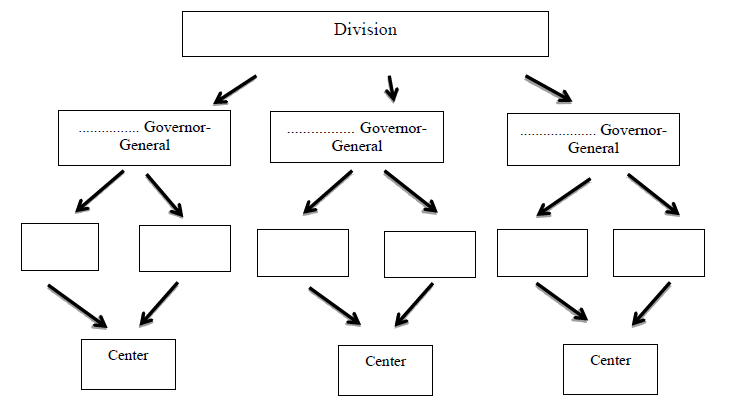 Task 3. Fill in the blanks.
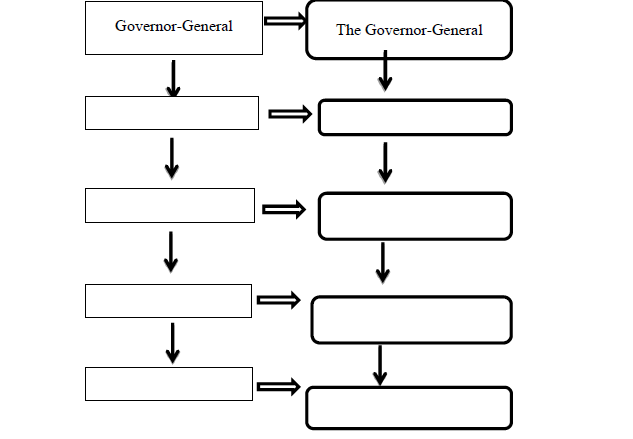
Descriptor: 1) The student can chain the system of administrative division and management.
Figure 4. The system of administrative division and management
Task 4. Complete the table with the relevant information
Descriptor: the student can analyze the reform of 1867-1868 and give at least two arguments;
Table 5. Table for analyzing the reform of 1867-1868
|
The reason for the preparation of the reform |
Positive aspects of the reform |
Negative aspects of the reform |
My opinion |
|
|
|
|
|
Tasks needed to be designed to illustrate the characteristics of language forms, as well as how they are created, used, and tested. They should also encourage students' independent and creative thought processes. Since it improves both written and spoken communication skills, the main goal of all tasks should be the development of communication skills.
The formula “PEEC”, the method “Cinquain”, and the technology “RAFT” help to develop writing skills. They motivate students to collect ideas and convey them clearly. Interpretation of the PEEC formula:
· Position (I think it was a period of unfulfilled expectations for the people)
· Explanation (... because the dreams of workers, peasants, intellectuals, and prisoners of the camps were not fulfilled)
· Example (I can prove it with the following example …)
· Consequences (I draw the following conclusions on this issue ...).
Or as for the order of creating Cinquain:
The first paragraph is a noun related to the main idea;
The second paragraph is an adjective related to the main idea;
The third paragraph is the verb that means action related to the main idea;
The fourth paragraph is a phrase related to the topic;
The fifth paragraph is a synonym for the word in the first paragrap
Table 6. RAFT technology: writing historical letters.
|
Role |
Audience |
Format |
Topic |
||
|
1. Batyr (hero) 2. Khan 3. Bi 4. The landlord 5. Ambassador 6. Spy 7. Warrior 8. Traveler |
Woman Friend Khan Bi Batyr (hero) Head of state |
Diary Report Appeal Order Letter |
The Kazakh-Dzungar war |
||
Instructions:
• Choose the role and the audience;
• Additional information can be used;
• The letter should be written according to the plan;
• The word number should not be less than 300-350;
• Historical terms should be used correctly;
• Arguments must be given;
• Ideas and thoughts should be summarized.
Considering students' needs and abilities is one of the best strategies to accomplish language and topic objectives. The school's psychological services and the class curators create a map of each student's unique and typological characteristics at the start of the academic year. Subject matter experts use this map as a guide when they plan their classes. For instance, visual learners can benefit from color schemes, tables, pictures with captions, and writing exercises; auditory learners can benefit from audio listening, communicative and creative exercises, role-plays, songs, poems, and performances; kinesthetic learners can benefit from moving games that combine speech and movement, verbalization of action, object description, and action demonstration. For example, in the 8th grade, on the subject of the history of Kazakhstan, when learning the topic “What is the common idea that united Isatai Taimanovich and Makhambet Utemisov?” students are divided into four groups according to their typological features, and each group is given individual tasks.
Group 1. This group was the largest because the class had so many auditory learners. Therefore, students were divided into three groups according to the social groups involved in the historical event, and each group was asked to demonstrate the goals and objectives related to this event through role play.
Task: Determine the causes and consequences of the uprising.
Table 7. The “information organizer” on the causes and consequences of the uprising
|
Group I. The rebels |
Group II. Zhangir Khan and his entourage |
Group III. Representatives of the tsarist government |
|
Ordinary people, peasants, tribal leaders |
Bi, Sultans, Sultan Baimagambet, Karaulkozha Babazhanuly - father-in-law |
Governor-General of Orenburg, military governor, commander of the Cossack army. The head of the punitive detachment - Lieutenant Colonel Geke |
|
Call for uprising: Purpose: Incitement of the population to rebel, unification. Plan: 1. Reasons for protest 2. Purposes of the uprising 3. For a better life |
Meeting Purpose: Brainstorm ways of action against the rebels Plan: Consider two perspectives: 1. Simplification of the situation of ordinary people: taxes, land issues; 2. Suppression and punishment of the uprising: - Relying on the help of the tsarist government to suppress the uprising; - Showing hatred for ordinary people; - Analysis of the actions of Makhambet and Isatai. |
Emergency meeting Purpose: Measures of the Russian government to suppress the uprising - Problem analysis - What danger can the rebels pose - Decision making Plan: 1. Who should be punished; 2. How to punish; 3. Who controls the punitive squads, how many squad numbers, and what weapons will be used; 4. What military methods and techniques (tactics) apply; 5. What is the amount of remuneration for punishment issues? |
|
1. Create a script for a role-playing game using the suggested keywords; 2. The use of historical terminology in role-playing; 3. Link to a concept (focus) in the lesson; 4. Demonstration of artistic abilities; 5. Dialogues should be interesting and clear. |
||
Group 2. The topic information organizer for visual learners will be a thematic map titled "Kazakhstan in the first half of the XIX century."
Task:
1. Determine the years of the uprising.
2. Name the three most important events of the uprising and justify your answer.
3. Use the thematic map to identify the area where the uprising took place.
Information organizer on the topic “What is the common idea that unites Isatai and Makhambet?”
Table 8. Information organizer on the topic “What is the common idea that unites Isatai and Makhambet?”
|
Date |
The course of the uprising |
|
February, 1836 |
The rebels attacked Zhangir Khan. |
|
In the Autumn of 1836 |
Isatai Taimanuly visited the villages of different tribes and called for the seizure of lands occupied by the Ural Cossacks. |
|
In the Summer and Autumn of 1837 |
The rebels intensified their attacks on the villages of the rich. A detachment of 200 soldiers stormed the village of Karaulkozha Babazhanuly. In late October of this year, the rebels surrounded the Khan's Horde and besieged Zhangir Khan. Zhangir Khan felt scared and decided to negotiate with Isatai. The rebels petitioned Zhangir Khan. The Orenburg administration and Zhangir Khan organized punitive forces. |
|
November 15, 1837 |
In Tastobe, there was a bloody battle between the rebels and the punitive detachments. In the first half of the battle, the rebels prevailed and won a significant victory. However, the punishers of the rebels began to fire with a cannon. The rebels could not stand it and then had to retreat. The tsarist government issued 500 rubles of silver money for those who would kill Isatai. |
|
July 2, 1838 |
A decisive battle between the rebels and punishers occurred on the Kiyl and Akbulak rivers. Isatay Taimanuly was killed. The uprising slowed down. Makhambet Utemisuly disappeared for some time. |
|
In 1845 |
Makhambet died at the hands of Zhangir Khan's people. Persecution of those involved in the uprising began. Many people were forced into labor camps and their property was confiscated. Those who took an active part in the uprising were permanently deported to Eastern Siberia. |
Group 3. Kinesthetic learners work with the text and are asked to create a mind map. Criteria:
• use concepts, words, and phrases related to the topic;
• indicate the purpose, causes, and consequences of the uprising;
• presentation of solutions based on examples of changes related to the topic;
• summarizing results based on detailed information.
Group 4. Three groups comprised of creatively inclined students were formed. The rebellion's commander, Makhambet, will present the group with a book of poetry. Students assess Makhambet's contribution to the rebellion by drawing on their understanding of Kazakh literature and the poet's poems. The assignment must be completed innovatively. Poems, traits, letters, memoirs, appeals, etc. are a few examples.
The study of the history of Kazakhstan is inherently directed towards the cultivation of historical thinking skills. These skills are systematically nurtured throughout each instructional session, with due consideration given to their incremental refinement and extension. Pedagogical approaches are underpinned by a series of foundational concepts, including change and continuity, cause and effect, argumentation, comparison and contrast, significance, and interpretation. Each instructional unit is structured around a singular historical concept, chosen in alignment with instructional objectives. This deliberate focus on specific historical concepts enables students to construct and refine their historical thinking capabilities within the context of targeted learning materials (Curriculum for secondary school for grades 6-10, 2019). By anchoring each lesson within a historical concept framework, students are afforded opportunities to develop proficiency in historical analysis and temporal contextualization. The effective use of interdisciplinary communication in the classroom is important for the development of language skills. At the beginning of each term, Kazakh language, Geography, and History teachers conduct horizontal planning. Common topics are identified according to the curriculum. A minimum of a dictionary on these topics is approved. Words related to the topic are learned in Kazakh language lesson. The correct pronunciation and spelling of words and the ability to use them correctly are taught in the Kazakh language lessons. This is a very effective way to acquire academic knowledge in non-linguistic disciplines. For example, in grades 7-8 in the History of Kazakhstan, it is very effective to work with maps in connection with geography to use the skills acquired in Geography when finding the location of countries, states, rivers, and lakes on the map. On the contrary, integrating various integration associations (NATO, LAAI, G8, NAFTA, the European Union, OPEC) in modern international relations in grades 9-10 will help supplement and memorize the knowledge of Economic Geography. It was found that when the topics of the discussion are related to another subject, students tend to focus on them better. They use the knowledge gained in all disciplines to learn to draw logical conclusions, find the cause-and-effect relationship of events, and use the acquired knowledge and skills by giving answers or having discussions in class. The student must learn to see the problem or situation as a whole, not just one subject. This is because the humanities involve the full disclosure, substantiation, and interrelationship of issues. The objective is not theoretical knowledge, which is also important, but the development of evidence-based response or reasoning skills.
Examining the culture of the Kazakh people and the pivotal periods of Kazakhstan's history, the relationship to the topic of Kazakh literature is highly appropriate. For example, in the 8th grade, on the subject of the history of Kazakhstan, “Why did “Elim-ai” become a national song?”, the value of the folk song “Elim-ai” as a historical source is estimated. Students study the policy of Bilge Kagan and Kultegin in the Turkic period on the basis of the poems “Kultegin”, “Tonykok”, and “Bilgekagan”. Through the rulers, the students analyze the foreign policy of the East Turkic Khaganate and draw conclusions. The consequences of the colonial policy of the Russian Empire at the end of the XIX century are considered on the basis of acquaintance with the works of the literary movement “Zar Zaman”. The students study the national liberation uprising of 1916, the February Revolution, the October Revolution, and the establishment of Soviet power through the works of Kazakh intellectuals and learn about the historical period. By establishing inter-subject connections, students better understand and acquire new topics. In addition, the planning of integrated lessons with teachers of Kazakh literature in the study of the culture of different periods of the history of Kazakhstan deepens the knowledge of students on the topic and develops their critical thinking. As the same topics are studied in another subject, students' memory further develops and vocabulary increases.
Extracurricular work also had a great impact on the integration of students into the language environment. Morning meetings, celebrations, and extracurricular activities in three languages, which combine Kazakh and Russian classes under one common group, help students to immerse themselves in the language environment. The educational program of AEO “Nazarbayev Intellectual Schools,” provides students with a permanent language environment through independent research work. In the subject of the history of Kazakhstan in the 9th grade, students were asked to conduct a small research on the topic “How has industrialization changed your region?” They conducted research in small groups and shared in front of the class. In this way, they had the opportunity to learn the history of their region in the Kazakh language, conduct research, relate it to the present day, develop language skills, and increase their responsibilities. In grades 11-12, students will continue to write a term paper of 2,500-3,000 words on the subject of “Kazakhstan in the modern world” and engage in independent research.
Conclusion
Through the application of effective pedagogical strategies and targeted vocabulary instruction, students demonstrated enhanced comprehension and retention of historical content. This was discernible through notable advancements in their assessment performance and adept utilization of terminology within appropriate contexts. Moreover, students exhibited heightened engagement and enthusiasm towards the subject matter. Furthermore, by conscientiously considering the individualized learning needs and preferences of students when selecting instructional methodologies, there was a marked improvement in their acquisition of subject matter knowledge.
Meanwhile, this study demonstrated the value of integrated subject instruction. Students learn to approach problems from multiple perspectives by creating cross-disciplinary linkages between two areas and studying phrases and topics comparable to other subjects. Students' critical thinking skills and knowledge are developed as a result. In order to help students better understand the material, teachers of social and humanitarian courses in second languages should focus more on the linguistic aims. Consider each student's unique characteristics when creating exam items and employ a differentiated strategy. As was previously said, doing integrated classes or integrating teachings with other pertinent disciplines is advised to improve students' knowledge.
References
Autonomous Educational Organization “Nazarbayev Intellectual Schools”. (2013). 2020 Development Strategy.
Banegas, D. L. (2012). CLIL teacher development: Challenges and experiences. Latin American Journal of Content & Language Integrated Learning, 5(1), 46-56. http://dx.doi.org/10.5294/laclil.2012.5.1.4
Byram, M. (1997). Teaching and Assessing Intercultural Communicative Competence. Multilingual Matters.
Coyle, D., Hood, P., & Marsh, D. (2010). CLIL: Content and Language Integrated Learning. Cambridge University Press.
Cummins, J. (2000). Language, Power, and Pedagogy: Bilingual Children in the Crossfire. Multilingual Matters. https://doi.org/10.21832/9781853596773
Curriculum for secondary school for grades 6-10. (2019). History of Kazakhstan. Astana: AEO NIS.
Dalton-Puffer, C. (2007). Discourse in Content and Language Integrated Learning (CLIL) Classrooms. John Benjamins.
Johnson, A. P. (2012). A short guide to action research. New Jersey: Pearson Education.
Kemmis, S., & McTaggart, R. (2008). Participatory action research. In N. K. Denzin & Y. S. Lincoln (Eds.), Strategies of qualitative inquiry (3rd ed.) (pp. 271-300). Sage Publications.
Klychnikova, Z. I. (1983). Psychological features of reading in foreign languages. Moscow: Prosveshcenie.
Kuang, C. H. (2016). Enhancing student learning in higher education through student input. Practice and Evidence of the Scholarship of Teaching and Learning in Higher Education, 11(1), 100-122. https://www.pestlhe.org/index.php/pestlhe/article/view/115
Lasagabaster, D. (2008). Foreign language competence in content and language integrated courses. The Open Applied Linguistics Journal, 1, 31-42. http://dx.doi.org/10.2174/1874913500801010030
Le, N.P., & Nguyen, P. (2022). Content and Language Integrated Learning (CLIL) method and how it is changing the foreign language learning landscape. Open Access Library Journal, 9, 1-5. https://doi.org/10.4236/oalib.1108381
Liu, J. E., Lo, Y. Y., & Xin, J. J. (2023). CLIL teacher assessment literacy: A scoping review. Teaching and Teacher Education, 129, 104150. https://doi.org/10.1016/j.tate.2023.104150
Mart, Ç. T., & Khajavi, Y. (2019). A comparison of form-focused, content-based and mixed approaches to literature-based instruction to develop learners’ speaking skills. Cogent Education, 6(1). https://doi.org/10.1080/2331186X.2019.1660526
Mehisto, P., Marsh, D., & Frigols, M. J. (2008). Uncovering CLIL: Content and Language Integrated Learning in Bilingual and Multilingual Education. Oxford: Macmillan Education.
National Center of Educational Statistics. (2012). National Report on the state and development of educational system of the Republic of Kazakhstan. Astana: Ministry of Education and Science of the Republic of Kazakhstan.
Nazarbayev, N. (2007). New Kazakhstan in a new world: Address by the President of the Republic of Kazakhstan N. Nazarbayev to the People of Kazakhstan. Astana, Kazakhstan: Institute for Strategic Studies. Retrieved from http://www.akorda.kz
State Programme of Education Development in the Republic of Kazakhstan for 2011-2020. (2010). Retrieved from http://www.akorda.kz/en/category/gos_programmi_razvitiya
Vygotsky, L. S. (1978). Mind in Society: The Development of Higher Psychological Processes. Harvard University Press. https://doi.org/10.2307/j.ctvjf9vz4

Page 1 of
Download Count : 46
Visit Count : 460
Keywords
Content and Language Integrated Learning; Multilingualism; Interdisciplinary; Second Language; CLIL


Author(s) Information





How to cite this article:
Kaliyeva, Z., Bektassova, G., Aliyeva, A., & Tleuberdinov, K. (2024). Development of language skills of students by establishing inter-subject connections between the Kazakh language and the history of Kazakhstan subjects. Studies in Educational Management, 15, 60-77. https://doi.org/10.32038/sem.2024.15.04
Acknowledgments
Not applicable.
Funding
Not applicable.
Conflict of Interests
No, there are no conflicting interests.
Open Access
This article is licensed under a Creative Commons Attribution 4.0 International License, which permits use, sharing, adaptation, distribution and reproduction in any medium or format, as long as you give appropriate credit to the original author(s) and the source, provide a link to the Creative Commons license, and indicate if changes were made. You may view a copy of Creative Commons Attribution 4.0 International License here: http://creativecommons.org/licenses/by/4.0/