






Original Research
Representation of Corporate Governance Information: Organization of Information as Constructs for Governance


- Abstract
- Full text
- Metrics
In Information Science, multidisciplinary is understood as the initial level for the Association of disciplines from different Sciences, which, as a representation of knowledge, aims to foster a common achievement as we approach corporate governance. Treating the historical development of the term governance as a source of information to identify the specificity of the vocabulary, maintaining the literary guarantee, consolidates the formatting of the vocabulary itself, and may even derive connections by synonymy, homograph or polysemy. All these arguments for the study of governance information, preliminarily treated in a multidisciplinary way, can create paths to seek new connections and integrations, allowing the creation of an informational context that fosters the practice of the state of governance. The aim of this study is to create a conversational space on corporate governance to represent the formation of organized and correlated constructs from their properties and the informational flow in organizations. The literature reviews the terms, meaning, use, properties, and resignification of content applied to governance, considering the terminological specificity, literary guarantee, deductive method, and techniques related to terminological analysis for construct formation. The results revealed a domain model in the context of governance applied to a corporate governance situation for Value Added analysis. The conclusion presents defining an information representation model, composed of associated terms according to their properties and characteristics, extracted by coeval and chronological analysis of the use of the term governance, innovates Information Science in a multidisciplinary way, opening perspectives for its application in new social phenomena.
Representation of Corporate Governance Information Organization of Information as Constructs for Governance
Geraldino Gonçalves Bastos, Claudio Gottschalg-Duque , Tomás Roberto Cotta Orlandi
University of Brasília – UNB, Brazil
Abstract
In Information Science, multidisciplinary is understood as the initial level for the Association of disciplines from different Sciences, which, as a representation of knowledge, aims to foster a common achievement as we approach corporate governance. Treating the historical development of the term governance as a source of information to identify the specificity of the vocabulary, maintaining the literary guarantee, consolidates the formatting of the vocabulary itself, and may even derive connections by synonymy, homograph or polysemy. All these arguments for the study of governance information, preliminarily treated in a multidisciplinary way, can create paths to seek new connections and integrations, allowing the creation of an informational context that fosters the practice of the state of governance. The aim of this study is to create a conversational space on corporate governance to represent the formation of organized and correlated constructs from their properties and the informational flow in organizations. The literature reviews the terms, meaning, use, properties, and resignification of content applied to governance, considering the terminological specificity, literary guarantee, deductive method, and techniques related to terminological analysis for construct formation. The results revealed a domain model in the context of governance applied to a corporate governance situation for Value Added analysis. The conclusion presents defining an information representation model, composed of associated terms according to their properties and characteristics, extracted by coeval and chronological analysis of the use of the term governance, innovates Information Science in a multidisciplinary way, opening perspectives for its application in new social phenomena.
The study of corporate governance translates into the need to provide organizations with management arguments that extend the life cycle of the organization, perpetuating the existence of the organization, its evolution, and the continuity of jobs in a highly competitive environment that is revealed in the period of Industry 5.0.
This research aims to understand the importance of governance by using interdisciplinary arguments found in Information Science (IS). Thus, it is established as a conversational space to add value to governance by using the tools of Information Science, more specifically, Information Organization, to represent knowledge about governance and the use of this term in different sectors of modern society.
Thus, this conversational space is oriented towards adding value and aims to minimize the significant loss of resources involved in controlling minor issues in the practice of governance, as warned by the 2019 Nobel Laureates in Economics Banerjee, Duflo, Imbert, Mathew, and Pande (Banerjee et al., 2016).
It is proposed that IS be another agent to promote the strengthening of the concept of governance to face the challenges mentioned by structuring a conceptual model that favors the integration of private and public interests with clear communication that the models offer. Ostrom (2000), winner of the 2009 Nobel Prize in Economics, believes that it is essential to avoid discrepancies or misinterpretations to build and develop resources in a situation of cooperation that occurs in the practice of governance.
The conceptual model consists of a controlled vocabulary of the word governance, using terms, concepts, and their multidisciplinary relationships to improve the understanding of the community of users interacting during the governance consolidation cycle. Since the source of information for the creation of the controlled vocabulary is the literature review, the control factor comes from the link between the term and the topic of governance.
Considering the multidisciplinary paradigm of IS makes it possible to use governance concepts in correlation with information representation arguments to create the model. To this end, a multidisciplinary approach is used to facilitate the integration of paths and perspectives. This paradigmatic context supports this research and proposes the formulation of an innovative methodological path in terms of its stages.
The multidisciplinary that underpins this approach requires a focus for this research that deals with Shera's (1980) argument when he reinforces that IS, within the spectrum of social sciences, focuses on the substance, methods, and techniques of various other disciplines, aiming at a resilient conceptual extract that exposes the properties, behavior and circulation of information.
This continuous challenge of better characterizing information from the perspective of ownership, behavior, and flow sums up the multidisciplinary paradigm of IS. In addition to evolving according to the historicity applied in a restricted way, from Kuhn's (2017) perspective, the aim is to seek theoretical articulation in the presentation of solutions to governance. It is essential to establish a theoretical framework that supports the line of argument, which reinforces Kuhn (2017), to favor the deliveries established in this introduction.
Information Science Support for Research – Theoretical Framework
IS proposes the creation of conversational spaces that allow the study of social problems of all kinds and sizes. These conversational spaces make use of resources for understanding the domain that defines IS, namely the properties of information, the flow of information, the relevance of information, and the ways in which information is retrieved, as well as the impact on the users of information when it is processed (Borko, 1968).
However, the characterization of the context being evaluated requires a dynamic that includes chronological and contemporary research to broaden the range of disciplines that can contribute to epistemological support. The IS arguments we intend to use are the organization and representation of information on terms related to governance. Information based on the terminology found in a literature review on the concept of governance.
The establishment of constructs based on the hermeneutic analysis of the information source contributes to the value-added of contextual processes and can be crucial "... for redirecting the cognitive processes inherent in the new mentality of the information age, with the insurrection of information science against the monopolizing ghettos of knowledge" (Frota & Frota, 1994, p. 65).
Defining a governance ecosystem model that provides solutions for communication, integration, motivation, and results generation, among others, already lays the groundwork for paradigm formation. Kuhn (2017) argues that problems related to real-world phenomena, such as governance, can be solved by analyzing the paradigms that shape the understanding of the phenomenon.
Francelin (2013) asserts that the function of the interdisciplinary paradigm is to create links between IS and related fields. This aspect underscores the interest of this research in creating links between IS and governance to contribute to the tool of information representation as an argument that promotes an innovative and modular vision for the development and applicability of governance.
Multidisciplinary must precede the interdisciplinary approach of creating links to establish the "complementarity of methods, concepts, structures and axioms on which the different scientific practices are based" (Japiassu & Marcondes, 1993, p. 136).
The research ranged from the etymology of the word governance to the use of the term in different organizational sectors to manage public and private resources to the present day with the treatment of the term in international laws and committees to meet the requirements of Industry 5.0.
The arrangement of the sample to establish the vocabulary control of concepts related to the governance model, an informational context that creates the conversational space between IS and corporate governance. This model is the research objective for the conceptual approach to the term governance, with the relationships created in the structure as the result of the analysis of information properties collected during the literature review.
Saracevic (1999) adds that IS is a field of practice and scientific research that addresses the problem of effective communication between human beings within an organizational context, a concept that exposes the approach of this research regarding building a knowledge base of governance.
Araújo (2018) points out that action, among the four problems of IS described by Burke (2012) - Collection, Analysis, Dissemination and Action - is the current problem. However, the solutions presented by IS for the three previous problems are exhaustive. For action, IS faces greater complexity, as society evokes the participatory nature of IS and the effective use of information as priorities for human existence in the information age.
Action is characterized as a construct, or construct, which is a theoretical construction, purely mental, elaborated or synthesized based on simple data from observable phenomena such as governance, to allow the researcher to identify, classify, analyze, understand, and structure some aspect of a study or science (Michaelis, 2022).
For the collection and analysis of governance arguments, the next section structures the development of the first stage of the methodological journey, at which point the sources of information are organized chronologically and in terms of their contribution to the formation of the term governance.
Literature Review of Governance to Identify Constructs
The challenge of exercising the social role of IS in dealing with information, information flow, and the characteristics and properties of information requires a methodological approach to establish constructs to understand the scope of governance in the context of this research.
A constructo is a theoretical construction, purely mental, elaborated or synthesized based on simple data that helps this research propose a method for structuring an information model (Michaelis, 2022).
Thus, managing resources based on principles that defend the fairness of benefits for the actors involved, whatever their roles, is what Berle and Means (1932) define as governance.
Berle and Means (1932) minimize the conflicts between ownership and professional management by establishing the aspects involved in governance. However, the Agency Theory (Jensen & Meckling, 2008) addresses conflicts and considers semantic interpretations the main factors in understanding and using terms related to governance, as Souza (2005) stated. The author defines the modes of communication and interaction environments that support the content communicated and processed in the conversational spaces of the corporate governance process.
Andrada and Rossetti (2007) point out that the agency conflict arises from the relationship between the granting agents (shareholders) and the granted agents (executive managers), so there are no complete contracts without loopholes for opportunistic maneuvers and/or expropriatory actions, nor are there perfect agents willing to work for the rights of others to the detriment of their own interests.
According to Souza (2005), in the Theory of the Firm, an integral part of microeconomics, the firm is a "black box" with inputs on one side and outputs on the other. It is made up of elements that go beyond controlling and minority shareholders, and managers, and include directors, managers, employees, customers, creditors, suppliers, society, and the government. All are integrated into the firm with respective interests that must be considered to create a transparent, integrated, and equitable environment (Monks, 2001).
Monks (2001) recognizes that corporations are the dominant institutions of the information age, which, although they seem to be effective tools for creating wealth, also require an increasing cost of investment in scientific development to improve the regulatory process. The regulation provides instruments to combat low returns on investment, stages of internal and external corruption, and illegal dealings that favor inappropriate interests.
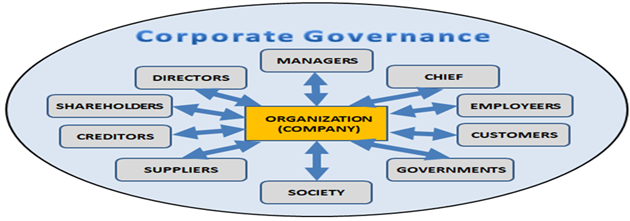
This investment in scientific development and its insights into the phenomenon of the firm, from its earliest research, allows corporate governance to play a fundamental role in the arrangement of the interests of capital versus equity. The governance structure's communication model explained in Figure 1, structured based on the contributions by Boaventura et al. (2009, p. 5), shows a conversational space with messages from various channels contextualized with two-way arrows between the entities. These arrows represent the various modes that allow stakeholders to interact with the firm.
Actors Involved in Corporate Governance
Source: created by authors
The entities represented by the stakeholders are in a first approach, recording only the basic context of these relationships, but the double arrows represent the need to receive and generate content from each of the actors, which creates the space in the firm to process the content and determine which information is relevant to the production of profits and equity in the context of governance.
It should be noted that the arrows indicate bidirectional communication between the actors and the organization, explicit as documents, files, spreadsheets, and contracts, or implicit as informal relationships, conversations, and agreements, thus in a multimodal arrangement.
The organization includes roles such as employees, managers, and directors involved according to the hierarchical structure adopted; governments, society, and customers as consumers and regulators; and the market with shareholders and creditors. All stakeholders in the spectrum of the organization under organizational governance serve the stakeholders and are committed to sustainability.
Irrespective of the direction of communication, modality, hierarchical level or formalism, there is a need for information competencies, which are also understood here as IS arguments (Starec, 2011). They enable information workers in the corporate governance process to face problems, challenges, and professional demands of low, high, and medium complexity.
The preparation of conversations, presentations, lectures, and explanations of ideas to maximize the use of resources and minimize risks to achieve the best results has become a trend in the design of process disruption in Industry 5.0. The longevity of the organization becomes fundamental, with the participation of all players, avoiding the collapse of the private or public initiative in the face of the economic and social challenges that the market poses during organizational activity.
The objective of improving the quality of life of all profiles and the institutional continuity of the company through the use of governance raises the expectations of the stakeholders in order to consolidate the partnership and cooperation. In this way, they are ready to adapt to the changes in the market resulting from the mutation of social interactions, the expansion of the company's fields of activity, the technological evolution, and the constant search for innovation.
The continuous changes in business processes and the intensity of the use of new technologies in organizations with corporate governance require the actors involved to continuously improve their competencies and skills. Starec (2011) calls these skills and capabilities informational competencies, which seek to minimize conflicts between capital and resource management: a) Digital fluency; b) Cognitive ability to assimilate relevant and priority information; c) Ability to retrieve, analyze, organize, index, disseminate, and use increasing volumes of information (Information Management); d) Critical thinking; e) Active and autonomous learning; f) Learning to learn in order to learn to do; g) Lifelong learning (Starec, 2011).
All these competencies can enhance decision-making in organizations, but they play an essential role in organizations managed by governance. Bringing these skills together can improve communication between managers and the governance committee, avoiding the development of communication noise that leads to a drain of resources that interferes with organizational longevity (Carvalho, 2023).
Perennialism is maintained with an adequate assessment of the strategic guidelines for the formation of the action plan, avoiding semantic mismatch between stakeholders with the use of conversational competence to expand communication capacity, as argued by Lucena Filho (2010).
Communicative competence is not only about good writing or oratory but also about analyzing feedback on guidelines, evaluating indicators, and monitoring results defined in the action plan. Strategic directives, interpreted from the cognitive and information management capacity, must be absorbed from the capacity for critical and systemic interpretation, seeking to characterize the relevance to justify management actions (Davis, 1999).
Sperber and Wilson (1995) suggest that the organization's management can increase the impact on the governance model by recognizing the ability of managers to make decisions that guide the improved interpretation of information for the business.
Management actions can expand the board's potential and strengthen decision-making by filling the information gaps inherent in the uncertainties arising from the organizational environment. Uncertainties that can be remedied with IS constructs that propose autonomous and continuous learning of new management arguments.
According to Starec (2011), the relationships between actors in governance for any information space are influenced by the theory of relevance, which can enhance the effects of these information competencies.
Duque (2015) points out that the cognitive theory of attention and information processing theory form the relevance theory - RT. RT shows that attention is selective, varies from actor to actor, and has informational distortions inherent in the informational space, and that it aims to explain the basis of human rationality, which is confirmed by Campos and Rauen (2008).
Kuroki Junior (2018) argues that the theory of relevance explains and distinguishes verbal media from nonverbal media since the stimuli that intensify the relevance of the message may have been captured by the receiver even before their intensity is exhausted.
The author reveals that the burden of knowledge about the relevance of the topic addressed in verbal environments is based on the multiplicity of main and ancillary stimuli inherent to the power of human expression and the knowledge of the sender. Relevance enhances communications between the actors in Figure 1 when verbal support is used as the most common modal, significantly altering strategic action.
The following are some of the constructs used in the interdisciplinary approach to IS and corporate governance: Information ownership, Information flow (Borko, 1968), Information management, Critical thinking and Active and autonomous learning (Starec, 2011), Theory of the firm (Souza, 2005), Conversational skills (Lucena Filho, 2010), Decision making (Carvalho, 2023) and Relevance theory (Kuroki Junior, 2018).
However, the constructs addressed in the various theories presented need to be integrated into the simultaneous use of governance at various times until it translates into more intense use, as observed in industry 5.0.
Contemporary Review of the Application and Use of the Term Governance
Historical Approach and Principles
To make use of the multidisciplinary paradigm of IS, concepts relating to governance were approached with greater emphasis and structured in a temporal manner without, however, failing to characterize important aspects that occurred during the historical evolution of the term governance.
Spanning several disciplines, the review brought together state-of-the-art and state-of-the-practice arguments, as governance is also intensely practiced and used in different scenarios, initially in an experimental way.
The industrial period consolidated the initiatives of the bourgeoisie at the time to form and internalize the concept of property. Investment sought to maintain and expand fortunes developed in the pre-industrial period, with economic activities that were sometimes unethical but generated a good return for the established bourgeoisie. The return on investment became an important concept for maintaining the political and financial importance of the bourgeoisie and became the source of funding for implementing the capitalist model (Souza, 2005).
The strengthening of capitalism created a social class from the artisans who worked in industries and were motivated by higher pay, called the proletariat. Attachment to capital and the structure of surplus value, labor exploitation, profit mechanisms, and financial empowerment created the entrepreneurial class, also called the bourgeoisie (Marks, 2015).
The bourgeoisie used capital as the great driving force behind industry through the application of technology and making a profit on investment. The formation of a powerful social class, the bourgeoisie, which has evolved to the present day as entrepreneurs and maintains a conflicting relationship between capital gain and due remuneration for workers, recognizes them not only as employees but also as responsible for building wealth (Marks, 2015).
This conflict between capital and labor began to require considerable effort in the management process, becoming a fundamental discipline in the administration of all resources, be they labor or capital so that both could be arranged in the best way to bring benefits to the actors involved. Managing, administering, governing, and coordinating business actions based on decision-making have become essential in determining the longevity of companies, organizations and the state (Coraiola et al., 2021).
The landmark study on governance is the article by Berle and Means (1932) entitled The Modern Corporation and Private Property. The authors explain the inherent difficulties of a relationship between a principal and other agents who have the power to make decisions on behalf of the principal, which demarcates the conflict between ownership and management.
The history of structuring the term and creating the management model is considered a fundamental element in understanding the derivations of concepts to date. Shleifer and Vishny (1997) understood governance as a means by which investors guarantee that they will make a profit on their investments.
Monks (2001) diverges from the concept of guaranteed profits in his book Corporate Governance. He addresses governance in pension funds, consolidating his analysis by establishing that governance is the relationship between the various stakeholders to determine the direction and performance of the company.
The Organization for Economic Cooperation and Development - OECD - created in 1948 with the aim of helping the Marshall Plan to rebuild Europe after the Second World War, states that corporate governance deals with the institutional and political structure of corporations, and its principles are organized as follows:
- Ensuring the basis for an effective system of corporate governance - corporate governance should promote transparent and effective markets consistent with the rule of law;
- Shareholders' rights and key ownership functions - corporate governance should protect shareholders' rights;
- Equitable treatment of shareholders - corporate governance should ensure equal treatment of the various types of shareholders;
- Role of other stakeholders in corporate governance - corporate governance should guarantee the interest of all those involved in the company, creating wealth, jobs and sustainability;
- Disclosure and transparency - corporate governance should ensure accurate and timely disclosure of all issues relevant to the company;
- Responsibilities of the Board of Directors - corporate governance should guarantee the strategic orientation of the company, efficient monitoring of management and accountability (Louette, 2008, p. 87).
Blair (1998) broadens the concept of governance to the integration of these OECD principles with organizational guidelines dealing with inappropriate management processes to reduce conflicts of interest between the parties involved and stakeholders, which are translated into corporate governance decisions.
Babic (2003) calls corporate governance a power structure that involves decision-making issues and the exercise of leadership, with methods that meet established interests and emerging demands - thus strongly influenced by the legal institutes and respective regulatory frameworks inherent to each country.
Jensen (2000), in turn, considers that corporate governance mechanisms are structured into four categories: 1) Legal, political and regulatory environment; 2) Capital markets, mergers, and acquisitions; 3) Competitive market in the sector; 4) Internal control mechanisms.
The use of the term governance has intensified since the financial crisis of the 1990s, which was felt throughout the world economy because of real estate speculation in the United States, also known as the financial bubble (Costa, 2016).
Governance in the Public Sector
In the context of public power, it is worth noting that the state had already identified investment and labor relations as a source of revenue and thus structured processes to promote the interests of entrepreneurs throughout the industrial period, allowing for the consolidation of important capitalist states, which applied their power to public policies that returned services to society and promoted private initiative in the various branches of business interest.
This strong attachment to capital was impacted when new command structures for organizations emerged, largely due to the need to perpetuate the large conglomerates at the time, protected as the property of industrial and business families (Oslon, 1999).
The state's public policies on the use of governance in this sphere, with the capitalist regime, also promoted the development of new concepts in the creation of the public good as opposed to the generation of profit from the perspective of adopting governance. Oslon (1999) and Ostrom (2000), Nobel laureates in economics, antagonized perceptions about the factors involved in public policies that increase the likelihood of cooperation between the actors essential to establishing the governance of the public good.
In Brazil, the principles were translated into law with Decree No. 9.203 of 2017, which aimed to review the specialized literature, clarifying in addition that the coordinated and contextualized application of these principles is fundamental for good governance, as summarized by the Civil House of the Brazilian government (Brasil, 2023) as guiding public governance policy: Responsiveness; Integrity; Reliability; Regulatory improvement; Accountability and responsibility; Transparency.
However, as Oslon and Ostrom translate these principles into the conduct of people who take on executive positions, they become managers of the public good without losing the personal, relational characteristics and political interests of all kinds that are manifested in the theories described by the researchers.
Rational choice theory, among the theories mentioned above, applies to the translation of governance principles and considers that there is a social dilemma of choices that are independent of individuals, even if the actors are in a situation of cooperation, a situation that could minimize the dilemma, but which is overlaid by the possibility of not making the best decision for the organization out of personal interest.
Oslon (1999), in contrast to Ostrom (2000), points out that conflicts occur during cooperation because decision-making, although dependent on the individual, highlights the rationality of decisions and rational choice, thus overcoming the conflict and making managers opt for the best result for the organization, to the detriment of personal interest.
In Oslon's (1999) view, therefore, a dependence that coexists with limits of rationality favors cooperation (Moura, 2010) due to the proximity between the actors without being carried away by self-interest.
Among the factors pointed out by Ostrom (2000) to increase cooperation in processes of structuring governance policies, we can mention the intensity of communication between the actors, the size of the cooperation group, the degree of information available, reciprocity and coercion between the actors, factors that minimize the effects of the dependence of individuals in the governance process.
Oslon (1999) replicates Ostrom's (2000) arguments by considering that in organizations, there is a possibility of discrepancy between individual and collective interests, and even if there is an interest in building common goods, individuals in a situation of cooperation do not want to bear the costs of producing the good.
The same occurs in state bodies, known as agenda conflict, as society expects those in power to make the best use of taxes, providing the maximum of state functions for the benefit of citizens (Andrada & Rossetti, 2007).
In consolidating the use of governance in public or private activity, Hardim (1993) highlights the role of the individual and collective choices of the stakeholders involved in the governance process. If there is a similarity between the choices, there is a strong possibility of achieving the organizational goals. However, there is less added value if there is bargaining between stakeholders to favor one choice over the other.
Choices involve making decisions, resulting in the act of investing and the act of managing, among others, which are important for the genesis of governance, whether in the public or private sector, as Hardim (1993) pointed out. These acts occur in various aspects and circumstances of organizational interactions in modern society.
In the public sector, administrative acts require a set of formal requirements to be established. In the private sector, if not characterized by governance principles, they reveal a management model that minimizes the effects of collective choices.
The tragedy of the commons, a term coined by Hardim (1993, p. 206), explains the importance of consumer regulation derived from governance for managing the common good. When individual choices maximize the use of the common good, it is suggested that other actors make the same consumption decision. When this competitive behavior is consolidated, the possibility of scarcity of the good increases, creating the tragedy of low availability of the good.
In the private sector, the relationship between the owner and the executive manager is conflictive, complex, and difficult to arrange with administrative management arguments. Berle and Means (1932) were able to detect additional requirements that minimize the effects of this conflict.
Agency Theory (Jensen, 2000) identifies the treatment of this conflict as a principle of governance. Berle and Means (1932) define the first governance approach to minimize the organizational impact resulting from the individual and collective choices inherent in the conflict.
They are concerned with maintaining trust between the agents in conflict, designed to reflect in the management process the intention of the investor and the firm's desire for perpetuity and return.
Information Management as a Tool for Organizing Information
The complexity reflected in the introductory concepts that the authors address with the concept of governance proposes the integration of information from various modes. Davenport (1994) proposes an information management model that increases the competence of the decision-maker to stratify and capture information that can expand the manager's potential in the face of capital needs.
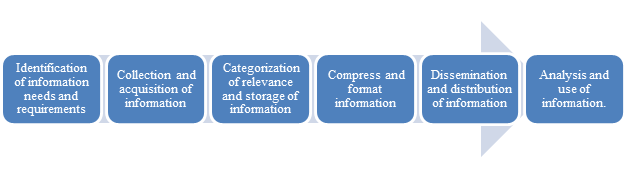
Figure 2 shows the stages of information management, which, in a cyclical application model, are augmented by information structure systems such as the organization and representation of information, establishing the skills and competencies required for information management.
Information Management Methodology
Source: Davenport (1994).
The flow defined in Figure 2 identifies the information needs that define the parameters for collecting and acquiring relevant information, but it is necessary to categorize the information to meet the user's search requirements.
Information storage requires the information to be compacted to its granular level: knowledge item. The dissemination and distribution of information to users motivates the formation of information behavior. The analysis of this behavior considers the relevance of the information and the reduction of uncertainties.
In this multidisciplinary stage between IS and governance, we sought to highlight the main terms found from a logical relationship perspective, which provides a better understanding of the properties, characteristics, and information flow that governance deals with.
The contents highlighted form a list of terms from the source of information that represents the initial understanding of the scope of application and use of the term governance. Examples of terms highlighted are rational choice theory, investment, management, agenda conflict, the tragedy of the commons, profit, return on investment, organizational management, decision-making, shareholders, corporate governance, corporate governance categories, governance principles, and controlling shareholders, among others.
The terms marked in bold will be treated in terms of their logical context to identify their contribution to explaining, constructing, and recording the concept of governance, following a methodological path.
The methodological approach includes the formation of a vocabulary, the structuring of a taxonomy and ontology to formalize the contribution of IS to governance. The arguments for addressing the relevance of the terms within a methodological path are presented below. In the state of the art, the methodological path consists of foundations to consolidate its stages.
Relevant Aspects for the Methodological Path
This exploratory research, which involves an analysis of the bibliography and a case study with the target population, uses information representation as a discipline that can foster multidisciplinary between governance and IS, considering as arguments for recording this evidence the need to bring forward concepts and tools, techniques, methods and a systemic vision to the tools of any manager who wants to ratify, rectify, implement or increase governance processes in organizations.
In the methodological path, bibliographic research is one of the stages that integrates all the arguments highlighted with the respective disciplines as arguments that have the potential to increase decision-making. The concept of information property and information flow in IS allows us to propose associations, factorizations, synonyms, homographs and polysemes between the terms found, consolidating a multimodal representation of information that expands the relationships and characteristics for the use of information.
In this stage of the methodological journey, the concept of relevance is added to the disciplines identified in the literature review under a multidisciplinary context, defined by Kress (2009) as semantic contributions.
From a syntactic perspective, the properties of information are enhanced to structure constructs based on syntactic arguments that generate auxiliary modeling structures detecting nouns, objects, verbs, and nominal or predicative complements.
To properly refine this syntactic and semantic selection, it was decided to identify the most frequent terms with the role of nouns or objects, which could be correlated in the context of governance with the lines of research found.
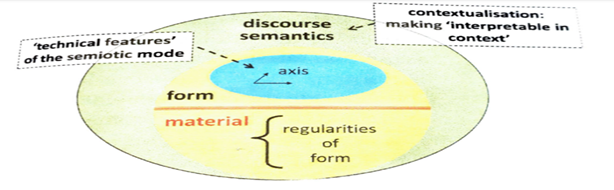
Bateman et al. (2017) point out, in Figure 3, that the path is based on semantic discourse, used during the description of the methodological path, with the aim of contextualizing the conformation of the constructs. However, the technical characteristics of the semiotic mode can be applied to the modeling of the data presented, thus based on multimodality - the convergence of modes in which concepts and terms are presented so that a regular format can be presented that materializes the results of the research.
Abstract Definition of the Semiotic Model
Source: Bateman et al. (2017, p. 117).
Representation model that condenses the organization of research findings into logical arguments. To this end, the constructs are structured within the semantic discourse, i.e., considering the literature review presented as a representation that allows the interpretation of the context in which they are addressed.
The integration of semiotic modes, especially those observed in the figures during the contextualization of the review, with the hermeneutics of the presentation of the authors and their research adds to the context of the possibilities of using interdisciplinary arguments to solve problems specific to the discipline of governance.
This method requires validation from users who deal with the concepts presented and with governance, as well as various incursions into communities of practice so that the potential of the constructs to implement and strengthen governance can mature.
The constructs refer to nouns, concepts, and terms with which they try to name and predicate logical relationships based on techniques of term treatment, allowing the definition of the model that represents the ontological commitment (Bateman et al., 2017). Thus, the commitment is to represent the information about governance to build a model that supports the organization of the constructs necessary for governance.
Bateman et al. (2017) note that the use of these named relations must be consistent with the semantics of the discourse being analyzed, with a focus on maintaining the commitment made to represent the model. However, considering the relevance to the proposed objectives of using the ontology as a preponderant factor in establishing contributions to improve the ontology, as well as in analyzing the progress made in governance.
To develop the information representation based on a conceptual representation, we used the process of evaluating the statements about the objects of the IS constructs found in the literature search (Dahlberg, 1978), noting that each statement is a characteristic of the construct and describes its attributes, properties, and flow. In this sense, the predictable attributes of the constructs can determine the hierarchy between the terms through polysemy, factoring, and synonymy, using the deductive method, making it possible to structure the information model.
Applying the Methodology to the Literature Review
The first initiative is a hierarchical approach to the terms found, seeking to deduce those that are already recognized as disciplines and that have been evaluated within the literature search as entities.
It should be noted that the representation of information to format governance constructs is aimed at organizing knowledge to broaden the spectrum of use of organizational governance in institutions. In this case, it proposes an environment of greater interactivity that allows the institution to perpetuate itself, with a greater possibility of applying its information resources.
Figure 4 reflects this objective of organizing information on governance, providing a spatial view of this concept and, at the same time, explaining the Protégé tool's representation arguments, which represent the disciplinary breadth that the literature review has brought to the spectrum of information representation. Figure 4 shows that we were able to reach the disciplines of economics, administration, psychology, IS, communication, and knowledge management.
Structure of the Research Ontology
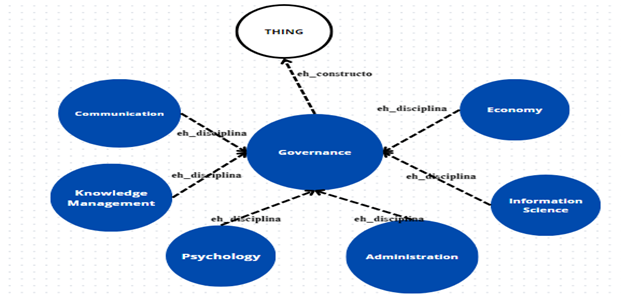
Source: created by authors
The terms, concepts, and meanings highlighted in each of the disciplines are listed below, considering the disciplinary axis in which they were addressed in the literature review. This list has the initial characteristics of a controlled vocabulary due to its ability to identify the topic of governance during the methodological process, but it is not yet capable of retrieving the topic effectively. In Table 1, the disciplines present the list with indentation representing the hierarchization of the terms based on the findings of the literature review.
Certainly, some of these terms are used in other disciplines. This list does not represent the academic ownership of the terms but only their use within the specific context of their presentation, as can be seen in the literature review sections.
The central core of the ontology seeks to identify the constructs captured from the literature review and the characterization of the multidisciplinary between governance and IS.
However, the methodological path must observe the items in Table 1 as the controlled vocabulary of the research and thus correlate the classification of the elements found to justify the constructs' designation. The list was then seen as a representation of concepts, tools, and processes that can help to underpin, structure, and implement governance.
List of Items Marked
|
Information Science |
Economics |
Administration |
Communication |
Psychology |
Knowledge Management |
|
Recovery capacity; Ability to analyze; Ability to organize; Ability to index; Capacity to disseminate; Capacity for large volumes of information; Information gaps; Information space; Relevance theory; Information; Property; Flow; Use; Processing; Information Workers; |
Agency Theory Agency conflict Market; Shareholder; Owner; Organizational continuity; Ownership; Capital; Return on investment; Finance; Capitalism; Surplus value; Labor; Proletarian; Bourgeoisie; Conflict of interest; Power Regulatory framework; Public Policy; Services to society; Conglomerates; Public Good; Dependence of Individuals; Reciprocity Coercion Production Costs; |
Theory of the Firm; Transparency; Publicity; Corporate Governance; Cooperativism; Quality of life; Firm Profiles; Business Process; Management Acts; Responsiveness; Decision-making; Execution of decisions; Board of Directors; Environment; Entrepreneur; Private Initiative; Rational Choice Theory; Integrity Reliability; Accountability and responsibility; Tragedy of the Commons; |
Digital fluency; Communication skills; Feedback; Two-way communication; |
Cognitive Capacity; Critical Thinking; Active Learning; Autonomous Learning; Learning to learn; Learning to do; Lifelong learning; |
Conversational skills Listening; Saying no; Action Coordination Cycle; Types of Conversation; Public speaking; Internal Speech. |
Source: created by authors
Taxonomic Modeling of the Controlled Vocabulary
The ontological modeling of this work is based on a holistic approach with intense use of hermeneutics, structured in the description of the methodological path of this research. The disciplines presented seek to reflect the conceptual breadth and characteristics of their dimensions and use in governance processes in organizations. The selection of disciplines was necessary to consolidate the use of IS tools in structuring conceptual models that propose decision-making in governance processes.
The organization of content derives from hierarchical representation in the context of governance. Hierarchy, association, indentation, semantics, logic, and thematic relationships are additional arguments for representing and organizing information such as instances, classes, properties, data flows, and relationships. These arguments define the spectrum of IS tools that will be used to represent governance constructs.
Modeling begins with translating the constructs into a formal language. Formalism allows models to be ported because they are based on protocol conventions. Protocols enable communication and data transfer between computer systems, as well as the reuse of representative models in specialized applications.
Protégé is one of these specialized applications for building ontologies, which has native protocols for representing the model, as well as communicating these models between computer systems. This portability disseminates the model within the user community, enabling contributions to be made to improve the model.
The domain ontology helps lower-level instances with a common representation language and can be reused in different situations in the same domain, defining a common domain ontology standard. This procedure suggests minimizing incompatibility when dealing with the organization instance, allowing the generalization of properties and relationships to declared classes from other disciplines related to governance.
In the search for this structuring and ordering of concepts, there is a need for contextual knowledge, domain knowledge, and knowledge of the language expressed in the literature review using definitions of terms (Novo & Miranda, 2015), which are revealed as formal language representations of the abstractions and intuitions of the researchers approached. However, there is a difficulty inherent in the procedure that Dahlberg (1978) reveals:
It's not always easy to distinguish or recognize the broader term (the genre) and the specific difference. Often, rather than an actual definition, only descriptions or explanations are given. But it is almost always necessary to try to clearly distinguish the generic term and the specific difference. [...] One can see that definitions depend on one's knowledge of the respective subjects (Dahlberg, 1978, p. 107).
To categorize and classify the vocabulary presented, the generic term was distinguished from the term that represents a tool, technology, theory, concept, content, method, methodology or technique. Based on the arguments in the literature review, the classification resulted in the formulation of instances and classes.
These arguments were recorded in Protégé to create the graphical representation and the formal representations that use the application's protocols. The inference rules were worked out using Protégé's reasoner. The reasoner uses the registered parameters of instances and classes and makes automatic associative and equivalence inferences to create new arguments.
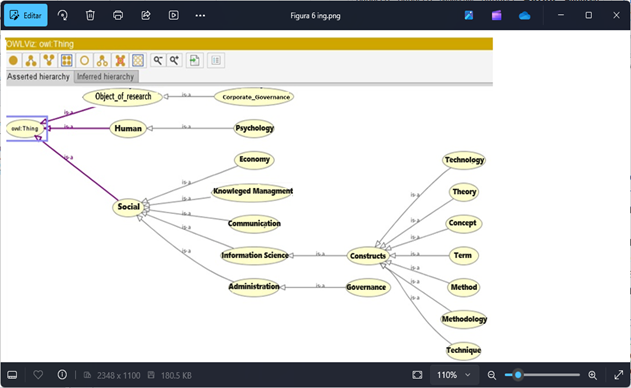
Figure 5 shows the structure that represents the establishment of inference rules to enable classification of controlled vocabulary terms considering the defined instances.
As Bateman et al. (2017) guide, the terms will be classified and indexed according to the semantic context in which they were presented, allowing them to be associated with the classes of constructs, according to the original meaning of the terms and then with the disciplines of the social sciences and humanities that were presented in the literature review.
Classification Structure for the Controlled Vocabulary
Source: created by authors
Protégé represents classes as ellipses and is completed by the representation of properties. There are also instances associated with the classes, which can also have properties declared. All instances must be registered if they are differentiated from classes based on hierarchical or semantic classification.
The arrows represent the semantic hierarchy between the classes and occur according to the relationships observed during the hermeneutic evaluation of the information source established in the research. In this case, the logical statement is that they are part of the original Think class and so on (is-a) until they reach the most distant class declared.
Classes have instances representing the actual occurrence of arguments presented in their definition. Therefore, arguments allow derivations of the class to be applied and relationships to be created between them by analyzing their meanings and usefulness for the governance process. Instances are occurrences that can be derived into a construct.
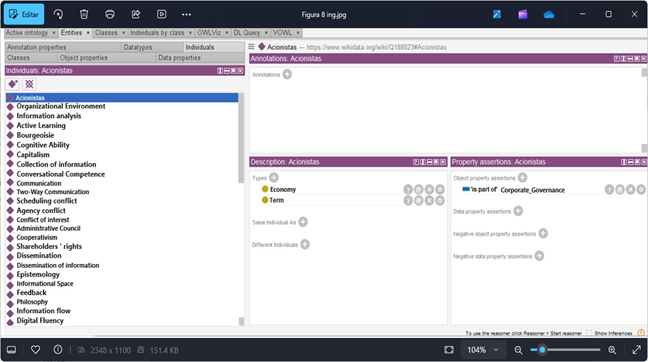
Figure 6 is an example of registered instances that derive from the controlled vocabulary defined in the previous step. These instances need to register their characteristics, properties, content, and relationships with other instances or understandings to represent knowledge about governance.
The scope of properties registered for an instance contributes to strengthening the class, reflecting the appropriate representation of the governance context.
Terms Registered in Protégé from the Controlled Vocabulary
Source: created by authors
Protégé generates in formal language and representation the relationships between the instances as constructs that can contribute to an overview of the disciplines that involve governance in organizations. Figure 6 shows that the concept of a construct is consolidated among the arguments used to identify the controlled vocabulary.
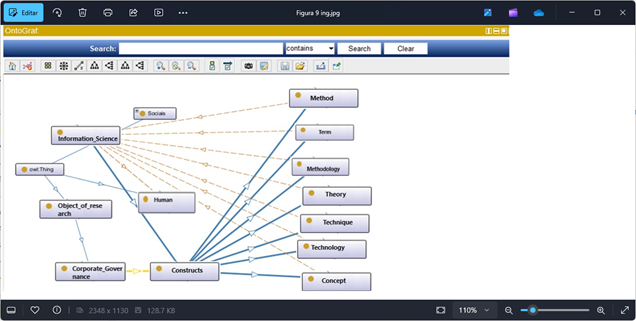
Figure 7 shows the categorization established in IS to determine which vocabulary terms can be considered constructs. However, in the context of governance, it was not represented which of the selected constructs should be considered when specifying the taxonomy.
Model Representing the Constructs Based on the Disciplines
Source: created by authors
It should be noted that this type of information representation shows the initial classification of the terms in the controlled vocabulary, seeking to identify similarities without losing the objective of the representation, which is to characterize the constructs relevant to reducing uncertainties.
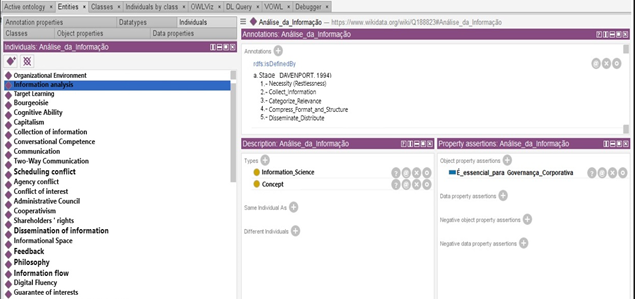
Figure 8 shows how to characterize a construct with Protégé. The terms were transformed into instances of the classes, as is the case for the term presented: "Information Analysis". The concept was presented in the description of the term as the stages of information analysis defined by Davenport (1994). In the annotations of the term, it is possible to describe all the information dealing with the term, including characterizations, how the construct is used when it can be essential for corporate governance, and all the semantic aspects found in the literature review.
In the descriptions of the information analysis, it is possible to correlate the term to the classes to which it belongs, establish associations with other terms, and determine the distinctions that the term has from other recorded instances.
In the property table, it is possible to establish relationships between instances using concepts of belonging, existence, necessity, and essentiality, such as the one recorded for the term information analysis. In this case, information analysis was classified as essential for corporate governance.
The arguments recorded in Protége and presented in this session characterize the stages of the methodological journey to transform a thematic vocabulary into a taxonomy for representing knowledge about the context of the literature review.
Figure 8
High-Level Structure of the Metalanguage Taxonomy
Source: created by authors
The representation models that information analysis is essential for corporate governance and that it is part of the concept of information science. The same model shows that Davenport (1994) establishes the following stages of information analysis: needs (concerns), information collection, categorized relevance, summarization, formatting and structuring, and finally, dissemination and distribution of the results of information analysis. In other words, managers who need to analyze information have a model to follow to consolidate what interests them during the governance process.
In the next stages, the representation taxonomy, together with the relationships and facets, should be transformed into an ontology, adding the capacity for reuse and the possibility of user contributions.
The epistemological section of the research should use the arguments of restrictions, properties, and facets to consolidate the ontology's contribution to the corporate governance domain.
Finally, this section does not limit the possibilities of using the domain ontology, nor does it restrict its evolution into an application ontology.
Non-Hierarchical Relations, Facets, Object Properties, Restrictions, Instance Properties, and Axioms
Classification techniques make it possible to signify arguments as tools, contents, and elements that form constructs. The application of the techniques modulates the formation and assertiveness of the taxonomy in representing knowledge on the subject. It can even extend the maturation of the taxonomy with the arguments needed to form the ontology.
The applicability of the ontology is enhanced by establishing relationships based on the hierarchies, facets, properties, restrictions, and characteristics that represent the corporate governance environment. However, these arguments must be observed from the perspective of relevance and integration.
Relevance can broaden use, causing the ontology to consolidate and form a critical mass that defines an evolutionary cycle of knowledge representation that the ontology brings.
The faceted classification identifies characteristics common to the terms that deal with informational approaches. Considering the term presented in Figure 8, information analysis, which has its properties, restrictions, instances, and axioms registered in Protégé, we went on to identify the facets of the term, as an example:
Information Analysis - A term commonly used in activities that deal with volumes of data to detect information necessary for the context. This term presented in the literature review had the following stages as its scientific argument:
a. Stages according to Davenport (1994):
1. Need (Restlessness);
2. Collect information;
3. Categorize Relevance;
4. Compacting, formatting and structuring;
5. Disseminate and Distribute;
In this context, it is inferred that information analysis is a concept (A); this concept is part of the IS class (B), that the concept is a construct, which implies that the construct contains IS (C). The constructs are structural derivations of the IS arguments (D); and that if information analysis is a construct, it is essential for corporate governance, and that corporate governance needs Davenport's (1994) arguments for its foundation (E); finally, that multidisciplinary allows the establishment of constructs that imply the contribution of IS (F).
A. Information analysis ∍ Concept;
B. Information analysis <-> Information science;
C. Concept ∍ Construct <-> Construct C Information science;
D. Construct ∍ Information Science;
E. Information analysis C Construct U Information science <-> Information analysis ∍ Corporate governance;
F. Multidisciplinary ∍ Construct -> IS;
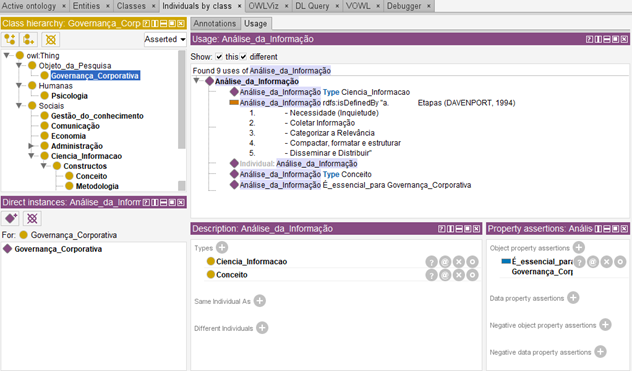
Figure 9 shows an effort to maximize information representation by creating a more relevant set of relationships between terms and applying the techniques of named relationship, polysemy, synonymy, factoring, and semantic and faceted analysis of terms to define properties and the information flow between the structuring of a concept and its relationship as an information science construct applicable to corporate governance to minimize uncertainties.
These logical arguments shown in Figure 9 help the Protégé application to infer automatically, expanding the set of relationships, discovering axioms or assertions, as well as establishing relationships between the items registered in the taxonomy.
Representation of the E
Source: created by authors
Thus, following the methodological path, an ontological model can be established by basing constructs on the characteristics of the disciplines surveyed. As a result of using the tool, making it possible to establish the number of arguments that have been organized, the Protégé induction and deduction tool is used to create as many relationships as possible and strengthen the representation of the knowledge that is seeking structure for application in the Court of Auditors' use case.
Inferring the Structure of the Ontological Model
Automatic inferences were developed in Protégé after using the Reasoner function, which works with the relationships created in the logical operators described between A and F in the previous section.
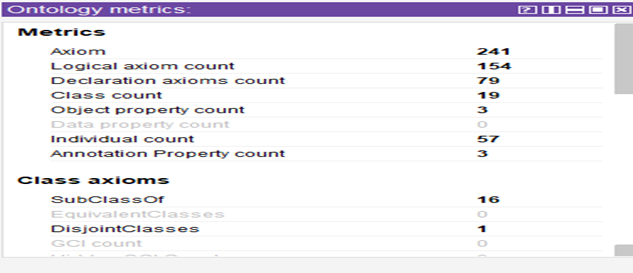
The participation of users in validating the model will make it possible to increase the number of structures. Figure 10 describes the volume of structures created at this stage of the methodological journey. With each new registration, this Protégé feature counts all the arguments, which allows reuse and participation to be monitored, observing the strengthening and suitability of the ontology for users.
The registration of 57 terms highlighted in the literature review, with the definition of 19 classes, enabled the establishment of 241 axioms and 79 axiomatic statements. These represent the objective definition of concepts for structuring the taxonomy.
Protégé Statistics with Inferences Created by Reasoner
Source: created by authors
Following the methodological path, arguments such as factoring and induction, performed automatically by Protégé, were increased during the registration of entities, properties, and instances by analyzing synonyms, using homograph to focus on concepts of interest to management, and polysemy to identify the concept most closely related to the disciplinary entities. These resources for dealing with terms facilitated the evolution of the taxonomy, as shown below.
Applying the Taxonomy to Develop the Ontology
This taxonomy was applied in a Court of Auditors when the IT corporate governance plan was being formatted to support the various requests made for the application of information technology. Based on the relationships between stakeholders, the definition of user roles led to the implementation of the new administrative structure, which has a Secretary, three Coordinators, and eight Sector Managers, responsible for coordinating the activities of 47 technicians and two technology service providers.
Action research, characterized as a qualitative method, was used to support the arrangement of competencies inherent in the positions of command, in line with Barbosa et al. (2022), to control the disposition of resources to meet the IT demands of that body.
The three coordinators, committed to applying the ontology to define the action plan and to stabilize the new organizational chart, recognized themselves as technical authorities, established and with managerial knowledge to meet the requests for information technology services and products.
In this proof of concept characterized by multidisciplinary (Bicalho & Oliveira, 2011), as an explicit instrument in the organization of knowledge, it was possible to reconcile technical management knowledge with technical IT knowledge, organized by constructs to promote governance, based on basic disciplines such as administration and information technology.
The sector's corporate governance allowed for greater fluidity in decision-making, and the constructs were seen as reducing uncertainties on the part of IT managers when implementing the organizational chart.
Objectively, since it is not the main focus of this research, we would like to highlight some advances characterized by the speed with which they were consolidated with the representation of information modelled as ontology:
- Systemic vision at the management level - The managers observed the models and were able to guide the initial conversations to define the action plan with an emphasis on the disciplines presented. In this way, there was a gain in communication and in the interaction of activities that created interdependence;
- Understanding of the construct - the constructs presented, considering concepts, tools, properties, and techniques, began to be used in the internal planning of each of the work units;
- Breadth of application - the constructs were used based on the concepts presented and gave rise to a significant number of new application proposals, especially in information technology.
- Productive meetings - Meetings were presented considering the modeling of decision-making within each discipline, making control and monitoring of targets more objective.
- Communication - communication between managers and between managers and the Court became more integrated, avoiding negative feedback about difficulties in understanding the message that everyone was passing on without any dissonance in context or terminology.
- Larger and more intense deliveries - The unit started to develop the action plan in an integrated manner, making users understand the work methodology, which enabled a significant set of deliveries for 2022.
Results
The definition of a methodological path to establish constructs should be seen as a way of using the representation of information and IS in the various themes that involve social life, communities, and areas of knowledge.
The ontology tool can be seen as an instrument for using the multidisciplinary paradigm of IS. This argument expands the possibility of contributing to different sciences and their respective disciplines.
Taxonomies and ontologies allow for a model vision, explained in formal language, which can be adapted according to the context and research topic.
The results presented were significant and relevant for the Court, but the development of constructs requires the participation of a team with a higher level of interaction than that offered by the Court.
A higher level of reuse of the ontology is proposed to consolidate it as a domain ontology. However, considering the results presented at the Court of Auditors, the governance of information technology resources has added value to the processes.
The exercise of applying the ontology was considered by the managers involved as a structural and objective way of representing knowledge and guiding decision-making. In this context, the greater the return for the users involved, the greater the contribution to the strengthening of the ontology.
Conclusion
Identifying terms that represent disciplines, contexts, entities, properties, instances, and data flows in a historical context of the use of the term governance is a challenge that requires intensive improvement work to identify the relevance of the concepts and the way to structure knowledge on the subject, including allowing it to be retrieved for practical use in management processes.
It is, therefore, a precarious first approach that matures with the resilience to intensively research how the organization of related terms can be transformed into a construct that promotes the use and stabilization of corporate governance in organizations.
In this process, the preliminary use of the controlled vocabulary considering the conceptual grouping then establishes the hierarchy between the terms in the proposal of taxonomy and finally develops the ontology considering the terms found that characterize relationships by information flow, by property, and by concepts that highlight techniques, methods, and methodologies as instruments, organized by information science arguments require the application as proof of concept of the constructs in a real case.
The research made it possible to observe the importance of the theoretical framework as an appropriate source of information for the detection of concepts that can be organized and structured as knowledge for practical use. The structure was used to consolidate the process of organizing the information needed to empower the court's IT management team to consolidate the information flow needed to address the problems of the area. In other words, information retrieval using an ontology model structured the process of retrieving disciplines to increase managers' confidence in making decisions.
Governance begins to be established as the constructs are used, as the quality of IT service delivery flows with less uncertainty.
In this way, we recommend broadening the spectrum of the theoretical framework, including a focus on understanding governance in the context of international organizations such as UN - United Nations Organization, OECD - Organization for Economic Cooperation and Development, Basel Accords and SOX - Sarbanes-Oxley Act. In Brazil, the CVM - Securities and Exchange Commission, IBGC - Brazilian Institute of Corporate Governance, ANBIMA - Brazilian Association of Financial and Capital Markets Entities, among others.
Finally, we can conclude that to broaden the spectrum of possibilities for using a knowledge representation, it is necessary to establish an application context, carry out maturity cycles with IS tools, understand the multidisciplinary nature as incipient, and guide the formation of concepts as constructs that have application in fields such as Corporate Governance. In this way, the level of uncertainty for managers can be reduced, and decision-making can be safer.
References
Andrada, A., & Rossetti, J. P. (2007). Corporate governance: foundations, development and trends [Governança corporativa: fundamentos, desenvolvimento e tendências] (3rd ed.). Book São Paulo: Ed. Atlas.
Araújo, C. A. A. (2018). What is information science? [O que é ciência da informação (1st ed.). Book Belo horizonte: Ed. KMA.
Babic, V. (2003). Corporate governance problems in transition economies. Winston-Salem, Cn: Wake Forest University. Social Science Research Seminar, 1–14. DOI:10.1007/978-0-387-84831-0
Banerjee, A., Duflo, E., Imbert, C., Mathew, S., & Pande, R. (2016). E-governance, accountability, and leakage in public programs: experimental evidence from a financial management reform in India. Cambridge, MA. National bureau of economic research. https://bit.ly/3krsyai .
Barbosa, A. D., Teixeira, B. B. F., Oliveira, A. M., Pessoa, T. R. R. F., Vaz, E. M. C., & Forte, F. D. S. (2022). Interprofessionality, training and collaborative work in the context of family health: action research [Interprofissionalidade, formação e trabalho colaborativo no contexto da saúde da família: pesquisa-ação]. Book Saúde Debate. Rio de janeiro.
Bateman, J., Wildfeuer, J., & Hiippala, T. (2017). Multimodality – foundations, research and analysis a problem-oriented introduction. Book Berlin: De Gruyter Mounto.
Berle, A. J., & means, G. (1932). The modern corporation and private property (1st ed.). Book New York: Macmilian Publishing Company.
Bicalho, L., & Oliveira, M. A. (2011). Theory and practice of interdisciplinarity in information science. [Teoria e a prática da interdisciplinaridade em ciência da informação]. Perspectivas em ciência da informação. Belo Horizonte, 16(13), 47–74. https://periodicos.ufmg.br/index.php/pci
Blair, M. M. (1998). For whom should corporations be run? An economic rationale for stakeholder management. Long Range Planning, 31(2), 195–200. https://doi.org/10.1016/s0024-6301(98)00003-x
Boaventura, J. M. G., Cardoso, F. R., Silva, E. S., & Silva, R. S. (2009). Stakeholder theory and theory of the firm: a study on the hierarchy of objective functions in Brazilian companies. [Teoria dos stakeholders e teoria da firma: um estudo sobre a hierarquização das funções-objetivo em empresas brasileiras]. RBGN, 11(32), 289–307. https://repositorio.usp.br/item/002176790
Borko, H. (1968). Information science: what is? American documentation, 18(1), 3–5. https://dx.doi.org/10.1002/asi.5090190103
Brasil. (2023). Civil House – Public Governance Policy [Casa civil – política de governança pública]. http://bit.ly/3jnnl6p
Burke, P. (2012). A social history of knowledge ii: from encyclopedia to Wikipedia. [Uma história social do conhecimento ii: da enciclopédia à Wikipédia]. Book Rio de janeiro: Ed. Zarah.
Campos, J., & Rauen, F. J. (2008). Topics in relevance theory [Tópicos em teoria da relevância]. Book Porto Alegre: Ed. Edipucrs.
Carvalho, D. B. S. (2023). Corporate governance, intangibility and regionality: evidence for B3 companies [Governança corporativa, intangibilidade e regionalidade: evidências para empresas da B3. Dissertação em administração (mestrado)]. PPGA – Faculdade de Administração, UFU – Universidade Federal de Uberlândia. Minas Gerais. https://repositorio.ufu.br/handle/123456789/37074?mode=full
Coraiola, D. M., Barros, A., Maclen, M., & Foster, W. M. (2021). History, Memory and the past in organizational and management studies. [História, Memória e passado em estudos organizacionais e de gestão]. Rae – Revista de Administração de Empresas. Fgv/eaesp. São paulo, 61(1), 1–9. Http://dx.doi.org/10.1590/s0034-759020210102
Costa, F. N. (2016). Financial governance, banking system and financial instability in Brazil: research by Felipe Rezende. [Governança financeira, sistema bancário e instabilidade financeira no brasil: pesquisa de Felipe Rezende]. In blog Fernando Nogueira da Costa. Campinas. São Paulo. http://bit.ly/3kxj32u.
Dahlberg, I. (1978). Concept Theory. [Teoria do conceito]. Ciência da Informação. Rio de janeiro, 7(2), 101–107. https://doi.org/10.18225/ci.inf.v7i2.115
Davenport, T. H. (1994). Process reengineering: how to innovate in the company through information technology [Reengenharia de processos: como inovar na empresa através da tecnologia da informação]. Book. Rio de janeiro: Ed. Campus.
Davis, K. (1999). Managerial communication and informal networking. Effective communication in the company: how to improve the flow of information to make correct decisions [Comunicação gerencial e rede informal. Comunicação eficaz na empresa: como melhorar o fluxo de informação para tomar decisões corretas]. Book Rio de Janeiro: Ed. Campus.
Duque, C. G. (2015). Relevance of geoinformation in the multimodal process of cartographic communication]. In XVI Enancib, GT 2 – organization and representation of knowledge. [Relevância da geoinformação no processo multimodal de comunicação cartográfica]. In XVI Enancib, GT 2 – organização e representação do conhecimento.] Brasil – PB – João Pessoa. http://www.ufpb.br/evento/index.php/enancib2015/enancib2015
Francelin, M. M. (2013). Interdisciplinarity and complexity in information science: analysis of possible contexts of training and professional practice. In XXV Brazilian Congress of Library Science, Documentation and Information Science. [Interdisciplinaridade e complexidade na ciência da informação: análise de possíveis contextos de formação e exercício profissional. In XXV congresso brasileiro de biblioteconomia, documentação e ciência da informação.] Florianópolis. http://xxvcbbd.febab.org.br
Frota, M., & Frota, M. H. (1994). Access to information: strategy for competitiveness [Acesso à informação: estratégia para competitividade]. Book Brasília, CNPQ/IBICT, Ed. FBB.
Hardim, R. (1993). Collective action. Book John Hopkins University Press. Baltimore. Md.
Japiassu, H., & Marcondes, D. (1993). Basic Dictionary of Philosophy [Dicionário básico da filosofia] (2nd ed.). Book Rio de Janeiro: Jorge Zahar.
Jensen, M. (2000). Maximization, stakeholder theory and the corporate objective function (pp. 00-058). Boston, Havard Business School. Working paper. Cambridge. Ma.
Jensen, M. C., & Meckling, W. H. (2008). Theory of the firm: managerial behavior, agency costs and ownership structure [Teoria da firma: comportamento dos administradores, custos de agência e estrutura de propriedade]. Revista de Administração de Empresas, 48(2), 87–125. https://www.scielo.br/j/rae/a/vr3bbm6tbjstsmqzk4y8y4m/
Kress, G. (2009). What is mode? In C. Jewitt (ed.), The Routledge handbook of multimodal analysis (p. 340). Book London, UK, Routledge.
Kuhn, T. S. (2017). The structure of scientific revolutions [A estrutura das revoluções científicas] (13th Ed.). Book São Paulo: Ed. Perspectiva.
Kuroki Júnior, G. H. (2018). On a multimodal information architecture: reflections on an epistemological proposal. Dissertation (master's degree) [Sobre uma arquitetura da informação multimodal: reflexões sobre uma proposta epistemológica. Dissertação (mestrado)] — Universidade de Brasília. http://dx.doi.org/10.26512/2018.02.d.31920
Louette, A. (2008). Compendium for sustainability: tools for managing social and environmental responsibility [Compêndio para a sustentabilidade: ferramentas de gestão de responsabilidade socioambiental] https://memoriadaeletricidade.com.br/acervo/16789/compendio-para-a-sustentabilidade-ferramentas-de-gestao-de-responsabilidade-socioambiental
Lucena Filho, G. J. (2010) Conversational competencies: a management differentiator AGE-SGDP/SE Lecture Note - Ministry of Agriculture, Livestock and Supply - Strategic Management Advisory. p. 1-11, Brasília. MAPA Institutional Repository: Conversational skills: A management differential. http://agricultura.gov.br
Marks, K. (2015). Capital: Critique of political economy (Vol. 1) [O capital: crítica da economia política (Vol. 1) (tomo 1)]. Book Rio de Janeiro.
Monks, R. A. G. (2001). The new global investors: how shareowners can unlock sustainable worldwide (1st ed.). Book Capstone Publishing.
Moura, T. W. (2010). Public policy for homicide prevention and collective action alternatives [Política pública de prevenção de homicídios e alternativas de ação coletiva]. In texto de discussão. Book Ipea. N. 1513. Brasília.
Novo, H. F., & Miranda, J. G. V. (2015). Knowledge organization from the perspective of the dynamic model of conceptual analysis [Organização do conhecimento na perspectiva do modelo dinâmico de análise conceitual]. In XVI Enancib, GT 2 – organização e representação do conhecimento.] Brasil – PB – João Pessoa. http://www.ufpb.br/evento/index.php/enancib2015/enancib2015
Oslon, M. (1999). The logic of collective action: public benefits and a theory of social groups [A lógica da ação coletiva: os benefícios públicos e uma teoria dos grupos sociais]. Book São Paulo: Ed. Edusp.
Ostrom, E. (2000). The government of common good [El gobierno de los bienes comuns]. Book Fondo de cultura económica, México.
Saracevic, T. (1999). Information science. Jasis - Journal of the American Society for Information Science and Technology, 50(12), 1051–1063. ISSN: 2330-1643
Shera, J. H. (1980). About library science, documentation and information science [Sobre biblioteconomia, documentação e ciência da informação]. In D. J. Foskett (org.). Ciência da informação ou informática? (pp. 91-105). Tradução de hagar espanha gomes. Book Rio de janeiro: Ed. Calunga.
Shleifer, A., & Vishny, R. W. (1997). A corporate governance survey. The Journal of Finance, the American Finance Association, 52(2), 447–922.
Souza, A. N. (2005). Evolution of corporate governance and effects of governance levels in Brazil [Evolução da governança corporativa e efeitos dos níveis de governança do brasil]. Dissertação (mestrado). Programa de pós-graduação em economia-face-unb. http://face.unb.br
Sperber, D., & Wilson, D. (1995). Relevance: communication and cognition (2nd Ed.). Book Oxford: Ed. Blackwell.
Starec, C. (2011). The new frontiers of knowledge in the world of work. In K. Tarapanoff (org), Organizational learning (Vol. 2) [As novas fronteiras do conhecimento no mundo do trabalho. In K. Tarapanoff (org), Aprendizado organizacional (Vol. 2)]. Book Curitiba: Ed. IBPEX.

Page 1 of
Download Count : 39
Visit Count : 114
Keywords
Governance; Representation of Knowledge; Multidisciplinary; Vocabulary; Disciplines

Author(s) Information




How to cite this article:
Bastos, G., Gottschalg-Duque , C., & Orlandi, T. R. C. (2024). Representation of corporate governance information organization of information as constructs for governance. European Journal of Studies in Management and Business, 30, 74-101. https://doi.org/10.32038/mbrq.2024.32.04
Acknowledgments
Not applicable.
Funding
Not applicable.
Conflict of Interests
No, there are no conflicting interests.
Open Access
This article is licensed under a Creative Commons Attribution 4.0 International License, which permits use, sharing, adaptation, distribution and reproduction in any medium or format, as long as you give appropriate credit to the original author(s) and the source, provide a link to the Creative Commons license, and indicate if changes were made. You may view a copy of Creative Commons Attribution 4.0 International License here: http://creativecommons.org/licenses/by/4.0/