






Original Research
The Use of Nudge as an Influencing Factor to Micro and Small Enterprises to Improve Risk Culture in the Federal District


- Abstract
- Full text
- Metrics
Risk management has always been a part of society. However, Brazil exhibits a high mortality rate among Micro and Small Enterprises (MSEs) in their first years, which may indicate that they lack a well-implemented risk culture or are unfamiliar with this topic. This research aimed to find an effective Nudge used to induce a risk culture behavior in MSE. The present work investigated the potential influence of Nudge techniques, from behavioral economics, on the risk culture in MSE. As a methodology, action research was conducted using two applications of the same questionnaire, before and after the use of the Nudge technique, known as priming, in MSE and in the Brazilian capital, Brasilia. According to data from the Commercial Registry of the Federal District, there are approximately 158,416 micro and small enterprises in Brasilia. For the purposes of defining the sample, a 95% degree of confidence and a 5% margin of error were adopted. A total of 384 enterprises were selected as the sample for the survey. After completing all the stages, it was concluded that the use of nudge was effective in inducing micro and small enterprises to examine their risk culture in another Prisma. Only in cases in which the approach was not perceived, an average performance of 46.12% was obtained, indicating the efficiency of the technique. In the context of this study, initial findings suggest that micro and small enterprises can utilize priming techniques to enhance risk perception.
The Use of Nudge as an Influencing Factor to Micro and Small Enterprises to Improve Risk Culture in the Federal District
Davi Ferreira Honorato de Paiva1 , Tomás Roberto Cotta Orlandi2, João Souza Neto2
1Catholic University of Brasília – UCB, Brazil
2University of Brasília – UNB, Brazil
Abstract:
Risk management has always been a part of society. However, Brazil exhibits a high mortality rate among Micro and Small Enterprises (MSEs) in their first years, which may indicate that they lack a well-implemented risk culture or are unfamiliar with this topic. This research aimed to find an effective Nudge used to induce a risk culture behavior in MSE. The present work investigated the potential influence of Nudge techniques, from behavioral economics, on the risk culture in MSE. As a methodology, action research was conducted using two applications of the same questionnaire, before and after the use of the Nudge technique, known as priming, in MSE and in the Brazilian capital, Brasilia. According to data from the Commercial Registry of the Federal District, there are approximately 158,416 micro and small enterprises in Brasilia. For the purposes of defining the sample, a 95% degree of confidence and a 5% margin of error were adopted. A total of 384 enterprises were selected as the sample for the survey. After completing all the stages, it was concluded that the use of nudge was effective in inducing micro and small enterprises to examine their risk culture in another Prisma. Only in cases in which the approach was not perceived, an average performance of 46.12% was obtained, indicating the efficiency of the technique. In the context of this study, initial findings suggest that micro and small enterprises can utilize priming techniques to enhance risk perception.
Keywords: Nudge, Behavior Economics, Companies, Risk Management, Risk Culture
For a long time, risk management has been present in combating losses and, from time to time, has revealed itself to be surprisingly effective in identifying good opportunities for enterprises. Yet, it is not common for micro and small enterprises to implement a risk culture model where the primary goal is to introduce institutional thinking about the development of policies and regulations that constantly evaluate the inherent risks of executed activities.
The risk culture in trade goes beyond Modernity, coming ever since the beginning of economic transactions and, for example, glimpsing at the losses that could occur in specific logistics, as it was the case of the Romans that took individual responsibility for possible losses and, through that, defined the penalties and subsidies for potential outputs at the concrete delivery of products (Milkau, 2017).
Historically, humans tend to prepare for the worst, and that is completely reasonable, for even dictionaries bring up that approach, referring to risk as “Danger; probability or possibility of danger; being at risk”. It is noticeable that this deep-rooted culture often associates risks with something negative, and therefore, there is no clear encouragement to identify and handle them, often acting out of instinctive fear, which hardly motivates those involved.
It can be noted that managing risks does not involve only containing damages, after all, as the saying goes: “Every cloud has a silver lining”. A clear example of this is when a pandemic occurs, as is the case today, pharmacy chains can generate several positive triggers for their business. Exploiting positive risks can be good, but for that to happen, there must be a very well-established culture.
In some Micro and Small Enterprises (MSEs), there is a notable lack of skills in mapping risks, especially those that could close the business in question. According to data from Brazilian Service of Support to the Micro and Small Companies (SEBRAE, 2017), the main reason for this was that “when starting the company, some entrepreneurs did not gather important information about the market”, i.e., there was no prior planning that took these risks into account.
According to SEBRAE (2017), “previous experience or knowledge in the field influences the permanence of enterprises in the market”, meaning that identifying their threats and opportunities plays a crucial role in the enterprises ‘survival. This further highlights a key feature of entrepreneurs’ behavior, which is “anticipating the facts, intensely seeking information and persisting with objectives”.
Regarding the positive aspect in uncertain scenarios, economist Richard Thaler and Cassie Sunstein (2008) wrote the article “Toward a positive theory of consumer choice”, which initiated the Nudge theory, known worldwide as “a gentle push to the right direction” and ultimately earned him the Nobel Prize in economics.
Developed in 2008 by its creator, Richard Thaler and Cassie Sunstein, the nudge theory was designed to induce consumers to make positive choices, aiming even more at win-win negotiation relationships, in which companies and consumers directly benefit from an assertive choice. This entire context is embedded in Modern Economic Theory, which can predict the choices of individuals who possess a level of knowledge that enables them to make some predictable decisions.
Over the last few years, since the concept of nudge emerged, it has become possible to find numerous practical applications on the Internet aimed at reducing expenses and even changing behavior, utilizing cognitive aspects of the human being through the gamification of certain processes (Lieder, 2019).
Issue
Facing the current scenario of a pandemic in which very few risk managers in the world have been able to predict in their models the scale of the impacts of this problem, we are also dealing with a giant paradox of positive and negative risks, meaning that despite the economic losses of traditional companies, we can see an intangible gain in terms of development of technological solutions and cost reductions, whether through the home office forced by social isolation measures, or even the abrupt digital transformation of enterprises.
Therefore, despite being routinely affected by the risks, several micro and small enterprises went bankrupt in just under six months of the pandemic. This shows an absence of maturity in the culture of risk and this management.
For that purpose, we aim to use nudge theory to develop a model for implementing risk culture within MSEs, answering the following question: Can the use of nudge influence the culture of risk in a micro or small enterprise?
Culture of Risk and Culture of Risk Management – Theoretical Framework
As Hillson (2013) presents, culture of risk “is the values, beliefs, knowledge and understanding, shared by a group of people with a common purpose”; that association of risk and culture has existed since the beginning of human negotiations. According to Milkau (2017), ancient merchants already employed risk culture and its management when they needed to protect their goods during transportation.
Also, according to Milkau (2017), several factors must be considered for the formation of this culture: “Nevertheless, a careful separation is required to avoid a blending of commercial (risk) culture and criminal behavior, corruption, fraud or betrayal. Every company with some thousand people knows the truth that there will be potential criminals and fraudsters, drug addicts, or cheaters of the type of “rogue traders”. In any culture, one will find instances of criminal behavior by individuals, small gangs, or organized crime, and these activities are typically handled by public prosecutors.
As early as 450 BC, the Law of the Twelve Tables (“Leges Duodecim Tabularum”) was the foundation of Roman law. This version of the law comprised seven tables covering civil and commercial law, with one table for each of the following: criminal, public, and sacred law, as well as two supplements. Commercial law was always a basis for the society of a market economy, but it was never simple. However, Rome will also be the first example for the development of a “risk culture” throughout the ages.”
It can be noted that, over time, there has been an improvement in the risk culture within institutions; however, there is still much to be done on the subject. It is essential to note that, although common and long-standing, risk management still appears to be new to many people. After all, even in the face of numerous adversities, it is a significant challenge to change the social culture of reactivity. It is worth reinforcing the need to standardize procedures and systems so that they can effectively contribute to building a risk culture (Assi, 2018).
Returning to Hillson (2013), the model he proposes clarifies that attitudes chosen in response to a trigger or when facing a risk should not be called a risk culture. Still according to him, it is not clear that a company has an appetite or aversion to risk, given that the behavior is in relation to making a distinction between a “risk” and a risk culture of that company, which, for a moment, may make decisions about risks that are not fully rooted, but rather from spontaneous moments.
Risk culture management is considered a complex task and is deeply intertwined with an enterprise's organizational culture, but it is also influenced by the cultural aspects of the society in which that enterprise is embedded. The creation of a risk management model in which the principles influence the dimensions of an enterprise is fundamental in facilitating the management of risk culture (Pinheiro et al., 2021)
Literature Review of Nudge
Developed by its creator, Thaler and Sunstein (2008), the nudge theory was created to encourage consumers to make positive choices, aiming particularly at win-win negotiation relationships, in which enterprises and consumers directly benefit from an informed choice. This entire context is embedded in Modern Economic Theory, which can predict the choices of individuals who possess a level of knowledge that enables them to make some predictable decisions.
Given the experience developed over the years, individuals' choices are improved, consistently surpassing those of newcomers to a given area. This means that those who make the most assertive decisions in relation to the fictitious model applied in the case study become professionals (Thaler & Sunstein, 2008).
In his conclusion, Thaler and Sunstein (2008) affirm that the traditional model is able to predict the behavior of individuals who have the knowledge to carry out their actions in a way that is compatible with the situation presented, which in short, means that it is possible to manipulate consumer choices, though for those who do not have the knowledge, the ability to predict decisions is innocuous.
Another interesting point is the psychological approach behind the decision-making process: it can be seen that in the reflective system, people tend to be more controlled, hard-working, deductive, careful and respectful of norms, but slow; however, in their automatic system mode, they are uncontrolled, non-associative, tend to be unconscious and faster, at which point it is noticeable that there is a point of definition as to whether it is reflective or automatic, with control over the decision that will be made. As a rule, repetitive tasks are automated by the brain, while innovative tasks require a more reflective and systematic approach (Thaler & Sunstein, 2008).
Still according to Thaler and Sunstein (2008), in order for individuals to reach the best decisions, it is necessary to maintain several options for choice, allowing free choice; but it is possible to give “a push for certain choices”, for cases that are outside the reflective system, which results in a conduct that does not cause harm or damage. After all, it is routine to make bad choices, which would not be made if attention were paid at the time of the decision and the information was provided in a clear and complete manner. Another reinforcement is that self-control, cognitive skills, and past experiences are fundamental for this decision to be positive.
All of this created the term “Libertarian Paternalism”, which supports the idea that the architecture of choices should guide the behavior of classes, in the sense that they make their lives better and increase their financial wealth, in other words, it is possible to guide people towards positive choices, while maintaining the perception of freedom for other options. This point is fundamental in maintaining the individual's freedom of choice, which is always preserved in Thaler and Sunstein’s (2008) work.
To understand the automatic perception of individuals, the authors mentioned above created the six principles of good choice architecture:
• Incentives;
• Understanding mappings;
• Defaults;
• Give Feedback;
• Expect Error;
• Structure complex choices.
Incentives
In any choice architecture, the referred architect thinks about how the designed system will offer incentives and who will be affected. Put simply, in the process of creating incentives, four questions are asked: Who uses? Who chooses? Who pays? Who profits?
In addition to interests, there are also several incentive conflicts, including the way in which everyone reacts, which can be unexpectedly and unpleasantly so at times. Thaler and Sunstein (2008) highlight the difficulty people have with the interpretation of incentives, mainly since “real people [...] they are not homo economicus; they are homo sapiens”. Therefore, it is expected that, when constructing a choice process, the incentives involved should be understood, as well as for which audience they are being developed, aiming for relevant aspects.
Understanding Mappings
According to Groders (2017), the principle of mapping can be understood as: “[...] people find it difficult to map their options and one way to help them in their choices would be to provide more clear and understandable information of the different options. To support this mapping, the authors propose, using the concept of libertarian paternalism, that the government regulate the disclosure practices involved in the services provided, about the fees charged and the form of calculations involved, using what they call a RECAP program: Record, Evaluate and Compare Alternative Prices. The main objective would be to inform customers about the fees involved in the services provided, which could considerably improve agents' ability to make good choices and improve their well-being.”
Defaults
Throughout history, it has been observed that people generally opt for paths that require less effort. This is notorious for the failures of urban planning, in which individuals often take a shorter path, rather than using the one designed. In addition to the above behavior, human beings exhibit various patterns in their choices, such as the tendency to remain in a fixed position due to loss aversion, which in the financial market is often referred to as an anchoring movement (Montero-Porras et al., 2024).
It should be noted that not every pattern is beneficial to the user; sometimes there is a loss in this process, which does not necessarily influence people's choices, although they do like to opt for patterns.
Give Feedback
A widely used tool in people management processes, feedback is the return that can be provided to the individual involved, allowing them to improve their performance when it is negative or recognize it when it is positive. It can be compared to a thermometer, which, through advice and guidance, can tell people which path they should take or not. There is a vast body of literature on how this tool should be used, which is constantly updated by leaders and managers (Firgie et al., 2024).
Expect Error
Observing this principle is necessary in any decision-making planning process, and Thaler and Sunstein’s (2008) work makes it clear that one should, whenever possible, consider the mistakes usually made by users. Complementing the above comprehension, Groders (2017) gives a brief account in his work to facilitate interpretation: “[...] there is a problem observed in the health sector in relation to compliance with a treatment prescribed by the doctor for patients, especially the elderly, who need to take a certain medication regularly and at the right dosage. The authors highlight the need for those who are producing a new medicine to consider issues such as how often it should be administered by patients, as most medicines are not administered in a single dose by the doctor, and it is up to the patient to continue the treatment. The best solution presented by the authors would be to provide a medicine administered once a day, preferably in the morning, considering that once a day is better than twice or more, as it would reduce the chances of forgetting.”
Nonetheless, the author also highlights regularity as a form of education for the Automatic System, in other words, converting regularity into habit.
Structure Complex Choices
Not all choices are simple and straightforward, as there are times when the perception of the choice becomes complex, either because of the number of options or because of the level of personal knowledge about the option being considered. In their work, Thaler and Sunstein (2008) compare two choices: one being to choose where to work and the other being to choose which apartment to live in.
When choosing a place to work, he suggests that the strategy used by the user is one of compensation, seeking a financial trade-off between the attributes. When choosing an apartment, he suggests a strategy called Elimination by Aspects, which was introduced by Tversky (1972). This strategy first identifies the most important aspects and then eliminates options that don't meet these criteria.
Nudge Techniques
Among the most diverse effects of behavioral economics, nudge techniques stand out. This universe of techniques includes various cognitive tricks, mind maps and other forms of behavior induction. Thus, it can be stated that nudge techniques are nothing more than means of inducing behavior towards libertarian paternalism.
Implementation Intentions
According to Sanghikian (2019), “it is a strategy that helps people’s planning, following the ‘when, where and how’ format. This nudge technique is heavily used in scheduling campaigns, asking the individual what time they will attend, where they will come from and how they are preparing, thus recalling the calls from doctors' offices before appointments to confirm the patient's presence.
Future Payments
According to Ashby et al. (2025), nothing seems more annoying to customers of a particular online store than waiting for a piece of equipment after they have made a purchase. The concept of future payments highlights the fact that human beings continually adjust their relationship with payments according to the established timeframe. An example of this technique is to postpone any adjustments in the installments of contracted services, commonly used by telephone companies, offering “x” amount for three months and after that period “x + R$10”.
Simplification
In the face of the routinely difficult decision-making process, simplifying it is crucial for influencing the behavior of others. Another interesting point is the lack of human ability to make multiple choices, which makes simplification another nudge technique (Sanghikian, 2019). An example of this technique is simply emphasizing a certain product that is commonly contracted, to make it easier to demonstrate which proposal is more advantageous.
Framing Effects
Also known as framing, the use of framing effects has its origins in psychology, where the way a product is presented can influence people's choices. According to Oliveira (2012): “Framing is reflected in the cognitive organization of the world by the individual, meaning that all the information that has been assimilated through their social experience and which is subsequently organized through interpretation schemes ('frames in thought') and in the structuring of discourse, in the construction and interpretation of texts, such as those in the media ('frames in communication'), with communication having an impact on ways of thinking ('framing effect').”
Among the most varied forms of communication, the use of framing effects is common in behavioral economics, being inserted through some techniques that have already been mapped out.
Self-regulation
A measure in which one or more individuals make a pact for a common goal, for example: in his search for a healthier way of eating, the fictional character João chose not to drink high-calorie drinks anymore. Another classic example is the formation of weight-loss groups, which even have a final compensation for the winners (Palmeira et al., 2023).
Confidence
Given the current global scenario, in which information has increasingly fallen victim to fraud, being corrupted between sender and receiver and sometimes even being created without a real source. Trust in the messenger plays a crucial role in decision-making, within the framework of choice.
The scenario of fake news further highlights the importance of trust in information and messengers. Therefore, the trust technique involves carefully structuring who will be the bearer of the message, or even the structured choice process.
Emotion
A technique in which images or speeches with an emotional impact are used with the aim of inducing more positive behavior. Examples include traffic awareness campaigns featuring victims, or even images on cigarette packages featuring family members, illnesses, etc., aimed at reducing consumption (Gantiva et al., 2023).
Salience
Brüns and Wänke (2023) demonstrate objects with large decorations can be considered a form of salience. Salience is commonly used because it is intuitive; for example, if a company wants to sell a certain product, it will put a spotlight on it, making it relevant.
Social Norms
According to Liu et al. (2023), since the origin of the first processes of civilization in Greek culture, the use of norms has been fundamental to social structuring as it is today. Following the norm is also a way of inducing behavior by creating a standard to be followed. An example of this in people's daily lives is road signs, which show that social norms influence drivers' behavior.
Incentives
According to Nakagawa and Yamamoto (2023), whether it is the gain or loss of money, incentives can be considered a nudge technique because they induce rewarding or punishing behavior. For example, a parent who wants to encourage a child's high-grade behavior creates a rewards system for every grade the child achieves.
Power of Inertia
Assuming that human beings are inert and have difficulty making complex decisions, the Power of Inertia or also known as the Default Effect, plays a major role in choice architecture (Sanghikian, 2019). A classic example of the use of the default effect is when the architect of choice changes the parameter to what they want to be chosen as the default form. However, even though the “model” choice is “X”, to respect the premises of libertarian paternalism, the decision-making process must include the possibility of switching to another existing option (Chandrashekar & Sunstein, 2024)
Anchoring
Selling a product is not always an easy mission, so the use of anchoring can make it considerably easier by inducing the feeling that the individual cannot miss that opportunity. A clear example of the use of anchoring is Black Friday, an event where there are constant offers of big discounts, which make the customer think carefully before making a purchase (Furnham & Boo, 2024)
Priming
A nudge technique widely used in the market, priming stands out for its ease of implementation, which involves exposing the decision-maker to a stimulus, information, and/or an event that will influence their responses in subsequent events (Altman, 2015). Thus, it can be said that it is possible to control, through this technique, possible inhibitors of desired behaviors, meaning that it is possible to promote desired behaviors through information that is not so evident.
An easy way of looking at priming is to imagine the following scenario: a person is thirsty on a beach, and the salesperson wants to sell them a soda. The person in question has several options, including water, which is much cheaper than any other product. So how do you sell them a soda? The salesperson can simply make the information about sodas more explicit and leave the other products, including water, in the background. This simple action by the salesperson can already result in a change in the consumer's behavior, who will tend to choose soft drinks.
According to Cherry (2020), “priming suggests that certain schemas tend to be activated in unison. By activating certain units of information, related or connected units also become active”, in other words, priming can be considered a cognitive stimulus that makes associations between a certain person's desire and the information exposed to them.
Based on the premise of priming's capacity for association, it can be inferred that, when faced with a risk perception scenario, previously received information can mitigate the event or even eliminate it.
Applying the Action-Research Methodology
Action-research is a methodology commonly used by academia, as said Tripp (2005):
“It’s important to recognize action research as one of several different kinds of action inquiry. Action Inquiry is a generic term for any process that follows a cycle in which one improves practice by systematically oscillating between acting in the field of practice and inquiring into it. One plans, implements, describes, and evaluates an improving change to one’s practice, learning more about both the practice and action inquiry in the process.”
It is worth noting that it is necessary to make a difference between action-research and other types of action inquiry, making it by its use of established techniques to produce the research, a description of the effects of changes in action inquiry cycle practices (Tripp, 2005).
According to Gil (1987), we used nine stages to consolidate action research:
· formulation of the problem;
· building hypotheses or outlining objectives;
· research design;
· operationalization of concepts and variables;
· selecting the sample;
· design of data collection instruments;
· data collection;
· analyzing and interpreting the results;
· writing the report.
Keeping the prerogatives of action research in mind, this work aimed to ensure that all stages were completed, starting with the formulation of the problem and the determination of objectives.
Results
Stage 1 of this work was developed in the Literature Review of Nudge and the Theoretical Framework.
Stages 2 and 3 (Survey Elaboration and First QuestionnaireTo identify the level of knowledge of the culture of risk among those surveyed, the survey was applied by telephone. These were:
1) Your company adopts measures to contain losses.
2) Opportunities are always developed in the search for better results.
3) You are always aware of events that could affect your enterprise.
4) You seek to create a culture of loss mitigation and results optimization in your enterprise.
5) For you, risk is only loss.
The respondents gave a number from 1 to 5, 1 totally disagreed, as 5 totally agreed. Considering that, according to data from the Commercial Registry of the Federal District, there are around 158,416 micro and small enterprises in the Federal District, and for the purposes of defining sampling, it would be prudent to adopt a degree of confidence of 95% and a margin of error of up to 5%, the number of enterprises to be used as sample for the survey was defined as 384 (Martínez-Mesa, 2014).
Finally, between October 15 and October 23, a contract was signed with a research institute to administer the survey to 419 entrepreneurs in the Federal District, corresponding to a sample of the universe defined by the survey.
Thus, in the first stage, the following results were obtained by sentence: Survey 1 sentence – General Average of 3,98 and data according to Table 1.
First Approach Data
|
|
Phrase 1 |
Phrase 2 |
Phrase 3 |
Phrase 4 |
Phrase 5 |
|
Don't know/didn't answer |
7 |
1 |
10 |
2 |
10 |
|
Totally disagree |
55 |
6 |
25 |
13 |
247 |
|
Partially disagree |
11 |
4 |
6 |
8 |
48 |
|
Don't agree/don't disagree |
46 |
26 |
40 |
39 |
37 |
|
Partially agree |
45 |
36 |
80 |
61 |
11 |
|
Totally agree |
255 |
346 |
258 |
296 |
99 |
|
Overall average |
3,98 |
4,69 |
4,46 |
4,21 |
1,97 |
It can be noted that 71.09% of the surveyed (255 scores of 5 and 45 scores of 4) say they adopt loss containment measures, which is relevant information considering the contradiction to the indications of company bankruptcies.
Survey Sentence 2 - Overall average of 4.69 and data as shown in Table 1: Exactly 90.52% of the surveyed (346 scores 5 and 36 scores 4) say they always develop opportunities in search of better results, which demonstrates a degree of maturity in retaining opportunities in small enterprises.
Survey Sentence 3 - Overall average of 4.46 and data as shown in Table 1: With 84.59% of the surveyed (296 scores 5 and 61 scores 4) reporting that they are aware of events that could affect their company, a natural question arises: Why do so many companies still go bankrupt?
Survey Sentence 4 - Overall Average of 4.21 and data as shown in Table 1: Observing that 80.09% of the surveyed (258 scores 5 and 80 scores 4) say that they seek to create a culture of loss mitigation and optimization of results in their enterprises, it can be inferred that there is real preparation within micro and small enterprises regarding losses and market upswings.
Survey Sentence 5 - Overall average of 1.97 and data as shown in Table 1: With 69.90% of the surveyed (247 scores 1 and 48 scores 2) reporting that they disagree that risk is only loss, this provides an interesting insight into how entrepreneurs perceive risk; contrary to what was imagined, a large part of the business community perceives opportunity in risk.
Consolidating the results in a Box Plot graph (See Figure 1), it can be inferred that the distribution of quartiles and medians was concentrated in the maximum values.
Box Plot of the First Approach
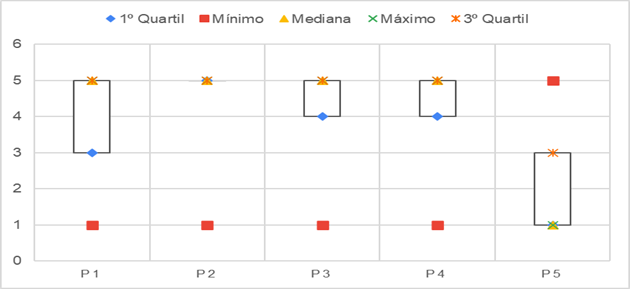
Note. 1st Quartile/Minimum/Median/Maximum/3rd Quartile
Stage 4 (Priming Effect)
Priming was defined as the most adherent technique because, through information (electronic or physical), it induces a more appropriate behavior, which could be more easily done in the interval between questionnaires. This was necessary considering the pandemic scenario and the fact that personal contact is increasingly distant, thus limiting the use of other techniques.
Another relevant point regarding the choice of priming as a technique is its simplicity of application compared to other techniques, demonstrating, in general, how simple its use can be in micro and small enterprises.
Once the first approach was over, the stage of influencing risk culture behavior in entrepreneurs began. To this end, the three letters.
The priming was conducted by sending two letters addressed to the company via email, and another letter was sent by post. The three letters contained information on the reasons why small enterprises go bankrupt prematurely, the opportunity to face risk, and the reasons why enterprises lose money (operational risk).
About the effectiveness of the mailing, it was observed that out of the 419 Letters Number Three sent, 79 were selected for a notice of receipt, corresponding to a 95% confidence level and a 10% margin of error, thus seeking to record the receipt of these letters. Of this sample, only 5 (five) letters were returned without confirmation of receipt, thus giving an assertiveness rate of 93.67%.
Stage 5 (Second Questionnaire)
The questionnaire was reissued between 23/11/20 and 02/12/20, respecting the 30-day deadline used for the Nudge approach. It's worth noting that although 419 contacts were made in the first stage, only 387 respondents were made in this second stage, which was already expected and was in the surplus margin of the first contacts. Furthermore, it is worth noting that the 387 respondents are sufficient to represent the universe, according to the parameters established.
Thus, in the second stage, the following results were obtained by Sentence, as shown in Table 2:
Second Approach Data
|
|
Phrase 1 |
Phrase 2 |
Phrase 3 |
Phrase 4 |
Phrase 5 |
|
Don't know/didn't answer |
4 |
0 |
2 |
11 |
10 |
|
Totally disagree |
21 |
0 |
1 |
8 |
248 |
|
Partially disagree |
7 |
0 |
2 |
11 |
50 |
|
Don't agree/don't disagree |
44 |
13 |
16 |
34 |
39 |
|
Partially agree |
46 |
37 |
78 |
91 |
9 |
|
Totally agree |
265 |
337 |
288 |
232 |
31 |
|
General average |
4,34 |
4,83 |
4,66 |
4,29 |
1,69 |
Survey 1 Sentence - Overall average of 4.34 and data as shown in Table 2: It can be noted that 80.36% of the surveyed (265 out of 5 and 46 out of 4) say they adopt loss containment measures, so in comparison with the previous questionnaire, ceteris paribus, there has been a gain in this regard following the nudge approach.
Survey Sentence 2 - Overall average of 4.83 and data as shown in Table 2: Exactly 96.64% of the surveyed (337 scores 5 and 37 scores 4) say they always develop opportunities in search of better results, which shows that again, ceteris paribus, the use of nudge induced improvement in the behavior of perceiving new opportunities.
Survey Sentence 3 - Overall average of 4.66 and data as shown in Table 2: With 94.57% of the surveyed (288 scores 5 and 78 scores 4) reporting that they are aware of events that could affect their company, the situation being ceteris paribus, after the approach with risk management content, the perception of risk events improved.
Sentence from Survey 4 - Overall average of 4.29 and data as shown in Table 2: Observing that 83.46% of the surveyed (232 scores 5 and 91 scores 4) say that they seek to create a culture of loss mitigation and optimization of results in their companies, it can be inferred that, ceteris paribus, there has been a timid gain compared to the results of stage 1.
Survey Sentence 5 - General Average of 1.69 and data as shown in Table 2: With 77.00% of the surveyed (248 scores 1 and 50 scores 2) reporting that they disagreed that risk is only loss ceteris paribus, once again there was a gain in the perception of risk as opportunity after the nudge approach.
By consolidating the results of the second questionnaire in a Box Plot graph (see Figure 2), it can be inferred that the distribution of the median remained concentrated in the maximum values; however, the boxes can be seen to have narrowed, which can be deduced, ceteris paribus, that there was a gain.
Box Plot of the Second Questionnaire
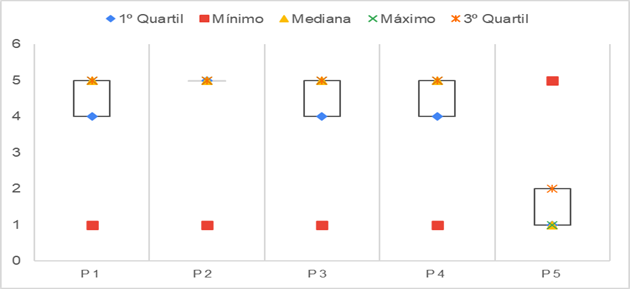
Note. 1st Quartile/Minimum/Median/Maximum/3rd Quartile
Stage 6 (Consolidation of results)
In addition to the previously established sentences, a question was inserted in this second stage to determine whether the surveyed individuals perceived the contact made through the letters.
As presented foward, this result illustrates the success of the priming technique applied to the sample, where the majority of the surveyed did not notice the content sent to their homes or email.
Another relevant finding is the technique's performance. Starting from the premise of excluding answers that did not allow for further progress, i.e., scores of 5 for the first 4 sentences and 1 for the fifth sentence, and considering the gain of the remaining sentences and only the cases in which the letters were not perceived, an average performance of 46.12% was obtained, consisting of:
a) Sentence 1 improved its score in 46.36% of the possible cases.
b) Sentence 2 improved its grade in 50.68% of the possible cases.
c) Sentence 3 improved its score in 50% of the possible cases.
d) Sentence 4 improved its score in 42.28% of the possible cases.
e) Sentence 5 improved its score in 41.32% of the possible cases.
In the end of second approach, we questioned “Since our last contact, did you notice if you were approached with risk management content?”and the results were 32% “Yes” and 68% “No”.
Conclusion
It is believed that this research can contribute to the literature with a set of state-of-the-art information on the topics of nudge, risk culture, micro and small enterprises and risk culture management. In addition, it aims to enhance the effectiveness of applying this knowledge in promoting risk culture behavior, thereby fulfilling the first specific objective.
Despite being a recurring theme in the field of Applied Social Sciences, the bibliographic review revealed that there is practically no academic production about culture of risk in small and micro enterprises. Among all the research carried out, only 33 articles with some adherence to the topic were shown, the vast majority of these being in the financial area, thus meeting the second specific objective of this work.
Among them, we can say that those that made the greatest contribution were the works of Thaler and Sunstein (2008), Altman (2015), Hillson (2013) and Furnham and Boo (2024).
Given all the consolidation of the theoretical framework, the following research question was posed: Can the use of nudge influence the risk culture in a micro or small enterprise? Additionally, the primary objective was to investigate the impact of nudge techniques on risk culture in micro and small enterprises.
As for the specific objectives, it was deemed necessary to identify the types and techniques of nudge, to compile bibliographic material on management of the risk, culture of risk, and culture of risk management, and to conduct research in the form of action research, structuring a flow of stages with an anonymous approach.
To answer the research question, after completing all stages of this work and consolidating the results, it was concluded that the use of nudges is effective in inducing risk culture behavior in micro and small enterprises. Given this scenario, it can be said that, at least with the priming technique, micro and small enterprises can make use of this tool to induce greater risk perception behavior. However, enterprises that aim to provide consultancy services to entrepreneurs can also utilize the tool.
Therefore, in addition to the research question, it is understood that the objectives of this research, both general and specific, have been achieved, whose contribution meets the action-research character expected in the specific objectives of this work. Furthermore, it is worth highlighting the consolidated theoretical framework.
It is worth noting that, in the current global pandemic scenario, this research has encountered several limitations in terms of applying other nudge techniques, as some techniques require physical or face-to-face contact to be effective. As a suggestion for future work, other nudge techniques could be applied using the methodology used in this work to improve their potential and effectiveness.
References
Altman, M. (2015). Real-world decision making: An encyclopedia of behavioral economics. Greenwood.
Ashby, R., Sharifi, S., Yao, J., & Ang, L. (2025). The influence of the buy-now-pay-later payment mode on consumer spending decisions. Journal of Retailing, 101(1), 103–119. https://doi.org/10.1016/j.jretai.2025.01.003
Assi, M. (2018). Corporate governance, risk, and compliance: Changing business conduct. Trevisan Editora.
Brüns, J. D., & Wänke, M. (2023). Show me that you are advertising: Visual salience of products mitigates the negative effects of users' ad recognition on influencer and endorsement evaluations. Journal of Business Research, 163, 1–10. https://doi.org/10.1016/j.jbusres.2023.01.021
Chandrashekar, S. P., & Sunstein, C. R. (2024). Framing the default: Influence of choosing versus accepting default options on decision-making. Journal of Behavioral Decision Making, 37(1), 1–15. https://doi.org/10.1002/bdm.2244
Cherry, K. (2020). Priming and the psychology of memory. Verywell Mind.
Firgie, D., Lunanda, Z. A., Subarkah, F., Putra, B. A., & Oktaviana, N. (2024). Analysis of feedback responsiveness on employee performance. Jurnal Ilmiah Manajemen Kesatuan, 12(3), 885–892. https://doi.org/10.37641/jimkes.v9i3.2536
Furnham, A., & Boo, H. C. (2024). Anchoring bias: A review of the literature and its implications for marketing and consumer behavior. Journal of Economic Psychology, 85, 1–10. https://doi.org/10.1016/j.joep.2023.102358
Gantiva, C., García, L., & Fernández, A. (2023). Emotional impact of graphic health warnings on tobacco products: A systematic review. Frontiers in Psychology, 13, 1–15. https://doi.org/10.3389/fpsyg.2022.1023456
Gil, A. C. (1987). Methods and techniques in social research (6th ed.). Atlas.
Groders, E. D. (2017). Consumer preferences for organic products: Nudges and the use of descriptive norms [Master’s thesis, Federal University of Rio Grande do Sul]. ILUMINE Repositório Digital. http://hdl.handle.net/10183/158149
Hillson, D. (2013). The ABC of risk culture: How to be risk mature [Paper presentation]. Global Congress 2013, New Orleans, USA.
Lieder, F., et al. (2019). Cognitive prostheses for goal achievement. ResearchGate.
Liu, X., Zhang, X., & Li, Y. (2023). The nudging effect of social norms on drivers' yielding behavior when turning corners. Transportation Research Part F: Traffic Psychology and Behaviour, 88, 1–10. https://doi.org/10.1016/j.trf.2022.02.001
Martínez-Mesa, J., González-Chica, D. A., Bastos, J. L., Bonamigo, R. R., & Duquia, R. P. (2014). Sample size: How many participants do I need in my research? Anais Brasileiros de Dermatologia, 89(4), 609–615. https://doi.org/10.1590/abd1806-4841.20143705
Milkau, U. (2017). Risk culture during the last 2,000 years: From an aleatory society to the illusion of risk control. International Journal of Financial Studies, 5(31). https://doi.org/10.3390/ijfs5030031
Montero-Porras, E., Suchon, R., Lenaerts, T., & Fernández Domingos, E. (2024). Defaults: A double-edged sword in governing common resources. arXiv. https://doi.org/10.48550/arXiv.2403.06796
Nakagawa, M., & Yamamoto, K. (2023). Long-lasting effects of incentives and social preference on public goods provision: A field experiment. Journal of Behavioral and Experimental Economics, 101, 1–10. https://doi.org/10.1016/j.socec.2022.101013
Oliveira, L. T. (2012). The framing in the social construction of the meaning of risk and uncertainty in science. Revista Comunicando.
Palmeira, A. L., Marques, M. M., Sánchez-Oliva, D., Rodríguez-Ayllon, M., Pereira, B., Oliveira, J., ... & Teixeira, P. J. (2023). Are motivational and self-regulation factors associated with 12 months’ weight regain prevention in the NoHoW study? An analysis of European adults. International Journal of Behavioral Nutrition and Physical Activity, 20, 128. https://doi.org/10.1186/s12966-023-01529-8
Pinheiro, D. R., Souza Neto, J., & Cotta Orlandi, T. R. (2021). Guidelines for a risk culture model. LinkSciencePlace, 7(3). https://doi.org/10.17115/lnk.v7i3.9
SEBRAE. (2017). Causa mortis: Annual report on company shutdowns. SEBRAE.
Sanghikian, R. (2019). Nudges? It’s time to learn and leverage your fundraising. ABCR Festival 2019, São Paulo, Brazil.
Thaler, R. H., & Sunstein, C. R. (2008). Nudge: The gentle push toward better choices. Campus.
Tripp, D. (2005). Action research: An introductory methodological approach. Educação e Pesquisa, 31(3), 443–466. https://doi.org/10.1590/S1517-97022005000300009
Tversky, A. (1972). Elimination by aspects: A theory of choice. Psychological Review, 79(4), 281–299. https://doi.org/10.1037/h0032955

Page 1 of
Download Count : 10
Visit Count : 43
Keywords
Nudge, Behavior Economics; Companies; Risk Management; Risk Culture

Author(s) Information



How to cite this article
Paiva, D. F. H., Orlandi, T. R. C., & Souza Neto, J.(2025). The use of nudge as a influencing factor of risk culture in micro and small enterprises in federal district. European Journal of Studies in Management and Business, 34, 64-79. https://doi.org/10.32038/mbrq.2025.34.04
Acknowledgments
Not applicable.
Funding
Not applicable.
Conflict of Interests
No, there are no conflicting interests.
Open Access
This article is licensed under a Creative Commons Attribution 4.0 International License, which permits use, sharing, adaptation, distribution and reproduction in any medium or format, as long as you give appropriate credit to the original author(s) and the source, provide a link to the Creative Commons license, and indicate if changes were made. You may view a copy of Creative Commons Attribution 4.0 International License here: http://creativecommons.org/licenses/by/4.0/