



Case Study
Leadership in Managerial Knowledge Management: Continuous and Innovative Learning in Colombian Companies


- Abstract
- Full text
- Metrics
This research article highlights managerial skills of leaders in organizational management, knowledge management, and innovation from the perspective of organizational culture in Colombian companies under the continuous formal and informal learning conceived within the entities. The research is quantitative; the design is cross-sectional and field-based; the scope is descriptive and correlational; and the instrument used is a structured survey, designed, validated, and applied between October 2024 and February 2025. The research results from the 1498 companies mainly showed that directors from the three different sectors of the economy, in the diverse economic activities of small and medium-sized Colombian companies, should promote the implementation of strategic and operational practices from management, as is done in large companies and organizations, mainly through the strengthening of theoretical-practical and social skills accompanied by technical skills, with social skills serving as the pillar of organizational strengthening and as the axis of interaction and synergy for managerial skills.
Leadership in Managerial Knowledge Management: Continuous and Innovative Learning in Colombian Companies
Fabio Orlando Cruz-Páez
Corporación Universitaria Minuto de Dios -UNIMINUTO, Colombia
ABSTRACT:
This research article highlights managerial skills of leaders in organizational management, knowledge management, and innovation from the perspective of organizational culture in Colombian companies under the continuous formal and informal learning conceived within the entities. The research is quantitative; the design is cross-sectional and field-based; the scope is descriptive and correlational; and the instrument used is a structured survey, designed, validated, and applied between October 2024 and February 2025. The research results from the 1498 companies mainly showed that directors from the three different sectors of the economy, in the diverse economic activities of small and medium-sized Colombian companies, should promote the implementation of strategic and operational practices from management, as is done in large companies and organizations, mainly through the strengthening of theoretical-practical and social skills accompanied by technical skills, with social skills serving as the pillar of organizational strengthening and as the axis of interaction and synergy for managerial skills.
KEYWORDS: Leadership Management, Knowledge Management, Cultural Innovation
This article is derived from a UNIMINUTO research project with national application in various companies in Colombia and is directly related to the management carried out by directors in small, medium, and large companies, as well as organizations in the country, and where the existing relationship between the managerial skills exercised by leaders with the purpose of culturally innovating companies and their work teams can be appreciated, leading to the generation of actions that promote culture and competitive business development at the local, regional, national, and international levels.
Management in companies corroborates either good or inadequate decision-making by entrepreneurs and how human resources are motivated, enriched with knowledge, and exposed to good or bad practices, thus enabling continuous learning and the improvement of each part, department, area, or subsystem of the company, all through assertive organizational communication that helps to drive continuous innovation in companies, and within that innovation, each and every person is organizationally educated in the different roles they assume in companies, whether operational, administrative, middle leadership, or strategic and/or operational directors, with all roles being important in the articulation of the processes, procedures, services, and production that are developed and implemented in companies with the purpose of being more competitive in the globalized context, whether in marketing, logistics, operations, research, human resources management, production, or service production (servuction) in the management of companies together with their teams of employees, who are ultimately a fundamental part of business success or failure.
Business management in Colombia currently faces challenges related to the need to integrate managerial skills, knowledge management, and cultural innovation in order to achieve sustainable organizational development (Aceituno et al., 2018; Guerrero et al., 2024). Therefore, university education is important as a factor that helps strengthen managerial capacities that, through strategic action, foster a culture of business innovation. Thus, based on the general context, one must learn about leadership, knowledge management, and innovation, aligning them to enhance business development (González et al., 2020) and strengthened, of course, through the use of technological management tools for decision-making in favor of organizational efficiency (Guardia et al., 2022), as evidenced by strategic organizational business development with e-commerce management (Molchanova et al., 2018).
In many business contexts, sustainability and business development are sought. For example, rural tourism business management is built thanks to the interaction of regional context factors with the impact of cultural innovation toward local development (Guerra & González, 2023), together with the agroecological transition, which is a global approach strategy for sustainable business development (Jones et al., 2022), impacting rural areas through strategic social programs for economic development (Taype et al., 2023), all articulated from the transformation and management of change, integrating, according to Khudyakova and Shmid, (2018), the tools for control and effective leadership toward the sustainable business development model.
Similarly, another important factor for achieving organizational sustainability, according to Guerrero et al. (2024), is the design and implementation of financial and administrative management strategies that articulate the knowledge of companies with innovation. Thus, knowledge management is a tool that is continuously transformed to face the challenges of the digital age, enhancing the business capacities that facilitate adaptation to change (Gutiérrez & Espina, 2025). For example, in the international scope, according to Lima et al., (2023), corporate culture strengthens organizational performance and innovation in sectors with high competitiveness, and according to Luciano et al., (2023), this competitiveness also reveals business management as a driving force in small and medium-sized companies, while Millan et al., (2015) assert that formulating performance indicators is a vital tool that promotes continuous improvement processes and thus enables organizations to be sustainable and highly competitive.
Sustainable business development through corporate social responsibility, according to Miranda et al. (2019), evidences the need for an organizational culture that promotes sustainability with ethical commitment. According to Monterrey et al. (2013), integrating sustainable processes under innovative logistics models strengthens companies’ internal capacities. Thus, for example, experiences in countries such as Indonesia highlight the value of strategic community development as an articulating bridge that shows the path toward business self-sufficiency (Nurman & Rauf, 2018), and in academic environments, according to Pazos et al. (2012), the development of university spin-offs evidences the importance of assertive strategic administration for organizational success. That is why administration with assertive business management is guaranteed through strategic communication (Preciado & Guzmán, 2012) and, jointly, economic development in the territories is achieved by attracting investment capital, which impacts business management policies through assertive decision-making by leaders (Zaripova et al., 2018) and the continuous strengthening of the managerial skills that each leader manages and applies in order to strategically develop companies and their human, technological, financial, intellectual, information, and social resources, mainly.
Thus, the research question is: How do management and cultural innovation facilitate business development based on managerial skills of Colombian business leaders?
Business development in Colombian companies depends on effective management and cultural innovation, driven by key managerial skills. In this context, the existing literature highlights the importance of leadership, organizational management, knowledge management, and cultural innovation as fundamental elements for improving business competitiveness and sustainability.
The literature review shows that there is an interconnection between leadership, management, knowledge management, and cultural innovation, as they all tend to promote business development. That is why companies in Colombia must develop the integration of strategic leadership actions in a participatory manner, transfer knowledge, and promote cultural innovation in organizational contexts, thus achieving sustainable competitive advantages in companies. In this way, directors can develop management skills that promote the interconnection of these variables to grow and adapt organizations in current markets.
Literature Review
Management
Management in companies is founded on ethics and participatory organizational modeling, promoting commitment and business efficiency. Management shaped by participatory models enhances transparency and equity in companies (González et al., 2019). Related to this, organizational integrity, both internally and externally, is strengthened through competitiveness, and for this, the supply chain is vital in business administration (Banda et al., 2022), as it enshrines management in all activities to obtain goods, which is facilitated by empowered human talent.
Empowered human talent is motivated to have a greater commitment to themselves and to companies, and for this reason, the first act of self-management they undertake is to keep themselves up to date in order to make assertive decisions to achieve each goal set in organizations. Barragán et al. (2025), in a study conducted in Ecuador, highlighted the importance of inventory management as a business intelligence tool for enhancing decision-making in companies in the country. This is complemented by research on Peruvian companies, where Chafloque and Araiza (2025) showed that management acts as a mediator between big data and financial performance, thus affirming that management by managers is essential and decisive in the use of technologies. Similarly, in Peru, in the public sector, Ávila et al. (2024) indicate that innovation management is enabled by managerial skills aimed at overcoming organizational-level resistance to change.
In Colombia, in the hotel sector, Nova Santos et al. (2024) demonstrated that strategic marketing management contributes to competitive positioning through leadership in planning and the results obtained, just as Villa Castaño (2025) affirms that business management must be synergistic with the moral duty in the actions of managers in Colombia. Management itself is ethical, moral, and strategic, fostering human quality and business quality in the products and services offered to diverse actors in the surrounding environment, locally, regionally, nationally, and internationally.
In this sense, organizational settings influence the capacity to innovate, demonstrating that knowledge management is vital for business development (Pertuz & Pérez, 2020). According to Salas-Arbeláez et al. (2023), the analysis of human talent management impacts the competitiveness of companies in Colombia. Thus, Solano-Castro et al. (2023) reinforce this by showing the importance of strategies developed by human talent, as they help improve business performance in Peru and, consequently, in every Latin American country. Management itself, more than being a pillar of competitiveness, is projected in each company as an axis of leaders and employees who are comparatively better every day and deliver better products, better services, and quality management, both human and business, enabling them to position themselves in the market day by day with each innovative action from the social, technological, environmental, and economic spheres to strengthen companies and, therefore, a country and a continent.
Knowledge Management
Knowledge management facilitates business strategy and adaptation thanks to the innovative capacity of human talent. Thus, every activity that is managed and benefits production and service production, according to Apolinario and Guevara (2021), can have its impacts mediated so that they are positive from a knowledge management perspective through the executive capacities that facilitate innovation. Similarly, Demuner (2021) states that small and medium-sized companies that apply knowledge benefit from innovative management and business competitiveness.
The capacity to provide services and products helps strengthen business competitiveness. Orozco-Acosta et al. (2021) state that knowledge management in informed organizations continuously improves service efficiency. Similarly, Nuñez-Ramírez et al. (2020) analyzed the innovative capacity of companies in Mexico and Bolivia and found that knowledge management is an instrument for continuous improvement. In the case of small and medium-sized Colombian companies, it is a priority to join efforts to improve organizational learning capacity, thus adapting to changes in the current context, confirming that knowledge management promotes business sustainability (Riascos & Aguilera, 2024).
Knowledge management is developed thanks to the interaction and interdisciplinarity of human resources, as well as the ability to communicate assertively and satisfactorily achieve the goals proposed in companies. Martínez et al. (2024), in an empirical analysis of the textile industry in Mexico, establish a synergy between knowledge management and human resource management as mechanisms to encourage innovation. Complementarily, Roca Petitjean and Ochoa-Arias (2024), in a study conducted in Venezuela, highlight the role of communities of practice as key spaces for the circulation of knowledge in collaborative environments, particularly in open science projects, and suggest that horizontal leadership and participation are fundamental.
In accordance with the above, managing knowledge is crucial for innovating and improving organizational performance. For this reason, Del Castillo (2024) states that in Latin America, knowledge management is a moderator of the relationship that develops from intellectual capital in companies and the performance that consolidates greater competitiveness. Similarly, Huamani et al. (2024) state that in Peru, assertively managed knowledge strengthens cultural and business innovation based on the need for continuous management training in organizations.
Cultural Innovation
Cultural innovation directly influences how companies adapt according to their capacity in the face of current trends and changes that occur continuously in the market and in various contexts. Briones et al. (2017) show that interorganizational relationships in industry facilitate assertive innovation and cooperation in the current context, which is why cultural innovation is both internal and inter-company. Cultural innovation in companies tends to focus internally on change management that is adapted and adopted to enable decision-making and intrapreneurship within each entity, empowering every employee to generate greater, more impactful outcomes at the organizational level through collaborative work with each action.
For their part, Arboleda et al. (2020) state that social innovation enables companies to strengthen society by fostering and managing cooperation and creativity. Thus, cultural innovation is a foundation that enables the development of better entrepreneurs, better employees, better leaders and professionals, and creative individuals who, with each idea conceived and managed, chart a path toward resounding success. Espejel et al. (2019) reinforce this idea by showing that innovation in the agro-industrial chain in Mexico has increased the sector’s competitiveness. Each sector of a country’s economy contributes to economic and social development through business development, and it is established cultural innovation, continuously transformed according to market needs, that serves as the basis for ongoing inquiry, enabling companies to learn and unlearn to acquire what is important in an ever-evolving environment.
Similarly, Rueda-Barrios et al. (2018) analyze how organizational culture influences innovation outcomes in SMEs, concluding that a culture oriented toward creativity and learning fosters innovation. Cultural innovation thus promotes dialogue, subjectivity, objectivity, empathy, and resilience to foster technological appropriation, social innovation, technological innovation, productive innovation, and environmental innovation, thereby triggering business development.
Thus, cultural innovation is one of the pillars of business development, as stated by Chun et al. (2020), given that, in the United States, leaders are educated in diverse ways, which serves as a source of organizational learning. Cultural innovation is expressed by every person within a company and especially by its leaders, who serve as examples for all existing work teams in organizations. Therefore, it is vital that leaders learn and manage their managerial skills for business development, not as a competitive advantage but as a comparative advantage that reflects empowered leaders who drive changes aimed at business success.
Similarly, in Israel, Dan-Rakedzon et al. (2024) introduced cognitive mapping as a tool that offers a more humanized and inclusive approach to organizational design from the standpoint of cultural innovation in companies. Cultural innovation supported by cognitive mapping is a pillar built and strengthened thanks to the ideas of each collaborator and each leader in companies, stemming from their understanding of the business environment both competitively and comparatively, immersed in continuous learning for business management and development.
Leadership
Leadership is understood as a relational and strategic ability that provides guidance to individuals and companies, enabling them to achieve superior results aligned with cultural innovation and management, thereby promoting innovation and comparability as well as competitiveness in companies. In Latin America, and particularly in Colombian companies, leadership is an essential basis for shaping a culture that promotes creativity, collaboration and continuous improvement for the benefit of company development (Alvear et al., 2019; Villca et al., 2022).
Leadership for cultural innovation is understood as the set of behavior’s that help promote the generation, selection and implementation of ideas, validating measurement instruments that highlight behavior’s based on cultural norms and symbols in companies that legitimize experimentation, learning from mistakes and knowledge management (Contreras et al. 2022). According to Pedraja-Rejas et al. (2021) and Contreras et al. (2022), this type of leadership acts as a mechanism of strategic corporate culture in the micro-practices of daily work, such as creative meetings, spaces for co-design and metrics for learning, thus consolidating cultural innovation.
Similarly, according to Flores-Pérez and Gutiérrez Nuñez (2023), leaders' knowledge management skills can be assessed by their encouragement of autonomy and iterative learning, which continuously improve culture and sustain innovation, dynamically driving competitive advantage. Similarly, Rivas et al. (2024) assert that leadership and leadership training help foster a culture of learning and collaborative work, as in Colombian tourism companies, cultural maturity and innovation are more consistently achieved through strengthened management. According to Le Sante et al. (2021), collaboration through cooperation shapes the perceptions of each person in the company, especially leaders, and can affect decision-making and the empowerment of responsibilities to innovate, legitimizing the leader in their company and its surrounding environment.
According to Marín and Alfaro (2021), leadership must be distributed and cultivated for the management of resources and processes through learning and the integration of skills that develop assertive communication in companies. In Latin America, according to Saavedra-Mayorga (2019), recognizing cultural diversity and incorporating ethical reflection, an understanding of power and inequality, and commitments to sustainable development through leadership can positively transform economic outcomes and social reality by assertively managing knowledge in favor of business development. Basically, the integration of leadership in Colombian companies through managerial skills is a cultural lever and a driving force behind innovation, organizational, and knowledge management.
Method
The type and approach of the research is quantitative (Hernández & Mendoza, 2018) in order to obtain data that can be analyzed and are directly related to the research. In the first phase of the research, the literature review was constructed using a Boolean search applied in Scopus with the words “Gestión and Empresa” (“Management and Company”), with 46 articles found, “Gestión and del and conocimiento” (“Management and Knowledge”), with 14 articles, and “Innovación and cultural” (“Innovation and Cultural”), with 84 articles. The search was limited to the subject area of Business, Management, and Accounting, from which 21 business management documents published between 1999 and 2023 were selected. A literature review was conducted of articles published in the last five years. From the keyword “gestión del conocimiento” (“knowledge management”), 41 documents were selected from 2003 to 2024, and finally, six documents from the last five years were taken. The documents found on “innovación cultural” (“cultural innovation”) date from 2007 to 2020, based on a 2017 review.
In the second phase, the research instrument was designed based on the problem and the literature review. The instrument was created based on the document review carried out through the Boolean searches in Scopus described above, consisting of 51 questions, which were validated by five experts in knowledge management and cultural innovation, who confirmed the relevance, clarity, and consistency for their respective application. The evaluation conducted to determine the reliability of the instrument was obtained by applying Cronbach’s alpha coefficient using SPSS version 27, coding each point by dimension and obtaining the value for Management of α = .88, for knowledge management α = .86, and for cultural innovation α = .89, demonstrating consistency in each dimension addressed for the research.
The research design is cross-sectional, and field research was conducted at a single point in time (Cruz et al., 2022) using a structured survey as the research instrument, which was designed, validated, and applied from October 25, 2024, to February 25, 2025, obtaining responses from 1,498 directors in the same number of Colombian companies, including small and medium-sized companies, large companies, and public, private, and mixed organizations, with geographical diversity at the national and sectoral levels according to the different economic activities, allowing for a broad analysis of business management in Colombia.
The applied sample is non-probabilistic and based on convenience criteria of heterogeneity and sectoral coverage in the national territory. Methodologically, the external validity and representativeness of the data were strengthened based on the following strategies:
· National coverage in the main regions of Colombia (Andean, Caribbean, Pacific, Amazon, and Orinoquía), guaranteeing the coverage and geographical diversity of the country.
· Diversity of Colombia’s three economic sectors: services (58%), industry (30%), and agriculture (12%).
· Diversity in company size, mainly small and medium-sized companies (68.7%) and large organizations (31.3%), which fostered comparative analysis between the organizational structures of the companies that applied the research instrument.
· Diversity of legal entities and organizational nature, including private, public, and mixed companies, was included, thus enriching the results regarding the general context of Colombia’s business fabric.
· Heterogeneous distribution in positions and educational level: the integration of applications from owners, general managers, and executive advisors with training from undergraduate to doctoral level, which allowed the collection of specific perspectives on management and decision-making from the sample of companies that voluntarily applied the research instrument.
The scope is descriptive and correlational, the former with the aim of exposing the trend of the known problem and the latter with the purpose of obtaining statistical data from the large sample applied to the group of persons under study (Cruz & Mera, 2022; Hernández & Mendoza, 2018), thus evidencing the relationship between the variables of management, knowledge management, and cultural innovation in Colombian companies based on the responses obtained from the directors who applied the research instrument both in person and online via Microsoft Forms. Responses from applications submitted to diverse companies in Colombia were compiled, tabulated, graphed, and analyzed.
Results
Figure 1 shows the current maximum academic level of directors, ranging from basic, Secondary school or high school education, technical training, professional technical training, technologists, professionals, specialists, master's degrees, to doctorates, making it possible to appreciate the variety of academic levels among the leaders in the Colombian companies studied.
Maximum Current Academic Level
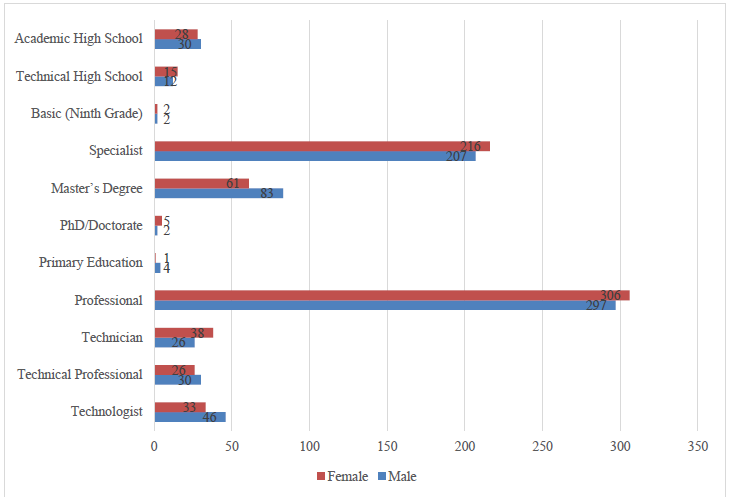
Of the 1,498 directors surveyed, 742 are women (49.5%) and 756 are men (50.5%), showing equity in the management of both sexes at the business level in Colombian companies, since the difference in the number of males who applied over the number of females is minimal, at 1%. Regarding academic level, the applied sample was concentrated in higher education — professionals, specialists, and master's degrees — with 78% of men and 80% of women, indicating that the labor force in leadership positions is highly qualified. The professional level represents 39.1% of the total sample, of which 40.41% are men and 37.7% are women, indicating that 4 out of 10 individuals hold a professional degree. This is followed by specialists with 29.4%, distributed as 28.16% men and 30.6% women. In third place, with 10% of the total sample, are those with a master's degree, distributed as 8.3% men and 11.76% women, evidencing a high percentage of women with master's degrees.
This is followed by 5.9% of technologists, distributed among 6.26% of men and 5.52% of women, professional technicians with 4.6%, of which 4.08% are men and 5.1% are women, technicians with 5.1%, of which 5.17% are men and 4.96% are women, academic high school graduates with 3.33%, of which 4.08% are men and 2.5% are women, technical high school graduates with 1.9%, being 2.04% men and 1.7% women, those with doctorates or PhDs at .49%, being .68% men and .28% women, those with Elementary school education at .35%, being .54% men and .14% women, and those with basic education to ninth grade at .28%, with equal percentages of men and women at .27%. In general, 78.5% of the total sample has an academic level of higher education, mainly professionals, specialists, master's degree holders, and doctors or PhDs, evidencing the high academic level of the applied sample, followed by technical and technological levels with 15.6%, high school level with 5.23%, and basic education and ninth grade levels with .63%. Thus, undergraduate and postgraduate training can be seen to influence strategic decision-making and business knowledge management. Figure 2 shows the positions held by the directors who responded to the survey.
Position Held
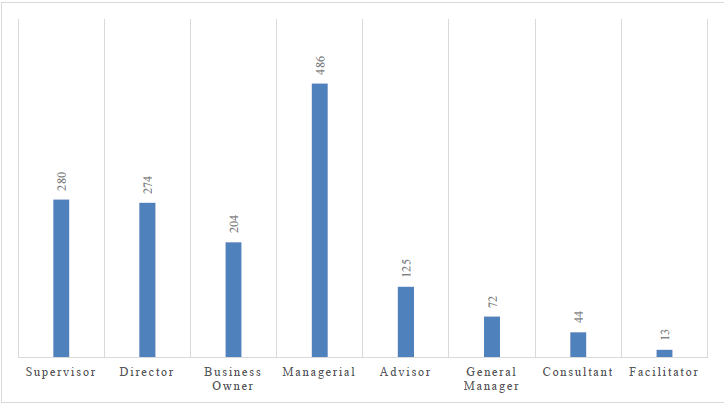
Thirty-two percent are located at the managerial level, both strategic and operational, of the company, 19% hold supervisory roles, 18% occupy managerial positions at a general functional level, 14% are company owners, 8% are advisors, 5% are general managers, 3% are executive consultants, and 1% are executive facilitators. Thus, company decision-makers validate the relevance of research in the field of business and organizational management, knowledge management, and cultural innovation.
Figure 3 shows the size of the companies and their business scope in order to recognize the importance of applying the study to multiple Colombian companies with respect to management, which is conceived according to their size and the scope in which they operate.
Figure 3
Company Size and Scope
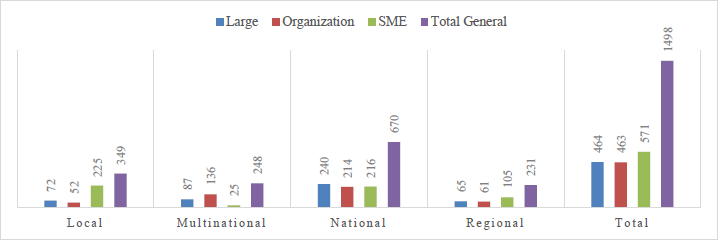
Small and medium-sized companies represent 68.7%, while large companies and organizations account for 31.3%. This demonstrates the need to strengthen SMEs in terms of cultural innovation and knowledge management through the implementation of strategies that improve their competitiveness in the market.
Figure 4 shows the purpose of the company and the economic sector to which each belongs, allowing recognition of the existing synergy between the purposes of companies directly related to a specific sector of the Colombian economy, including small, medium-sized, and large companies.
Purpose of the Company and Economic Sector
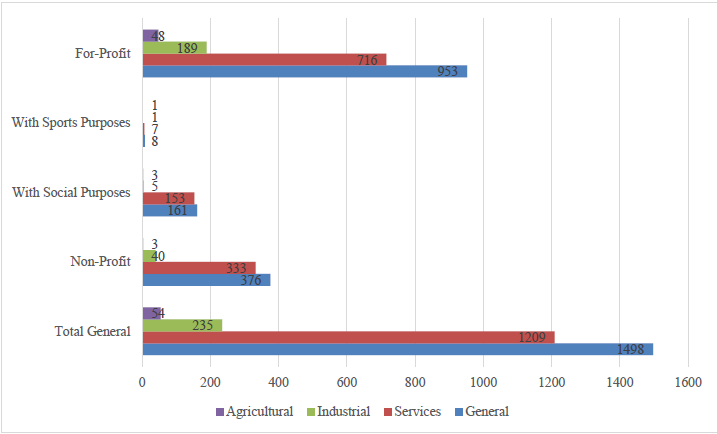
Eighty point seven percent have a lucrative purpose, 15.7% have a social impact purpose, and 3.6% have a sports purpose. The highest percentage is in the service sector at 58%, followed by the industrial sector at 30%, and a lower percentage in the agricultural sector at 12%. Thus, it can be seen that innovation and knowledge management adapt to the characteristics of each sector, thereby maximizing efficiency and profitability in companies.
Figure 5 shows knowledge management as a result of the undergraduate or postgraduate training level of each director in the companies, corroborating the managerial skills of each of the leaders and their contribution to business development through the continuous strengthening of learning and its assertive application, which can be observed in each of the decisions made based on the interaction of disciplinary and interdisciplinary knowledge within the work teams according to their level of training.
Knowledge Management by Undergraduate and Postgraduate Educational Level in Managers
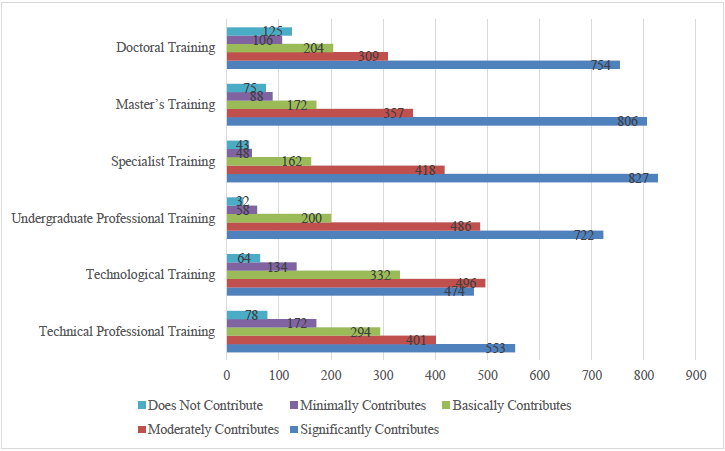
Sixty-two percent consider that postgraduate training (specialization, master’s, and doctorate) contributes significantly to knowledge management and strategic decision-making in their organizations, and the remaining 38% perceive it as something that would not have a major impact on the company in terms of competitiveness through knowledge management. This shows that postgraduate-level managerial training directly influences business competitiveness.
Figure 6 shows knowledge management fostered through extension training in companies, highlighting the importance of taking short courses, workshops, international certifications, and primarily diplomas, which help keep human resources in companies up to date in order to be more competitive and ensure effective business development.
Knowledge Management with Extension Training
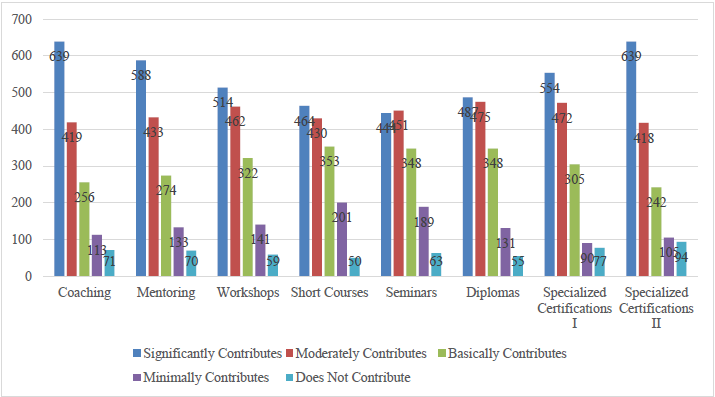
Fifty-seven percent state that national diplomas and specialized certifications are more effective in strengthening management skills. Twenty-eight percent perceive that international certifications stand out for their impact in the global competitive context, and 15% consider that workshops and seminars provide moderate support for knowledge management. Thus, it is evident that extension training is a key factor for business development. Coaching ranks first with 34% preference, followed by mentoring with 30%, workshops and seminars with 22%, and short courses and diplomas with 14%. This shows the importance of learning through practice and interacting directly with experts in business leadership.
Figure 7 shows the best way to learn and manage knowledge with company employees, based on continuous learning and the enhancement of the managerial skills of each person who is already empowered and those who are to be empowered, in order to have organizationally cultured work teams through joint knowledge management in companies.
Figure 7
Best Way to Learn and Manage Knowledge Implemented with the Team of Employees
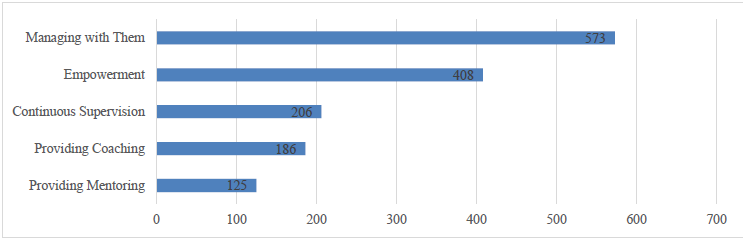
Thirty-eight percent state that collaborative management is the best strategy implemented to lead teams, followed by empowerment with 27%, which is considered important for directors in terms of carrying out activities in companies, followed by continuous supervision with 18%, and coaching and mentoring, with 10% and 7% respectively. These results reflect a change in organizational culture toward more participatory and inclusive leadership models, which is aligned with current trends in business management (González et al., 2019).
Figure 8 shows the considerations regarding which managerial skills have the greatest impact on the management carried out by the directors surveyed, taking into account that in the current global context, social skills should be the axis of synchrony between the skills that a leader must strengthen or improve for business development and the impact this has on the actors involved in companies, whether they are employees, suppliers, or their customers who benefit.
Managerial Skills with the Greatest Impact on Management
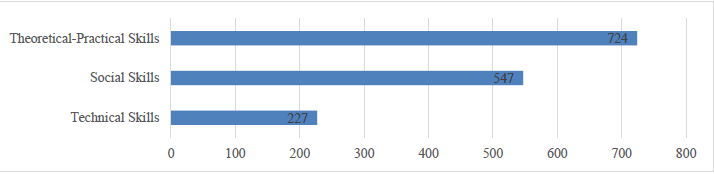
Theoretical-practical skills represent the highest percentage with 48.33%, evidencing that companies give relevance to the application and management of knowledge in the labor context. This is followed by social skills at 36.53%, indicating that interaction and assertive communication are highly valued in business management, and finally, technical skills at 15.15%, representing 15.15% of the total. Theoretical-practical and social skills are important and have a greater impact on business management, and the latter should be the focus of human development and therefore of business development.
Figure 9 shows the best and most used means for personnel recruitment, which evidences the importance of business competencies to recruit the right human resources, where companies must continuously improve their management through the different means and/or resources necessary to proceed assertively and with more specialized management in accordance with the current conditions of the company and the needs to be met.
Management of Personnel Recruitment
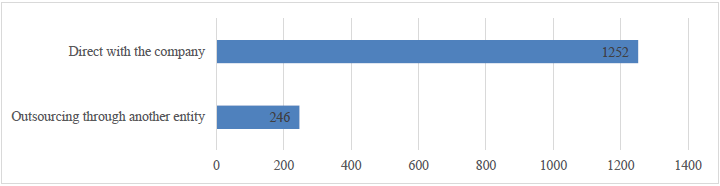
Eighty-three point six percent of companies recruit personnel directly and 16.4% through outsourcing. This demonstrates that companies prefer to control selection processes internally, thereby ensuring alignment with the organizational culture and demonstrating that the company’s own human resources possess the managerial skills required to recruit people in line with business needs and become more competitive.
Figure 10 shows the leadership management that leaders exercise toward employees, showing a broad overview of companies and the diversity of skills that managers must possess to make assertive decisions in favor of the application of synergistic leadership that enriches the organizational culture in companies.
Management to Lead Employees
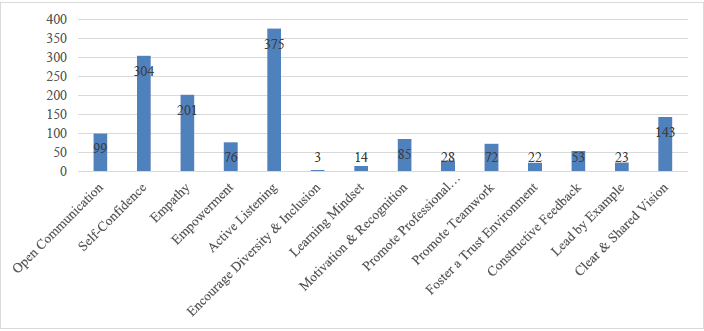
Forty percent state that effective communication is the main leadership tool they use in companies, motivation is used in 30%, followed by constructive feedback with 20% and traditional supervision with only 10%. A gradual approach should therefore be given to team management, and both communication and recognition should be key parts of organizational performance.
Figure 11 shows conflict resolution management in the Colombian companies studied, which is important from the decision-making stage and involves social managerial skills that help to improve and culturally innovate companies in accordance with the company’s needs and motivate employees who collaborate in this for the sake of business development.
Conflict Resolution Management in Companies
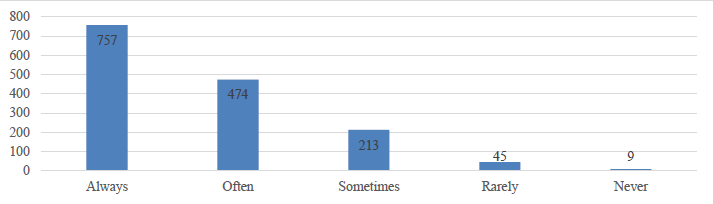
Forty-five percent of companies have implemented mediation and negotiation strategies that help resolve conflicts, 35% apply conciliation, 15% use formal protocols, and 5% entrust these situations to specialized external parties. This shows the adoption of internal and collaborative approaches to conflict resolution at the organizational level.
Figure 12 shows whether employees manage and implement voluntary actions, enabling leaders to make better decisions continuously with both the majority and minority of their employees, in order to be more competitive under an innovative dynamic in the context of business development and the culturalization of the company, so that their work teams are highly motivated and therefore productive.
Achievement of Voluntary Management Among Employees
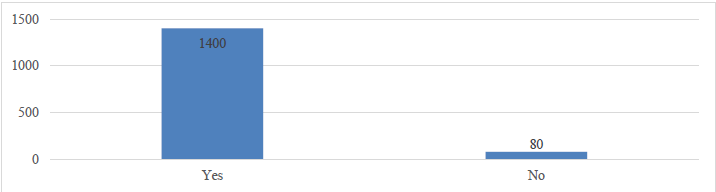
Fifty percent of employees manage and implement voluntary actions for business improvement, 30% do so only when provided with incentives, 15% participate occasionally, and 5% show no interest. This shows that organizational culture has a direct influence on employee initiative.
Figure 13 presents the implementation of different types of culture for organizational cultural innovation, thereby continuously embedding and strengthening cultural innovation, since the ability to innovate, communicate, lead, and adopt technologies forms the foundation of business development for all actors involved in companies and benefits customers who are satisfied with their products and/or services.
Type of Organizational Cultural Innovation Implemented in Companies
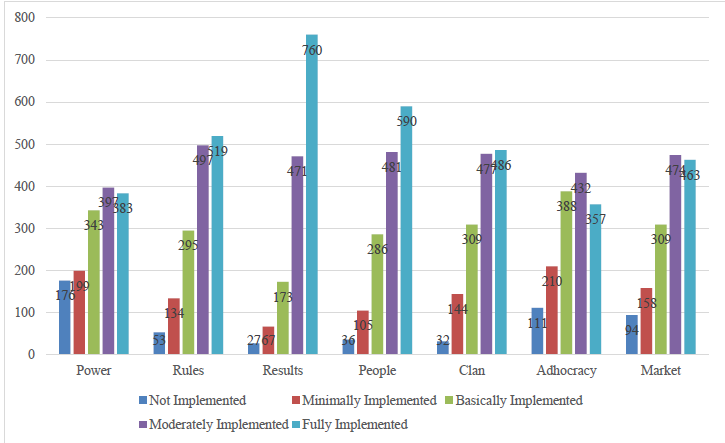
Sixty percent of companies prefer to implement innovation in communication and leadership, followed by 25% in process digitization and 15% in workspace improvement. This shows that organizational transformation focuses on the way companies interact and on the efficiency of technology use within entities.
Conclusion
The management carried out by company directors, based on theoretical-practical, technical, and social managerial skills that are learned and continuously strengthened through organizational knowledge management, is interconnected with cultural innovation in large companies and organizations. In small and medium-sized companies, each of these must also be continuously strengthened and more closely interconnected to promote competitive business development in Colombian companies at local, regional, national, and international levels.
The research results allow us to conclude that organizational management, knowledge management, and cultural innovation, the latter being the transformation of collaborative and voluntary organizational culture through the use of technologies, are synergistically related and strategically interdependent in Colombian companies, thereby boosting business development, since the survey made it possible to identify the existing relationships among these variables and the reliability provided by the applied sample. Management based on theoretical-practical and social skills has a greater impact on business leadership than the exclusive use of technical skills. Likewise, all of this is grounded in knowledge management, thanks to the professional, postgraduate, and continuing education qualifications that managers obtain with the aim of improving their skills, mainly social and theoretical-practical managerial skills, which motivate human resources to improve daily, both in the organizational context and at a personal level.
Integrating participatory leadership strategies in companies fosters better knowledge transfer and management, and promotes leadership grounded in cultural innovation, which are essential factors for the sustainability and business development of all companies.
References
Aceituno-Aceituno, P., Casero-Ripollés, A., Escudero-Garzás, J.-J., & Bousoño-Calzón, C. (2018). University training on entrepreneurship in communication and journalism business projects. Comunicar, 26(57), 91–99. https://doi.org/10.3916/C57-2018-09
Alvear Montoya, L., Luna Monterrosa, O., Navarro Lobo, S., & Salas Muñoz, B. (2019). Estilos de liderazgo de la alta dirección en industrias exportadoras de Barranquilla [Leadership styles of senior management in export industries in Barranquilla]. Revista Venezolana de Gerencia, 24(86), 575–591.
Apolinario, R. E., & Guevara, D. E. (2021). Mediating effect of executive capacity for innovation between knowledge management and supply chain performance. Información Tecnológica, 32(1), 151–168. https://doi.org/10.4067/S0718-07642021000100151
Arboleda Jaramillo, C. A., Arias Arciniegas, C. M., Pérez Sánchez, E. O., & Correa Janne, P. (2020). Social innovation as a strategy to strengthen community rural tourism in Colombia. Revista Venezolana de Gerencia, 25(89), 92–104. https://doi.org/10.37960/revista.v25i89.31390
Ávila Morales, H., M., Huamani Alhuay, E. F., Adauto-Medina, W.A. & Mattos Marreros, J. M. (2024). Innovation Management in Governmental Institutions: barriers and success factors. Revista Venezolana de Gerencia, 29(11 Especia), 53–68. https://doi.org/10.52080/rvgluz.29.e11.3
Banda Ortiz, H., Garza Morales, R., y Cepeda Villasana, L. A. (2022). Cadena de suministro para pequeñas y medianas empresas de servicios industriales: Desarrollo y aplicación de modelo de gestión. Revista Venezolana de Gerencia, 27(97), 274–288. https://doi.org/10.52080/rvgluz.27.97.19
Barragán Ramírez, C., Zurita Altamirano, J., Fierro, S., & Montenegro Ramírez, A. (2025). Business intelligence for inventory management in footwear structural import companies. Revista Venezolana de Gerencia, 30(110), 994–1009. https://doi.org/10.52080/rvgluz.30.110.14
Briones-Peñalver, A. J., Bernal-Conesa, J. A., & Carmen De Nieves, N. (2017). Interorganizational relationships of the defense industry: Its influence in innovation and cooperation and its effect on competitiveness. Journal Globalization, Competitiveness and Governability, 11(3), 20–37. https://doi.org/10.3232/GCG.2017.V11.N3.01
Chafloque-Céspedes, R., & Araiza Vázquez, M. J. (2025). Big data in the financial performance of Peruvian companies: the role of management as mediator. Revista Venezolana de Gerencia, 30(109), 396–411. https://doi.org/10.52080/rvgluz.30.109.25
Chun, J., Connor, A., Alsaman, M., Urkmez, B., & Kosciulek, J. F. (2020). Capitalizing on diversity in counselor education: An application of the interaction for learning framework. Journal of Multicultural Counseling and Development, 48(3), 161–175. https://doi.org/10.1002/jmcd.12175
Contreras, F., Espinosa, J. C., & Dornberger, U. (2022). Innovational Leadership: A new construct and validation of a scale to measure it | Estilo de Liderança para Inovação: apresentação de um novo construto e validação de uma escala para medi-lo [Leadership Style for Innovation: presentation of a new construct and validation of a scale to measure it] Estudios Gerenciales, 38(163), 151–160. https://doi.org/10.18046/j.estger.2022.163.4763
Cruz Páez, F. O., Castillo Ortiz, D. M., Lechuga Cardozo, J. I., & Triana Calderón, O. (2022). Conducta financiera en estudiantes de Administración de Empresas, Universidad de Cundinamarca Facatativá [Financial behaviour among Business Administration students, University of Cundinamarca Facatativá]. Tendencias, 23(2), 30–52. https://doi.org/10.22267/rtend.222302.200
Cruz Páez, F. O., & Mera Rodríguez, C. W. (2022). Investigación Prospectiva, Innovación Y Gestión Del Conocimiento. Editorial de la Universidad de Cundinamarca [Prospective Research, Innovation and Knowledge Management. University of Cundinamarca Press]. ISBN 978-958-5195-10-3. https://doi.org/10.36436/9789585195103
Dan-Rakedzon, N., Fleming, W., Lissovsky, N., Clayton, S., & Shwartz, A. (2024). A framework for understanding the human experience of nature through cognitive mapping. Conservation Biology, 38(4). https://doi.org/10.1111/cobi.14283
Del Castillo Guardamino, C. A. (2024). Moderating effect of knowledge management on the relationship between intellectual capital and export performance. Estudios Gerenciales, 40(173), 490–501. https://doi.org/10.18046/j.estger.2024.173.6787
Demuner Flores, M. R. (2021). Knowledge management for innovation purposes in small manufacturing companies. Revista Venezolana de Gerencia, 26(95), 741–757. https://doi.org/10.19052/rvgluz.27.95.19
Espejel García, A., Barrera Rodríguez, A., Ramírez García, A. G., & Cuevas Reyes, V. (2019). Innovation in the mezcal agribusiness chain in Oaxaca, Mexico. Revista Venezolana de Gerencia, 24(2), 188–209. https://doi.org/10.37960/REVISTA.V24I2.31488
Flores-Pérez, J. J., & Gutiérrez Nuñez, C. A. (2023). Liderazgo emprendedor y compromiso con el proceso creativo para la innovación. [Entrepreneurial leadership and creative process engagement]. Revista Venezolana de Gerencia, 28(9), 299–314. https://doi.org/10.52080/rvgluz.28.e9.19
González, M. L., Paz, M. A., García, G. J., & Cardeño, P. E. (2019). Ethical principles of participatory management: Management model in venezuelan petroleum mixed enterprises. Espacios, 40(4). https://www.revistaespacios.com/a19v40n04/19400416.html
González Rodríguez, S. S., Viteri Intriago, D. A., Izquierdo Morán, A. M., & Verdezoto Cordova, G. O. (2020). Administrative management model for the business development of Hotel Barros in Quevedo City. Universidad Y Sociedad, 12(4), 32–37.
Guardia Silva, J. E., Moncada Acevedo, E. A., Rodriguez Santana, G. D., & Betancur Amariles, J. H. (2022). Development of a technological platform based on management boards for the digitization of the SIGET PROS business management system in an academic environment. Risti Revista Iberica De Sistemas E Tecnologias De Informacao, 2022(47), 23–37. https://doi.org/10.17013/risti.47.23-37
Guerra, D. N., & González, K. G. (2023). Rural tourism management from an entrepreneurial approach and its impact on local development. Salud Ciencia Y Tecnologia Serie De Conferencias, 2. https://doi.org/10.56294/sctconf2023434
Guerrero, W. A., Camacho-Galindo, S., Guerrero-Martin, L. E., Arévalo, J. C., Fernandes, F. A. S., Correa, E. S., & Guerrero-Martin, C. A. (2024). Development of financial and administrative management strategies for business sustainability. Dyna Colombia, 91(234), 147–156. https://doi.org/10.15446/dyna.v91n234.115106
Gutiérrez Hurtado, H., & Espina-Romero, L. C. (2025). Knowledge management in the digital era: Trends, challenges and opportunities in business development. Revista De Ciencias Sociales, 31(1), 367–384. https://doi.org/10.31876/rcs.v31i1.43514
Hernández Sampieri, R. y Mendoza Torres, C. P. (2018). Metodología de la investigación: las rutas cuantitativa, cualitativa y mixta [Research methodology: quantitative, qualitative and mixed methods]. McGraw-Hill.
Huamani Torres, R., Flores-Limo, F. A., Barrios-Tinoco, L. M., & Montañez Huancaya De Salinas, A. P. (2024). Knowledge management as a key factor in Business Innovation. Revista Venezolana de Gerencia, 29(106), 760–775. https://doi.org/10.52080/rvgluz.29.106.19
Jones, S. K., Bergamini, N., Beggi, F., Lesueur, D., Vinceti, B., Bailey, A., DeClerck, F. A., Estrada-Carmona, N., Fadda, C., Hainzelin, E. M., Verchot, L., & Quintero, M. (2022). Correction: Research strategies to catalyze agroecological transitions in low- and middle-income countries. Sustainability Science, 17(6), 2651–2652. https://doi.org/10.1007/s11625-022-01205-z
Khudyakova, T., & Shmidt, A. (2018). The transformation of the approaches to management of the sustainable development of enterprises based on the introduction of controlling. Espacios, 39(36).
Le Sante, D. R., Eaton, A. A., & Viswesvaran, C. (2021). Cómo influye el desempeño contextual en las percepciones de la personalidad y el potencial de liderazgo [How contextual performance influences perceptions of personality and leadership potential]. Revista de Psicologia Del Trabajo y de Las Organizaciones, 37(2), 93–106. https://doi.org/10.5093/JWOP2021A10
Lima, I. A. C., Alvarado, J. A. Q., Mantaro, J. E. A., & Cuaresma, J. R. M. (2023). International business and the development of innovation through corporate culture. Proceedings of the Laccei International Multi Conference for Engineering Education and Technology, 2023-July.
Luciano Alipio, R. A., Sotomayor Chahuaylla, J. A., García Juárez, H. D., & Peláez Camacho, H. Y. (2023). Business management in the development of MYPES in mining areas of Peru. Revista Venezolana De Gerencia, 28(103), 1174–1189. https://doi.org/10.52080/rvgluz.28.103.16
Marín-González, F., & Alfaro Escobar, L. C. (2021). Management and leadership: Approach from an educational cell | Gestión y liderazgo: Enfoque desde una célula educativa. Revista Venezolana de Gerencia, 26(96), 1041–1057. https://doi.org/10.52080/rvgluz.26.96.4
Martínez-Arroyo, J. A., Peñaloza, M. F. T., Jiménez, M. A. V., & Moreno, F. M. (2024). Knowledge management and human resource management to innovate: An empirical analysis in the textile industry. Mercados y Negocios, 2024-Sept(53), 81–104. https://doi.org/10.32870/myn.vi53.7743
Millan, E., Torrealba, A., & Ortiz, M. (2015). Indicators of developing performance as a tool for business development. For a transportation enterprise: Inversiones Los Chabalos C.A. Espacios, 36(17), 21.
Miranda, D. D. P., Plaza, A. G., Brea, J. A. F., & Botero, C. M. (2019). Corporate social responsibility practices in the hotel sector. Case studies in Santa Marta city, Colombia. Cuadernos De Gestion, 19(1), 175–202. https://doi.org/10.5295/CDG.160707DP
Molchanova, V. S., Vidishcheva, E. V., & Potapova, I. I. (2018). Operating E-Commercial market framework in terms of tourist destination. Espacios, 39(34).
Monterrey Meana, M., Priore Moreno, P., & Fernández Quesada, I. (2013). Definition of a model for the development and management of a Reverse Logistics industrial estate in Spain. Dyna Colombia, 80(179), 14–22.
Nova Santos, L. C., Parra Penagos, C. O., & Quijano Brand, L. (2024). Strategic marketing management in the hotel sector in Sugamuxi province. Revista Venezolana de Gerencia, 29(12), 1599–1619. https://doi.org/10.52080/rvgluz.29.e12.45
Nuñez-Ramírez, M. A., Banegas-Rivero, R. A., Ozuna-Beltrán, A. G., & Atila-Lijerón, J. D. (2020). Knowledge management and incremental innovation capabilities in Mexican and Bolivian firms. Información Tecnológica, 21(5), 101–108. https://doi.org/10.4067/S0718-07642020000500101
Nurman, & Rauf, R. (2018). Strategic development towards a self-sufficiency village in Indonesia. Espacios, 39(42).
Orozco-Acosta, E., Ortiz-Ospino, L., Padilla-Suarez, D., & Pizarro Gutiérrez, A. (2021). Factores de gestión del conocimiento en entidad pública del sector de tránsito y transporte [Knowledge management factors in public entities in the transit and transport sector]. Revista De Métodos Cuantitativos Para La Economía Y La Empresa, 32, 99–111. https://doi.org/10.46661/revmetodoscuanteconempresa.4563
Pazos, D. R., Babío, N. C., & López, S. F. (2012). The importance of management in the university spin-offs development. Organizational and financial analysis. Cuadernos De Gestion, 12(1), 59–81. https://doi.org/10.5295/cdg.100211dr
Pedraja-Rejas, L., Rodríguez-Ponce, E., & Muñoz-Fritis, C. (2021). Liderazgo transformacional y cultura innovativa: Efectos en la calidad institucional. [Transformational leadership and innovative culture: Effects on institutional quality]. Revista Venezolana de Gerencia, 26(96), 1004–1018. https://doi.org/10.52080/rvgluz.26.96.2
Pertuz, V., & Pérez, A. (2020). Organizational learning conditions and innovation management practices: An analysis of medium-sized firms. Información Tecnológica, 31(3), 209–218. https://doi.org/10.4067/S0718-07642020000300209
Preciado-Hoyos, Á., & Guzmán-Ramírez, H. (2012). Strategic communication management in business, developmental and public sectors. A comparative study. Palabra Clave, 15(1), 128–159. https://doi.org/10.5294/pacla.2012.15.1.6
Riascos-Erazo, S. C., & Aguilera-Castro, A. (2024). Aprendizaje organizacional y gestiÓn del conocimiento en las pymes de Colombia. [Organizational learning and knowledge management in Colombia SMES. | Revista Venezolana de Gerencia, 29(12), 1378–1394. https://doi.org/10.52080/rvgluz.29.e12.30
Rivas, C., Tarí, J. J., & Pereira-Moliner, J. (2024). Antecedentes de la calidad del servicio en los Parques nacionales del Ecuador: Liderazgo, gestión del talento, clima laboral y form. [Antecedents to service quality in the National Parks of Ecuador: leadership, talent management, work climate and training.]. Academia Revista Latinoamericana de Administracion, 37(2), 227–245. https://doi.org/10.1108/ARLA-07-2023-0117
Roca Petitjean, S. J., & Ochoa-Arias, A. E. (2024). Communities of practice and knowledge management. An experience in open science projects. Revista Venezolana de Gerencia, 29(11), 439–452. https://doi.org/10.52080/rvgluz.29.e11.26
Rueda-Barrios, G., Gonzalez-Bueno, J., Rodenes Adam, M., & Moncaleano Rodríguez, G. (2018). Organizational culture and its influence on the results of innovation in small and medium-sized. Espacios, 39(42). https://revistaespacios.com/a18v39n42/a18v39n42p36.pdf
Saavedra-Mayorga, J. J. (2019). Rumo a uma perspectiva crítica do ensino de liderança em escolas de administração Hacia una perspectiva crítica de la enseñanza del liderazgo en las escuelas de administración. [Towards a critical perspective of leadership education in business schools]. Cuadernos de Administracion, 32(59). https://doi.org/10.11144/Javeriana.cao32-59.hpcel
Salas-Arbeláez, L., García-Solarte, M., & Ramiro Azuero, A. (2023). Influence of human resource management on the competitiveness in Colombian small and medium enterprises. Revista Venezolana de Gerencia, 28(10), 905–921. https://doi.org/10.52080/rvgluz.28.e10.3
Solano-Castro, V. V., Cavero Aybar, H. N., Chalco Vargas, F. T., & Nuñez Lira, L. A. (2023). Human talent management strategies in small and medium-sized Peruvian enterprises. Revista Venezolana de Gerencia, 28(10), 954–966. https://doi.org/10.52080/rvgluz.28.e10.6
Taype, R. A., Sifuentes, A. Y., Gamero, A. M., Pacahuala, E. R., Andrade, R. A. G., & Chamorro, M. R. (2023). Control of the business management of the national rural sanitation program for the economic development of rural areas of the department of Cajamarca during the year 2020. Proceedings of the Laccei International Multi Conference for Engineering Education and Technology, 2023-July.
Villca, S. R. C., Guerra, M. B. R., Fernández, R. P. V., & Zambra, M. I. A. (2022). Influencia del liderazgo y otras variables críticas en la competitividad de Mipymes chilenas. [Influence of leadership and other critical variables in the competitiveness of Chilean MSMEs]. Contaduria y Administracion, 67(4), 48–71. https://doi.org/10.22201/fca.24488410e.2022.2972
Villa Castaño, L. E. (2025). Kant in corporate management: ethical principles and imperfect duties among managers in Colombia. Revista Venezolana de Gerencia, 30(110), 1119–1131. https://doi.org/10.52080/rvgluz.30.110.21
Zaripova, I. R., Zhankarakyzy, A., Iskakov, B., Karabulatova, A., Ismagilova, T. V., & Sultanova, L. F. (2018). The multiplicative effect of free economic zones in the context of attracting investment capital. Espacios, 39(36).

Page 1 of
Download Count : 17
Visit Count : 53
Keywords
Management; Knowledge Management; Cultural Innovation; Leadership

Author(s) Information


How to cite this article
Cruz-Páez, F. O. (2025). Leadership in managerial knowledge management: Continuous and innovative learning in Colombian companies. European Journal of Studies in Management and Business, 36, 32-53. https://doi.org/10.32038/mbrq.2025.36.03
Acknowledgments
Not applicable.
Funding
Not applicable.
Conflict of Interests
No, there are no conflicting interests.
Open Access
This article is licensed under a Creative Commons Attribution 4.0 International License, which permits use, sharing, adaptation, distribution and reproduction in any medium or format, as long as you give appropriate credit to the original author(s) and the source, provide a link to the Creative Commons license, and indicate if changes were made. You may view a copy of Creative Commons Attribution 4.0 International License here: http://creativecommons.org/licenses/by/4.0/